

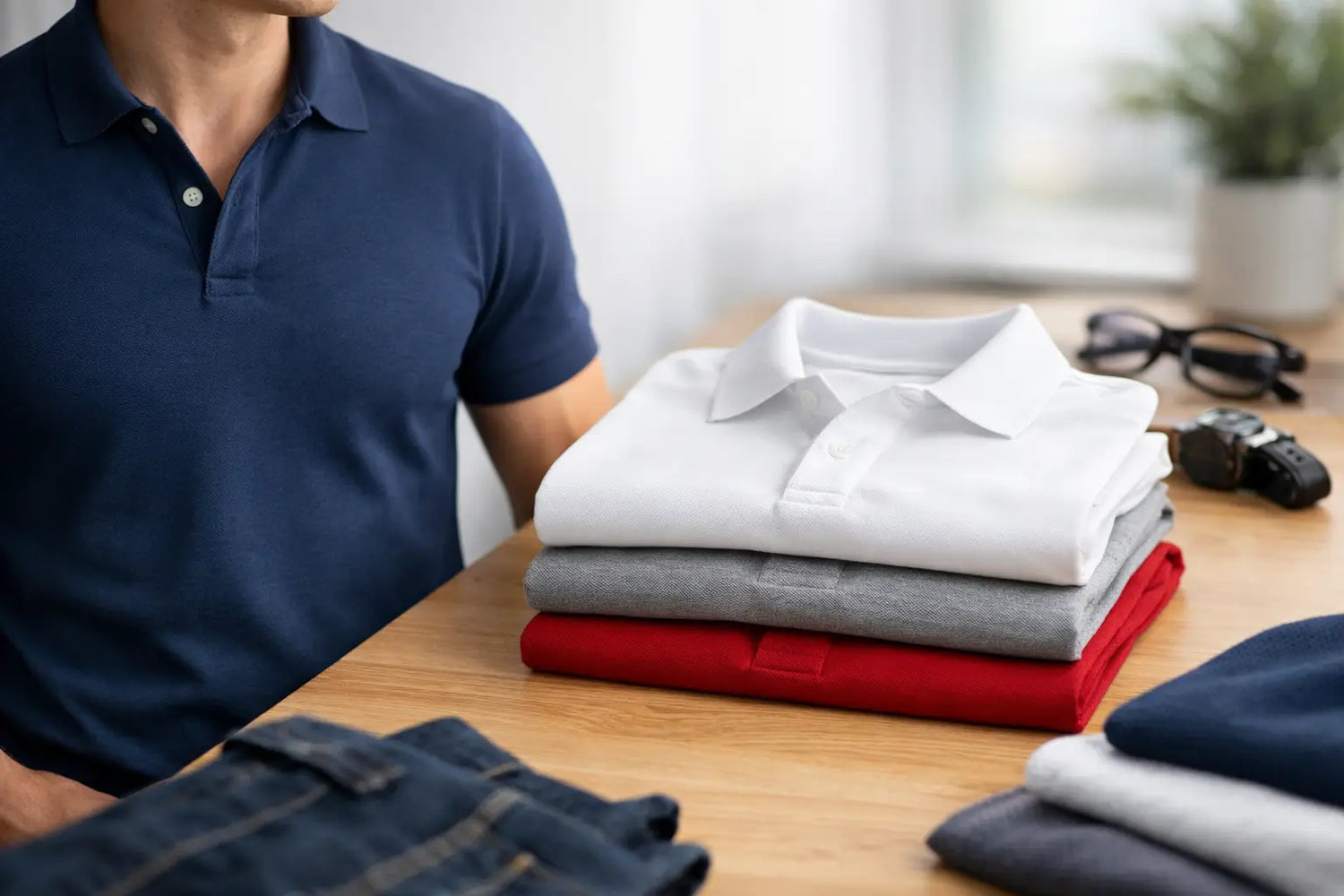
A good review slim fit polos search is rarely about finding the flashiest shirt. It is about avoiding the usual disappointment: a polo that looks sharp for one afternoon, then twists, bags out, fades, or rides up after a few washes. The right slim fit polo should do quiet work in your wardrobe. It should fit cleanly, feel comfortable through a full day, and still look intentional after repeated wear.
That sounds straightforward. It is not always. “Slim fit” means different things across brands, and a polished product page does not tell you whether the collar will curl or whether the body will shrink two inches. Here is what separates a dependable polo from one that merely photographs well.
What a Slim Fit Polo Should Actually Fit Like
Slim fit should follow the body, not restrict it. The chest should sit close without pulling across the buttons. You should be able to move your arms forward, sit at a desk, and drive without feeling tension through the upper back. If the placket gapes when you move, the shirt is too small or cut too narrowly through the chest.
The sleeves are often the quickest test. On a well-cut slim polo, they sit around the mid-bicep and skim the arm without squeezing it. Loose, flared sleeves can make an otherwise fitted shirt look dated. Overly tight sleeves create a gym-shirt effect that is not right for every setting. The best cut is clean, not compressed.
Length matters just as much. A polo that ends high on the waist will lift every time you reach for something. One that drops far below the fly can look sloppy untucked. For most men, the hem should cover the waistband and sit around the middle of the fly. If you have a longer torso, look for a long-fit option rather than sizing up. Going up a size usually adds unwanted width before it adds useful length.
Shoulders are non-negotiable. The shoulder seam should end near the edge of your shoulder. If it falls down the upper arm, the polo is too large. If it sits noticeably inward, you may feel restricted even when the chest seems fine.
Review Slim Fit Polos by Fabric First
Fit gets attention, but fabric decides whether you keep reaching for the shirt. Most everyday polos use cotton piqué, a textured knit that is breathable, durable, and recognizable. A quality piqué has enough body to hold its shape without feeling stiff against the skin. It should not be so thin that the placket collapses or the outline of an undershirt shows through.
Fabric weight is a trade-off. A lighter polo can be cooler in humid weather and easier to layer under a jacket. It may also show more texture, cling more readily, and wear through sooner if the knit is not well made. A medium-weight piqué generally offers the strongest balance for daily use: enough substance for structure, enough airflow for comfort.
Cotton with a small amount of stretch can improve movement and recovery. This is especially useful in a slim fit, where the shirt sits closer to the body. But more stretch is not automatically better. A heavily synthetic blend can feel slick, hold odor, and lose its shape once the elastic fibers weaken. Look for a fabric that feels like cotton first and performs like a considered everyday knit.
Touch the fabric if you can. When shopping online, read beyond terms like “premium” or “soft.” Look for practical details: fiber composition, knit type, fabric weight when available, and wash instructions. Those details say more about a polo than broad claims do.
The collar is where quality shows
A collar has one job: stay flat and hold its shape. Yet it is often the first part of a polo to look tired. A weak collar rolls at the points, stretches around the neck, or puckers after washing. No amount of good fit can compensate for that.
A stronger collar usually has a firmer rib knit and enough density to frame the face without standing rigidly away from the neck. It should lie neatly whether worn open or buttoned once. Check the placket, too. It should sit flat, with clean stitching and buttons that feel securely attached. These are small construction choices, but they determine whether a polo stays presentable after a season of wear.
How a Polo Performs After the First Wash
The fitting room test is easy. The laundry test is the real review.
Natural fibers can shrink, particularly when exposed to high heat. Some shrinkage is normal, but excessive shrinkage points to poor pre-treatment or a fabric that was not designed with real care in mind. A reliable polo should retain its overall proportions: sleeve length, body length, collar shape, and side seams should all remain balanced.
Watch for twisting. If the side seam starts moving toward the front after a wash, the knit or cutting process was not properly controlled. It may seem minor, but twisting makes a fitted shirt sit wrong on the body. Pilling is another warning sign. A few loose fibers can occur with regular wear, especially around friction points, but widespread fuzz after limited use is not what you want from an everyday essential.
Color retention matters most in navy, black, and deep green. These shades are wardrobe workhorses, but they can look washed out quickly when dye quality is poor. Washing cold, turning the polo inside out, and skipping the dryer when possible will extend its life. Still, care should preserve a well-made garment, not rescue a weak one.
The Details That Make a Polo More Useful
A slim fit polo earns its place by working across more than one situation. It should look right with shorts on a warm weekend, chinos for dinner, and dark jeans in a casual office. That versatility comes from restraint.
Start with color. White, navy, charcoal, black, and muted earth tones do more work than loud contrast collars or oversized logos. A minimal chest treatment keeps the shirt adaptable and makes it easier to wear under an overshirt or lightweight sweater.
Then consider the hem. Side vents can improve movement and help the polo fall naturally when untucked. A straight hem is usually the most practical for casual wear. A pronounced tennis-tail hem can be useful if you regularly tuck your polos in, but it is less versatile for an untucked everyday look.
Button choice matters less than construction, though simple tonal or mother-of-pearl-style buttons tend to age better than shiny plastic. Reinforced seams at the shoulders and side vents are worth noticing. You may not see them when wearing the shirt, but they are the kind of detail that prevents a daily staple from becoming disposable.
Common Slim Fit Polo Mistakes
The most common mistake is buying the smallest size that technically fits. Slim should create a defined line through the torso, not expose every shift in posture. If you are between sizes, use chest and shoulder measurements first. Choose the larger size when the smaller one pulls at the placket, then decide whether a different cut would serve you better.
Another mistake is treating every polo as a warm-weather shirt. A thin, airy polo has a place, but it may not have enough structure for work, travel, or layering. If you want one polo to cover the most ground, prioritize a medium-weight cotton piqué with a collar that holds up.
Finally, do not judge value by the price tag alone. A cheaper polo that loses its shape after a few washes costs more in frustration and replacement purchases. Buying a well-made essential in a practical multipack can make sense when you know the fit works. Start with one if you are uncertain. Once you have confirmed the sizing and wash performance, a three-pack is a sensible way to simplify the rotation.
A Straightforward Buying Standard
Before keeping a slim fit polo, ask a few plain questions. Does it sit cleanly at the shoulders? Can you move without the buttons pulling? Does the hem stay down when you lift your arms? Is the fabric substantial enough to hold its shape? Will you still want to wear it after the collar has been washed ten times?
LEBASQ approaches basics with that kind of standard: fit, fabric, and repeat wear before unnecessary noise. A polo does not need a story to earn its place. It needs to feel right on Monday morning and still look right when you pull it from the drawer months later.
Choose the polo that asks the least of you. The one that fits without adjustment, washes without drama, and works with the clothes you already own is the one you will actually wear.

Hinterlasse einen Kommentar
Diese Website ist durch hCaptcha geschützt und es gelten die allgemeinen Geschäftsbedingungen und Datenschutzbestimmungen von hCaptcha.