

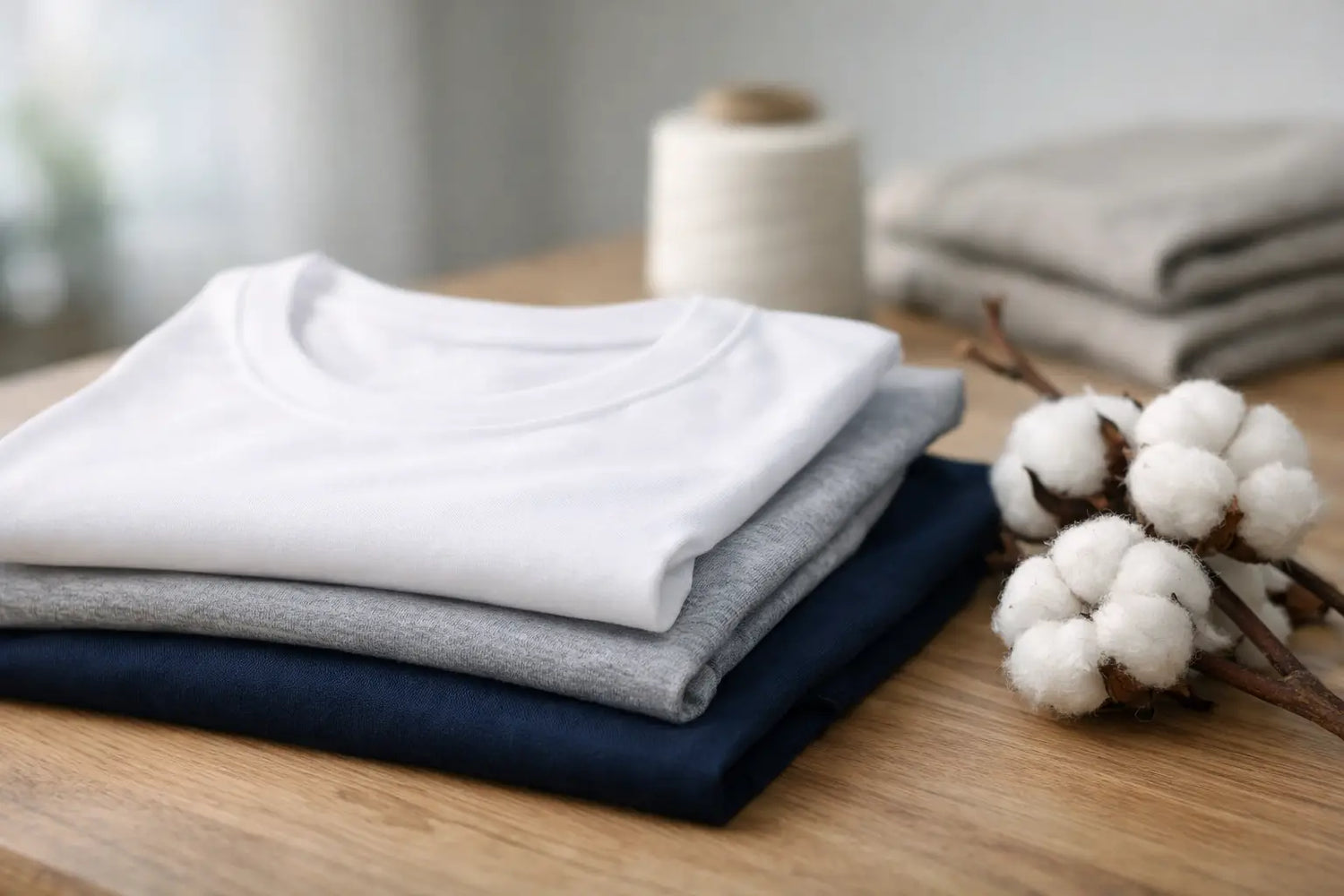
A T-shirt can feel great in the fitting room and look tired after six washes. That is why cotton polyester durability matters more than a fabric label alone. The right blend can keep a daily tee softer, more stable, and better looking through the repeat wear that basics are made for.
Cotton and polyester do different jobs. Cotton provides the natural hand feel most people want against their skin. Polyester contributes strength, shape retention, and faster drying. Neither fiber is automatically better. What lasts depends on the blend ratio, the yarn, the fabric construction, the garment fit, and how the piece is washed.
For an everyday wardrobe, durability is not just about whether a shirt tears. It is about whether the collar stays flat, the body keeps its length, the fabric resists thinning, and the tee still feels worth reaching for after a long stretch of regular wear.
What Cotton and Polyester Each Bring
Cotton is comfortable, breathable, and familiar for good reason. Its fibers absorb moisture well and give a tee that soft, natural feel. The trade-off is that cotton can shrink, wrinkle, and lose some shape over time, especially when exposed to high heat. Repeated friction can also gradually wear down the surface of a lightweight cotton shirt.
Polyester is a synthetic fiber built for resilience. It has strong resistance to stretching, shrinking, and abrasion. It also holds less water than cotton, which helps garments dry faster. On its own, though, polyester can feel less natural and may retain odors more readily than cotton, particularly in activewear or hot conditions.
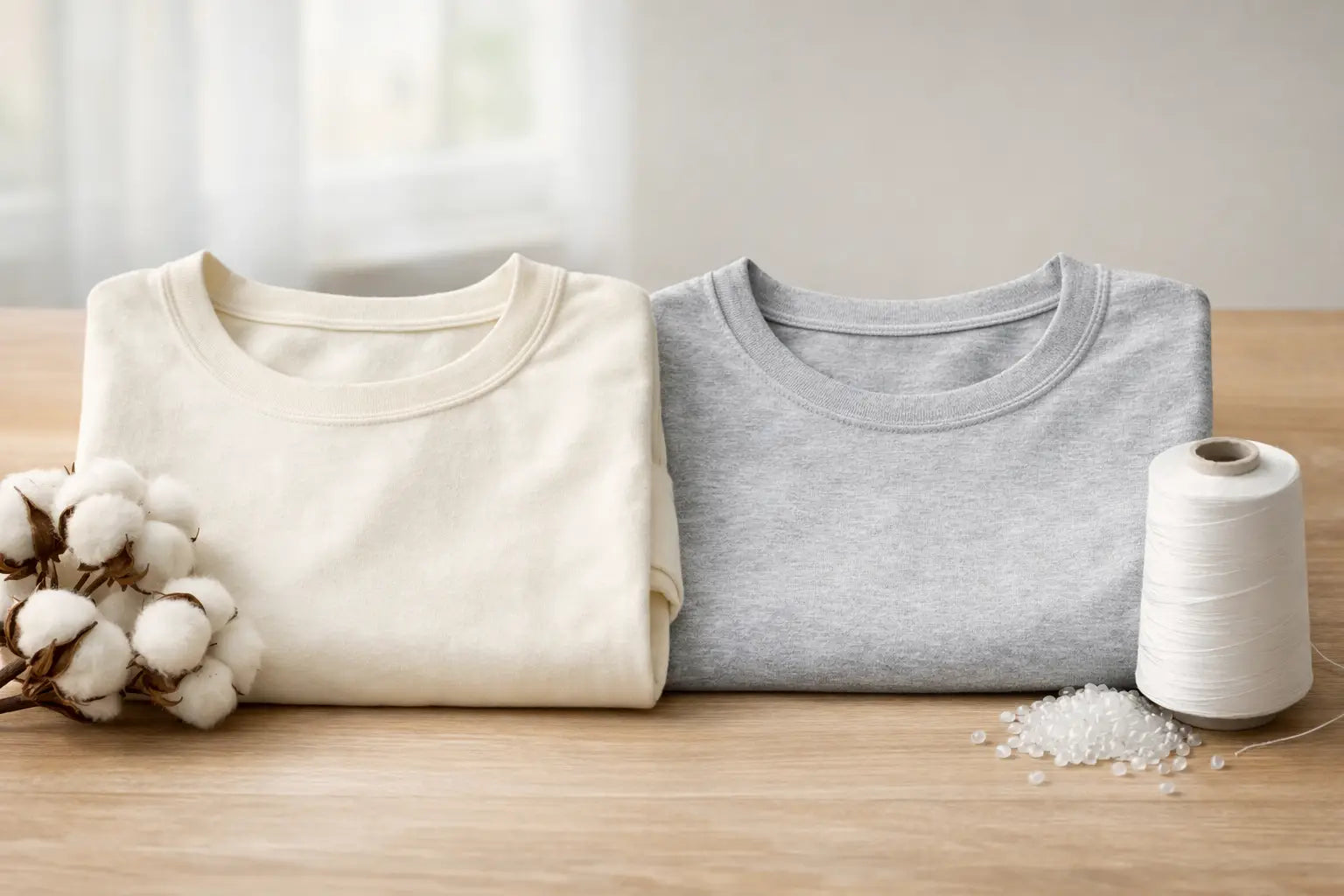
A blend combines those characteristics. Cotton keeps the fabric comfortable and breathable, while polyester helps it handle washing, movement, and daily friction. For tees, polos, and casual tops that see frequent rotation, this can be a practical balance rather than a compromise.
Cotton Polyester Durability Depends on the Blend
The percentage of each fiber changes how a garment behaves. A tee with a high cotton content will generally feel closer to a classic cotton shirt, with polyester providing support in the background. A higher polyester content usually improves dimensional stability and drying time, but it may change the hand feel and breathability.
A 60/40 or 65/35 cotton-polyester blend is common for everyday basics because it keeps cotton as the dominant feel while adding meaningful durability. It can be a good choice for a T-shirt that needs to look clean after repeated washes without feeling overly technical.
A 50/50 blend puts more emphasis on easy care and shape retention. It can work well for uniforms, casual layers, and pieces that are washed often. The exact experience still varies. A well-made 50/50 shirt can feel refined, while a poorly made one can feel thin or overly synthetic.
Very high polyester blends are often better suited to performance clothing than to a premium everyday tee. They can be durable, but durability without comfort is not much of a win when you are wearing the garment all day.
Fabric Construction Matters as Much as Fiber Content
A fabric label tells only part of the story. Two shirts with the same cotton-polyester ratio can age very differently.
Yarn Quality and Knit Density
Longer, cleaner cotton fibers can create smoother, stronger yarns with fewer loose ends. Better yarn quality generally means a more even surface and less tendency to look fuzzy too soon. Polyester quality matters too. Strong, consistent fibers support the fabric without making it feel stiff.
Knit density is equally important. A loosely knit lightweight jersey may feel airy, but it has less material to withstand friction and can lose structure earlier. A denser knit usually feels more substantial and is better positioned to resist twisting, stretching, and premature thinning.
That does not mean every durable tee must be heavy. The goal is enough density for the intended use. A lightweight summer shirt should still have a stable knit and a collar that can recover after washing. A heavier everyday tee should have body without becoming rigid.
Seams, Collars, and Stress Points
Durability shows up at the edges first. Check the collar, shoulder seams, sleeve hems, and side seams. These areas take constant stress from pulling a shirt on, carrying a bag, washing, and normal movement.
A well-constructed collar has enough recovery to sit flat rather than wave or sag. Clean, consistent stitching helps seams hold their line. Reinforcement at high-stress areas can add life, but it should not create bulky or uncomfortable spots.
Fit also plays a role. A tee that is too tight across the chest or shoulders puts extra strain on seams and fabric. A fit that is too long or loose may catch and stretch in different ways. Choosing a classic, slim, or long fit that actually suits your frame is part of buying clothes that last.
Where Blends Can Fall Short
Cotton-polyester blends are not perfect, and an honest choice means knowing the trade-offs.
Polyester can contribute to pilling when short fibers work loose and form small knots on the surface. Pilling is not exclusive to polyester, but blends can be susceptible if the yarn or knit is low quality. Because polyester is strong, those pills may stay attached instead of breaking away. A smoother, tighter fabric and gentle washing help reduce the problem.
Blends can also hold onto oil-based stains more stubbornly than pure cotton. Treating a stain early matters. A small amount of dish soap or a dedicated stain treatment applied before washing is usually more effective than trying to fix a set stain later.
Finally, no blend is immune to heat. Polyester resists shrinkage better than cotton, but high dryer heat can weaken elastic components, stress stitching, set wrinkles, and shorten the useful life of the garment. Durable fabric still needs sensible care.
How to Make Cotton-Polyester Clothes Last
The easiest way to get more life from good basics is to reduce unnecessary stress. Wash tees inside out in cold or cool water. This protects the outer surface from abrasion against zippers, buttons, and other rough fabrics in the load.
Use a mild detergent and avoid overloading the machine. Clothes need room to move through water rather than grind against each other. Separate heavier items like jeans, towels, and hoodies from lighter tees when possible. That small habit protects the fabric surface and helps prevent twisting.
Air drying is the safest option for preserving shape and color. If you use a dryer, choose low heat and remove shirts while they are still slightly damp. Smooth the collar, hems, and side seams by hand before laying or hanging the garment to finish drying. It takes seconds and helps the tee keep its intended shape.
Do not wash a shirt after every short wear if it is still clean. Overwashing is one of the fastest ways to wear down any fabric. For a basic tee worn close to the body, washing after a full day usually makes sense. For an overshirt, sweater, or casual layer, a quick air-out may be enough between wears.
Choosing a Blend for Your Actual Routine
Think about where the garment will live, not just how it feels when new. If you want a soft tee for relaxed weekends and moderate wear, a cotton-rich blend offers a familiar feel with useful added stability. If you need shirts for commuting, travel, or frequent laundry cycles, a balanced blend may earn its place through faster drying and better shape retention.
For a close-fitting tee, recovery matters. The fabric should move with you without permanently stretching at the neck, chest, or hem. For a long-fit tee, length stability matters just as much. A shirt that loses several inches after its first wash is not a value, regardless of its price.
Look beyond the word “blend.” Consider the garment weight, collar construction, stitching, fit, and care instructions. Then buy enough quality basics to rotate them. Wearing three dependable tees in rotation will usually give each one a longer life than wearing one favorite shirt into the ground.
The best everyday fabric is not the one with the biggest claim. It is the one that stays comfortable, keeps its shape, and earns another wear without asking for much in return.

Hinterlasse einen Kommentar
Diese Website ist durch hCaptcha geschützt und es gelten die allgemeinen Geschäftsbedingungen und Datenschutzbestimmungen von hCaptcha.