

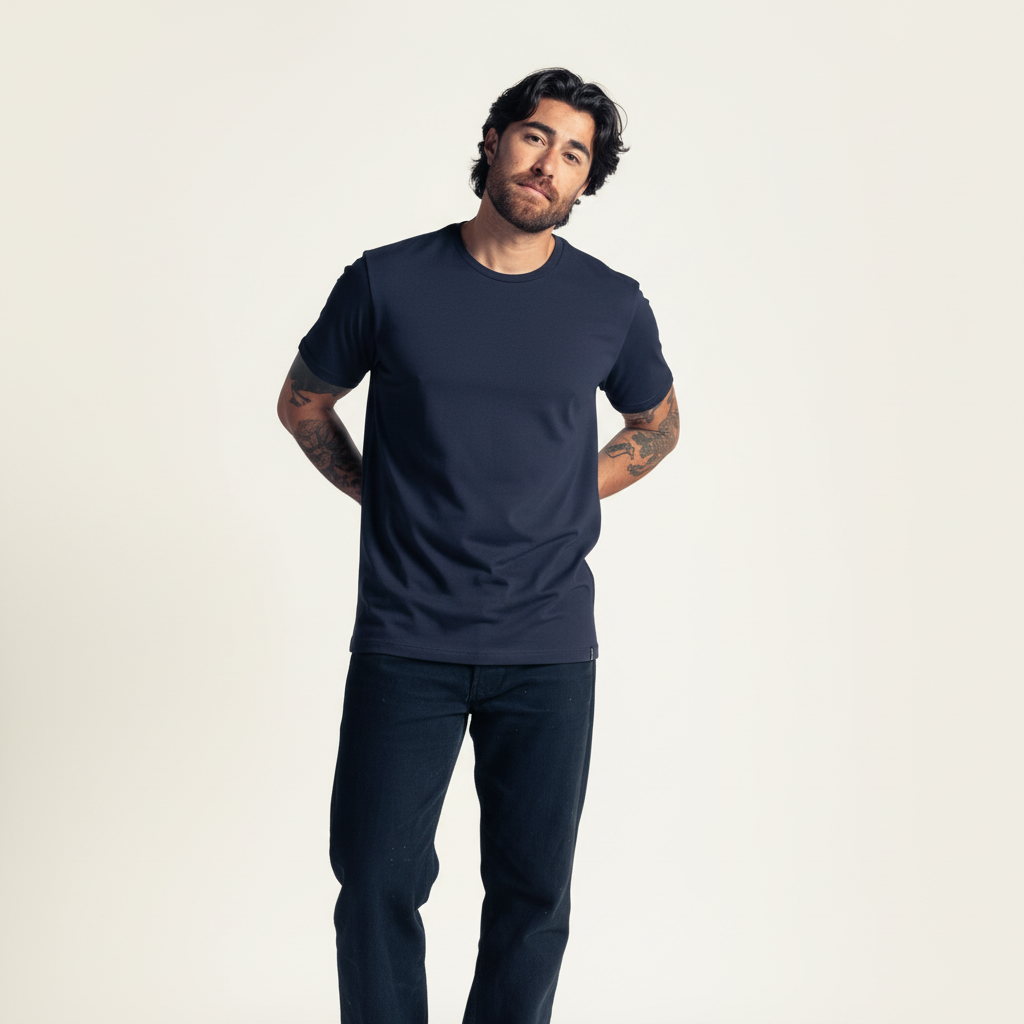
A T-shirt can seem simple on paper — until you have to choose between slim fit and regular fit. Suddenly it's no longer just about size, but about how a shirt sits, moves, and looks after a full day of wear. With basics especially, that choice makes more of a difference than many men realise.
Anyone who wears T-shirts, polos, or fine knitwear daily quickly notices that fit isn't a detail. A good fit makes a basic actually work. The wrong fit keeps pulling, sagging, or simply never feeling quite right. So the question isn't which fit is better in general — it's which works better for your body, your style, and the occasion.
Slim Fit or Regular Fit: The Real Difference
The difference between slim fit and regular fit isn't just about how tight a shirt feels. It's mainly about the line of the garment. A slim fit T-shirt follows the body more closely — usually narrower across the chest, waist, and sleeves. The result is a neater, more fitted look.
A regular fit gives more room. Not necessarily wide, but less shaped. The chest and waist fall straighter, the sleeves tend to sit a little looser, and the overall look is more classic. For many men, that's the familiar standard — partly because regular fit is more forgiving and less likely to show tension around the stomach or shoulders.
That difference looks small on the hanger, but on the body it's immediately visible. Slim fit looks sharper and more modern. Regular fit feels calmer and more relaxed. Neither is automatically better. It depends on what you want a basic to do for you.
When Slim Fit Is the Better Choice
Slim fit works well if you like a polished silhouette without excess fabric. Especially under an overshirt, cardigan, or blazer, a fitted T-shirt is often the neater option. There's less bunching around the waist and the fabric stays in place better under layers.
If you have a relatively slim or athletic build, slim fit often feels more natural too. A regular fit can fall too straight on that frame, giving the upper body less shape. Slim fit lets the shoulders and chest come through without going into a tight fashion fit.
There is a limit, though. Slim fit should follow, not constrict. If a shirt pulls across the chest, rides up at the stomach, or the sleeves grip too tightly around the upper arms, it's simply too tight or poorly cut. This often happens when men confuse slim fit with going down a size. That's not the same thing. A good slim fit gives shape while keeping comfort.
With premium basics, that's especially important. The fabric needs to give, recover well, and hold its shape after multiple washes. Otherwise a slim fit shirt quickly looks tired — which undermines exactly the sharp effect you chose it for.
Slim Fit for Daily Use
For work, dinner, or a smart casual outfit, slim fit is often the most precise choice. It looks intentional without being overdressed. Especially in plain colours and solid cotton quality, that delivers a clean, polished foundation.
But if you move a lot, sit for long periods, or simply want maximum freedom, slim fit can be less forgiving on long days. You'll feel every detail of the cut — not dramatically, but noticeably.
When Regular Fit Works Better
Regular fit is still the most versatile choice for many wardrobes. Not because it's the safe option, but because in practice it's often the easiest to wear. You get more freedom of movement, fewer pressure points, and a fit that's less critical of body shape.
For men with a broader torso, more chest volume, or a less defined waist, regular fit is often simply more logical. A slim fit can look restless in that case because the garment shows too much tension. Regular fit keeps the look calmer and falls more naturally along the body.
For days off, travel, and casual layering, regular fit is often comfortable too. You put it on and it works. No constant mirror checks, no feeling that your shirt is asking too much of your body. That's exactly the strength of a good basic: it should follow your day, not the other way around.
That doesn't mean regular fit has to be shapeless. The best regular fits are still thoughtfully cut — they give room without becoming baggy. That difference is significant. A poor regular fit quickly looks cheap, precisely because there's too much fabric in the wrong places.
Regular Fit and a Clean Appearance
There's a misconception that regular fit is automatically less stylish. That's not true. A good regular fit in high-quality fabric can look very strong. The appearance is calmer, slightly less sharp, but still polished.
Especially if you're buying basics to wear often, regular fit is often the cut that stays most broadly usable — from jeans to chinos, from trainers to loafers, it combines without effort.
What Suits Your Build Better?
The quickest way to choose between slim fit and regular fit is to look honestly at your build. Not at what looks good on a model, but at how clothes actually sit on your body.
If you have narrow hips, a clear shoulder line, and like clothing with a sharp silhouette, slim fit is often the natural choice. If you have a straighter torso, a broader midsection, or prefer less emphasis on your body, regular fit will usually look more balanced.
Height plays a role too. Tall men often find that a slim fit shirt looks good but rides up too quickly if the body length is too short. In that case, it's not just the fit but also the length that matters. A regular fit with enough length can be more practical than a slim fit that looks better on paper.
Muscle build also makes the choice less black and white. Someone with broad shoulders and arms but a narrow waist often falls between both options. A standard slim fit can be too tight at the top, while regular fit falls too loose around the waist. In that case, everything comes down to the quality of the pattern — that's where the difference lies between a basic that just sells and one you actually keep wearing.
Fit Means Little Without Fabric and Finishing
Many discussions about fit miss an important point: fit only works well when fabric, weight, and finishing are right. A slim fit in thin, limp cotton quickly loses its line. A regular fit in stiff, coarse fabric can become bulky and boxy.
That's why a good T-shirt doesn't just feel comfortable when you try it on — it stays good after ten, twenty, or thirty wears. The neckline needs to stay firm, the hem straight, the fabric shape-retaining. Only then can you really say whether slim fit or regular fit works for you.
That's also why men often return to the same basics once they've found the right combination. Not because of marketing, but because reliability in everyday clothing is rare enough to be genuinely valuable.
Slim Fit or Regular Fit With Different Outfits
Under a blazer or fine cardigan, slim fit usually sits neater. The layers fall more smoothly over each other and you get less volume around the waist — often the best choice for a polished, understated look.
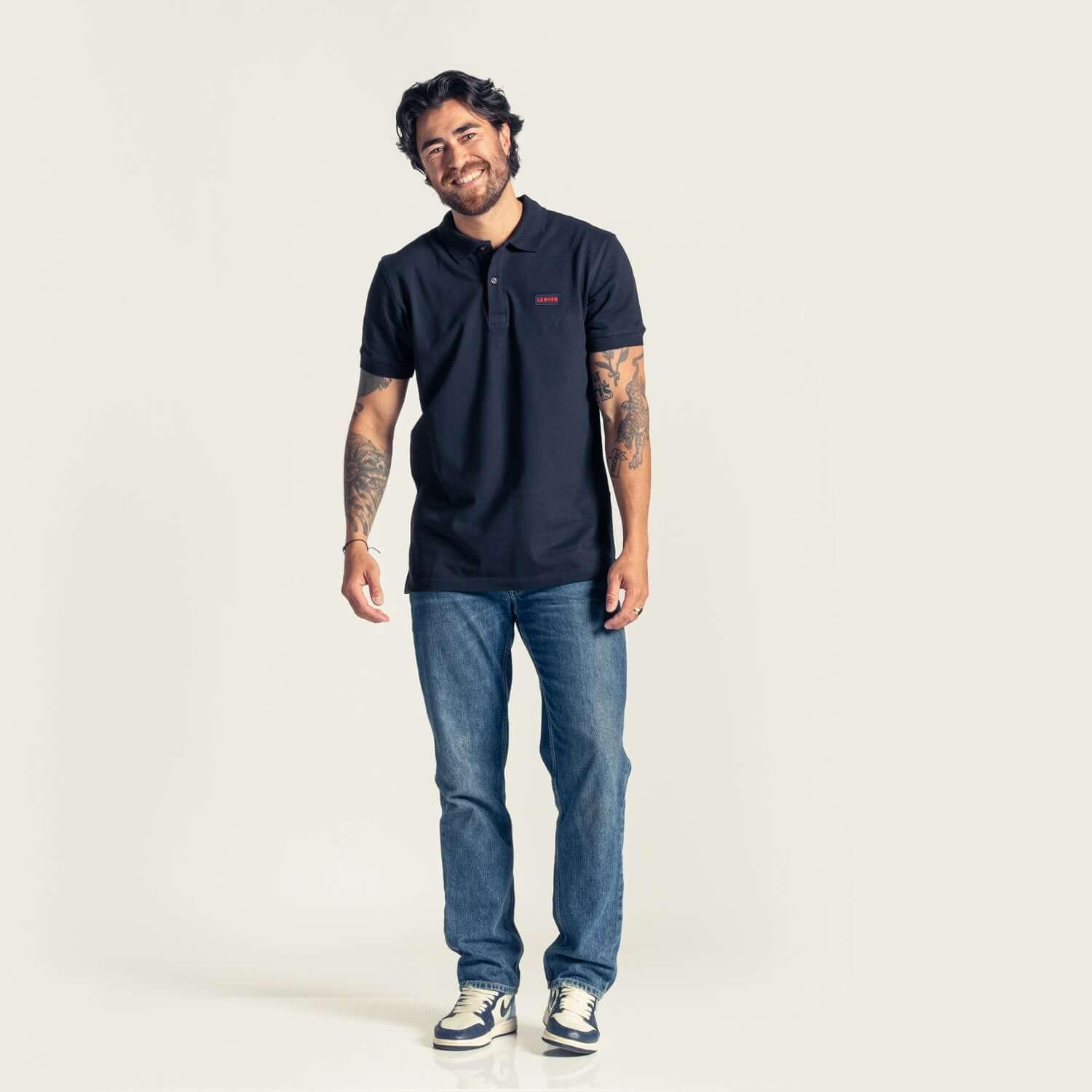
On jeans or relaxed chinos, regular fit can actually look better. The overall feel is more relaxed without becoming sloppy. Especially in weekend outfits, that's often exactly right.
If you mainly wear basics on their own — without an overshirt or extra layer — the choice becomes more visible. Slim fit lets your body speak more. Regular fit keeps the focus more on the overall look. Here too: it's not a competition between two fits, but a trade-off between appearance and comfort.
The Most Common Mistake
The biggest mistake is thinking slim fit is automatically more stylish. It isn't. A shirt that's too tight rarely looks better than a regular fit that falls well. The reverse is equally true: regular fit is no excuse for a shapeless shirt that only feels comfortable in the fitting room.
A basic should do exactly enough. It needs to feel good, sit well, and last. Nothing more. Nothing less.
Choosing slim fit or regular fit is really choosing a particular use. If you want a sharper line, a neater silhouette, and a modern foundation under layers, slim fit is often the right call. If you want more freedom, broader versatility, and comfort that stays effortless all day, regular fit is usually the stronger choice.
With essentials, it pays to be discerning — precisely because you wear them so often. Brands that focus on this, like LEBASQ, understand that a basic shouldn't impress with noise, but with consistency. Good fabric. The right fit. No fuss.
If you're unsure, don't choose what looks sharpest in a product photo. Choose the fit you'd reach for again without thinking. That's usually the right one.


Laat een reactie achter
Deze site wordt beschermd door hCaptcha en het privacybeleid en de servicevoorwaarden van hCaptcha zijn van toepassing.