

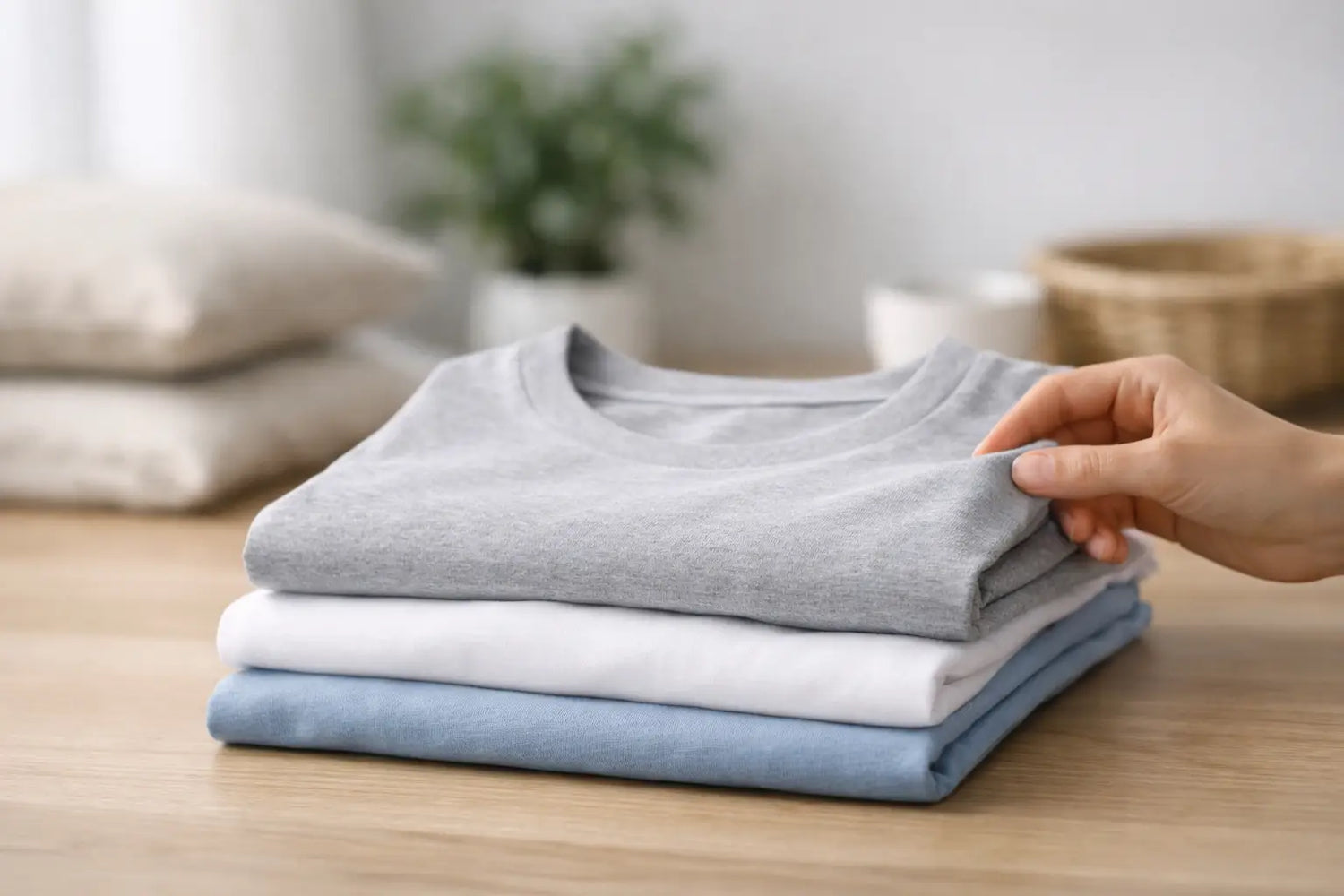
A T-shirt can feel soft for five minutes in a fitting room and disappoint after three washes. That is the difference between a surface finish and a well-made essential. The best soft cotton t shirts earn their place in your weekly rotation through the details you notice over time: a smooth hand feel, a collar that holds its shape, a fit that stays reliable, and fabric that does not turn thin or rough too soon.
For an everyday tee, softness matters. But it should not come at the expense of structure. A shirt that feels great but loses its shape is not a better basic. It is just a short-lived one.
Soft cotton t shirts start with the fiber
Cotton is naturally breathable, absorbent, and comfortable against the skin. That is why it remains the standard for T-shirts. Still, not all cotton feels or performs the same. Fiber length, yarn construction, knit density, and finishing all affect the shirt you wear.
Longer cotton fibers generally produce smoother, stronger yarns with fewer loose ends. Fewer loose ends means less fuzz on the fabric surface and a cleaner feel against the skin. It can also mean a tee is less likely to pill quickly. This does not make every long-fiber cotton shirt automatically superior, but it is one meaningful part of the equation.
The yarn matters just as much. A smoother, more tightly spun yarn can create a refined surface without making the shirt stiff. When the yarn is poorly made, the tee may feel coarse from day one or become rough after laundering. That roughness is not always caused by the wash cycle. Often, it was built into the fabric from the start.
A soft tee should feel comfortable without feeling fragile. If it is almost weightless, highly brushed, or unusually slick, ask whether that softness will survive regular wear. Some finishes create an immediate luxury feel but fade once the shirt has been washed a few times. Honest softness holds up.
Fabric weight changes the experience
Fabric weight is usually expressed in GSM, or grams per square meter. You do not need to memorize every number, but you should understand the trade-off. Lightweight cotton feels airy and works well in heat or under layers. Midweight cotton offers more substance, better drape, and a little more protection from showing through. Heavyweight cotton feels structured and durable, though it may be too warm for some climates or too firm for people who prefer a close, soft feel.
For most daily wardrobes, midweight is the practical middle ground. It has enough body to hang cleanly over the torso and enough comfort for long days. It also tends to outlast very thin jersey, especially around high-friction areas like the shoulders, chest, and waist.
Weight alone is not a quality guarantee. A heavier tee can still be stiff, poorly cut, or unevenly knitted. A lighter tee can be exceptionally soft and well made. The point is to choose the weight for how you actually dress. If your T-shirts spend most of their time under an overshirt, sweater, or jacket, a lighter or midweight option may make more sense. If the tee is the main piece, more structure is often worth having.
Softness needs a fit that works
Even excellent cotton will feel wrong if the fit is off. A collar that sits too tight can make a soft shirt feel restrictive. Sleeves that flare or pull can make a clean fabric look sloppy. A torso that is too short forces you to tug at the hem all day.
This is why fit options matter. A classic fit gives room through the chest and body without looking oversized. It works for people who prefer an easy, balanced silhouette. A slim fit follows the body more closely and keeps excess fabric out of the way. It can look sharper under an overshirt or blazer, but it should never feel strained across the shoulders or chest. A long fit solves a different problem: coverage. For taller builds or longer torsos, extra length can prevent the hem from riding up every time you sit, reach, or bend.
The right fit is not about chasing a certain look. It is about making the shirt easier to wear. A tee that fits your proportions well needs less adjustment, layers better, and stays in rotation longer.
Pay attention to the shoulder seam first. It should sit near the edge of your shoulder, not drop far down the arm or pull toward your neck. Then check the chest, sleeve length, and hem. A good T-shirt should look considered when you are standing still and stay comfortable when you move.
Look past the first touch
When shopping for soft cotton T-shirts, the first touch is useful, but it should not decide everything. Consider how the fabric is likely to behave after repeated washing. Does it feel dense enough to resist becoming transparent? Does the collar have enough recovery to avoid a stretched-out neckline? Are the seams clean and secure? Does the fabric have a consistent surface, or does it already look fuzzy?
Construction is where an everyday tee proves its value. Reinforced neck seams, stable ribbing at the collar, and well-finished stitching are not flashy details. They are the details that keep a shirt from looking tired after a season.
Color also affects what you need from the fabric. White and light gray tees benefit from enough weight and density to avoid showing too much underneath. Dark colors can hide wear longer, but poor dyeing may lead to fading or an uneven appearance. Black, navy, and charcoal basics should still look deliberate after regular washing, not washed out after a month.
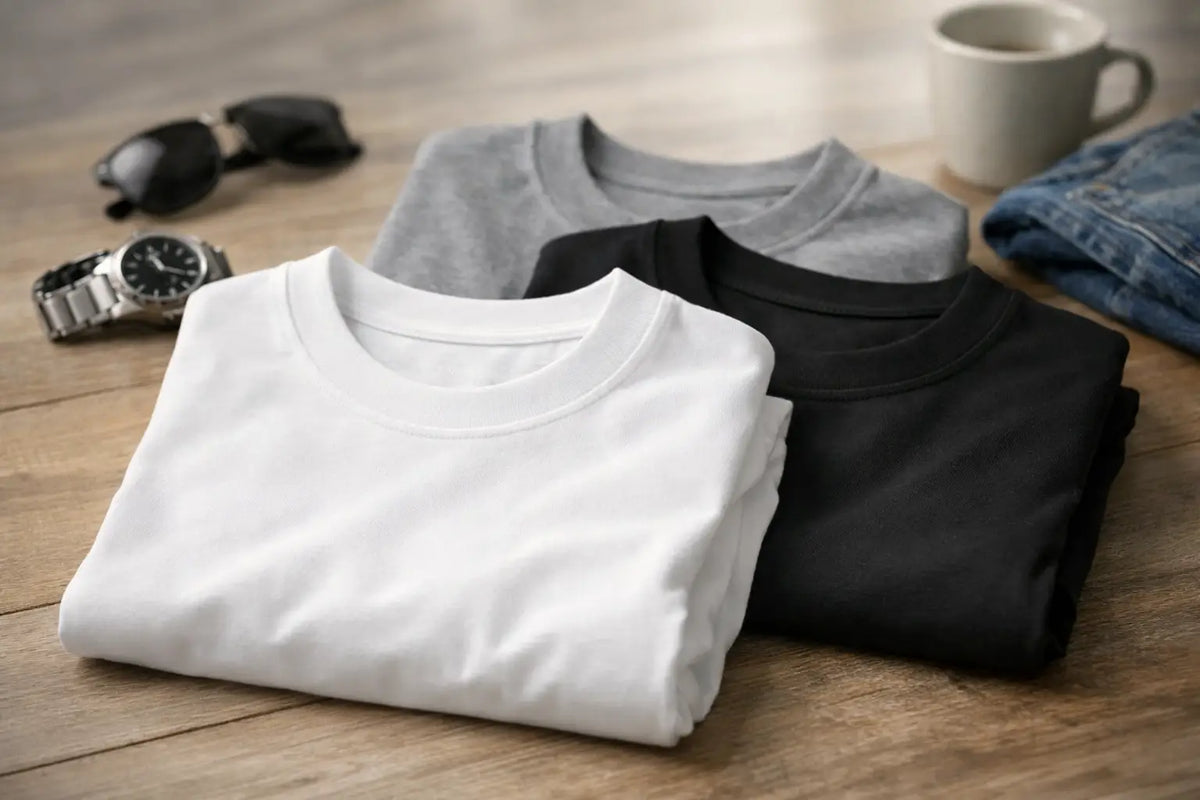
Buying a three-pack can be a sensible way to build consistency into your wardrobe. The value is not only the lower cost per shirt. It is knowing the fit is already solved. One white, one black, and one neutral shade can cover a large share of casual outfits without turning a basic purchase into a complicated decision.
LEBASQ approaches essentials from that practical angle: fabric, fit, and repeat wear before trend. That is the standard a daily tee should meet.
Care keeps cotton soft for longer
Good cotton deserves simple care. Hot water, high heat, and aggressive washing can make even a quality T-shirt feel less soft over time. You do not need a complicated routine, but small choices make a difference.
Wash T-shirts inside out in cold water with similar colors. This reduces friction on the outside surface and helps preserve color. Use a reasonable amount of detergent rather than adding extra, since detergent residue can leave fabric feeling stiff. Avoid using fabric softener on every wash. It can create a temporary soft feel, but buildup may reduce the fabric's natural breathability.
Air drying is gentler on cotton and helps limit shrinkage. If you use a dryer, choose low heat and remove shirts when they are dry rather than letting them bake through a long cycle. Reshape the collar and hem while the shirt is still slightly warm. It takes seconds and helps the tee keep its intended lines.
A well-made shirt will not last forever, but it should not act disposable. Softness that remains after many wears is a better measure of quality than softness that only lasts until laundry day.


Laat een reactie achter
Deze site wordt beschermd door hCaptcha en het privacybeleid en de servicevoorwaarden van hCaptcha zijn van toepassing.