

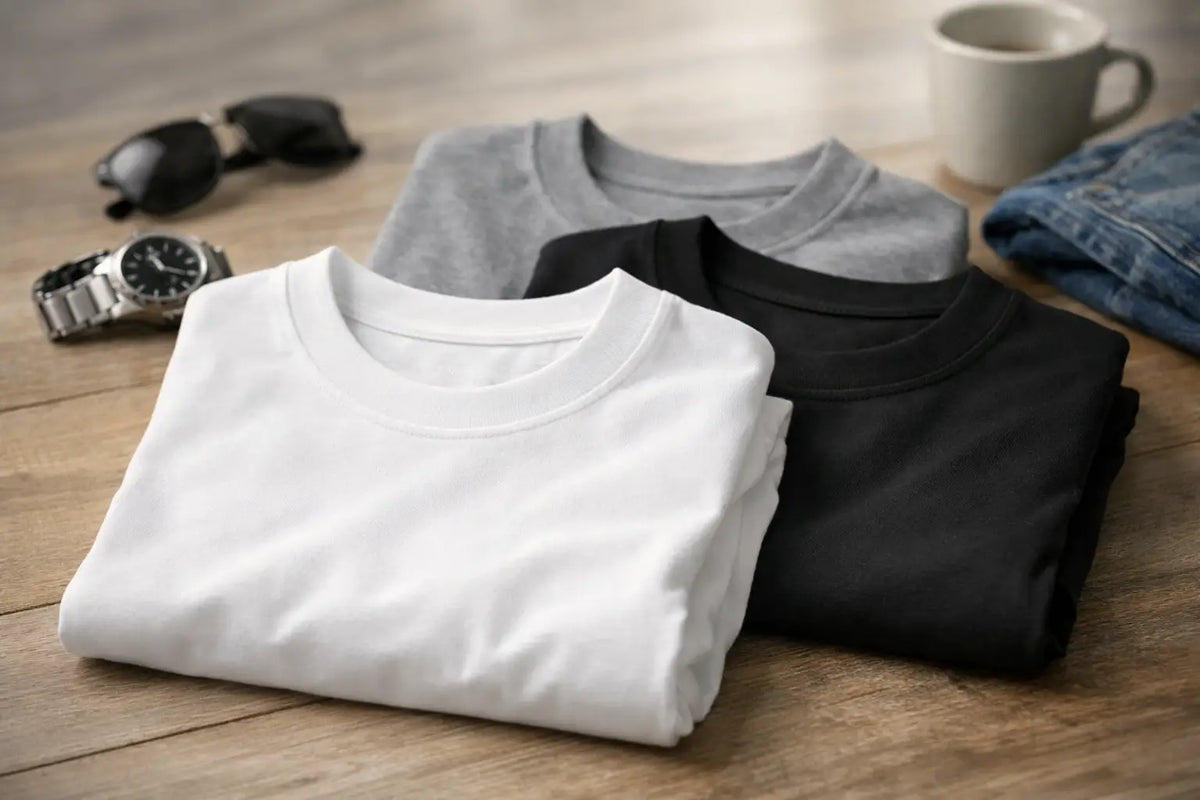
A lightweight T-shirt can look fine at 9 a.m. and feel worn out by dinner. The collar loosens, the fabric twists, and the shape starts to disappear. This heavyweight cotton tee review looks at what changes when a tee has real substance: how it feels, how it fits, how it wears, and when the extra weight is actually worth it.
A heavyweight tee is not automatically a better tee. It is a different tool. The right choice depends on your climate, how you like your shirts to sit on the body, and whether you want a base layer or a stand-alone staple.
What Makes a Cotton Tee Heavyweight?
Fabric weight is usually measured in GSM, or grams per square meter. Many standard cotton T-shirts sit around 140 to 180 GSM. A heavyweight cotton tee commonly starts around 200 GSM and can run well above 250 GSM. That increase may sound technical, but you notice it immediately in your hands.
The fabric has more body. It tends to drape with cleaner lines rather than clinging to the chest or stomach. It is also less likely to show what is underneath, which matters with white, light gray, and other pale colors.
Weight is only one part of the build. A dense knit, quality yarn, and a properly finished collar matter just as much. A shirt can be thick yet still feel rough, stiff, or poorly shaped. The goal is substantial cotton with a smooth hand and enough flexibility for daily wear.
Heavyweight Cotton Tee Review: The Feel
The first difference is structure. A good heavyweight tee feels present without feeling rigid. It holds its own under an overshirt, jacket, or sweater, but it should still move when you move. If the fabric feels board-like before washing, it may never become the shirt you reach for most often.
Breathability is the main trade-off. Cotton is naturally breathable, but more material retains more warmth. That is an advantage in mild weather, cooler offices, and evenings outside. In a humid summer or during a long commute on foot, a heavyweight tee can feel like too much.
For most people, the sweet spot is a shirt with enough density to look refined on its own but not so much that it becomes a seasonal item. It should work through most of the year, not spend half of it folded in a drawer.
Fit Matters More When the Fabric Is Heavier
Heavy fabric makes the cut of a T-shirt more visible. On a thin tee, excess fabric can fall away from the body. On a heavyweight tee, extra width at the torso or sleeves is more obvious because the material keeps its shape.
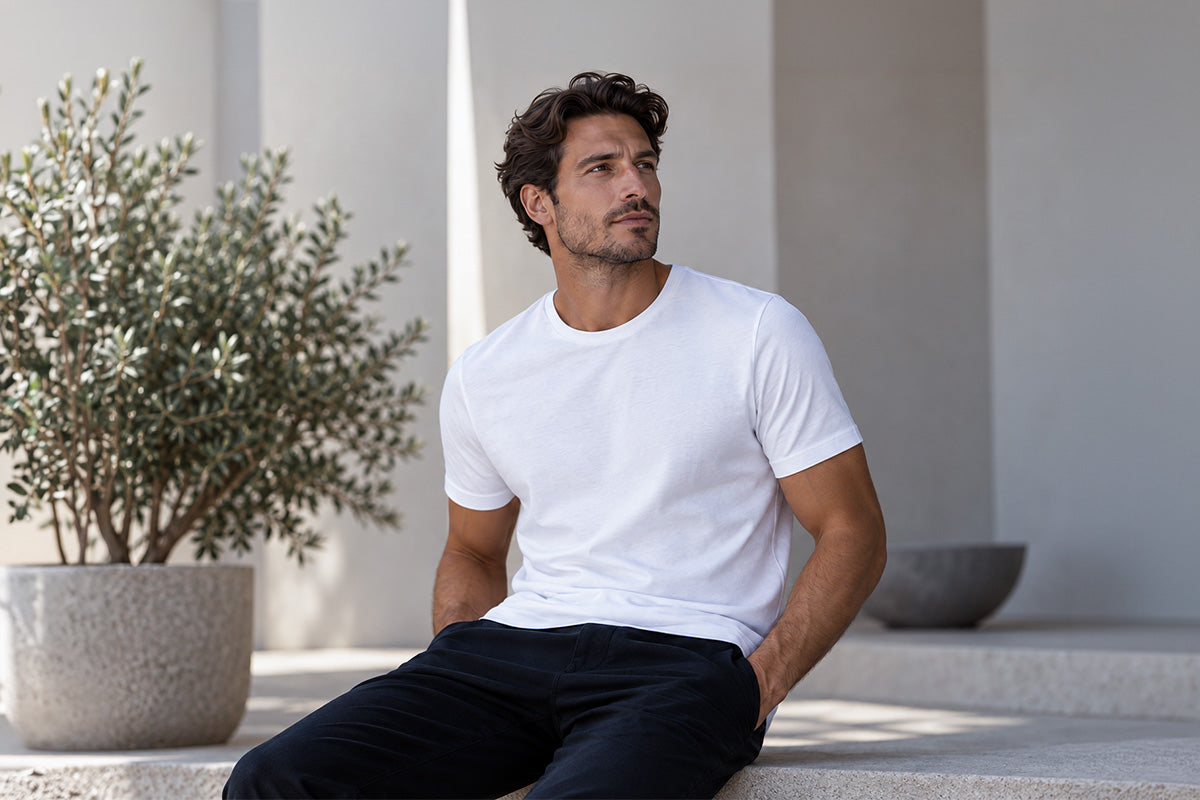
Start with the shoulders. The seam should sit near the edge of your shoulder, not drop halfway down your arm unless an intentionally relaxed fit is what you want. From there, look at the chest and waist. A classic fit needs room to move without ballooning. A slim fit should follow your frame without pulling across the chest. A long fit can solve the common problem of a shirt riding up when you bend or reach.
Sleeve length changes the overall effect, too. Heavyweight fabric gives sleeves more form, so a slightly longer sleeve can look deliberate rather than sloppy. The same applies to the hem. A straight, stable hem usually looks cleaner than a lightweight shirt that curls or twists after a few washes.
Do not buy a heavier tee solely because it sounds more durable. Buy the fit that works with your body and the way you dress. A well-cut midweight shirt will serve you better than an overly thick shirt that never sits right.
The Collar Is the Real Test
Most T-shirts fail at the neck first. The body may still be fine, but a stretched, rippled collar makes the entire shirt look tired. A heavyweight cotton tee should have a ribbed collar with enough recovery to return to shape after repeated wear and washing.
Look for a collar that sits flat against the neck without choking it. It should be firm, not flimsy, but there is a line between secure and restrictive. A collar that feels overly tight in the fitting room is unlikely to become more comfortable during a full day of wear.
Construction around the neckline matters as well. Clean stitching and a properly attached neckband help the shirt keep a polished appearance. This detail is easy to overlook when shopping online. It is also one of the clearest signs of whether a basic was made for repeat wear or for a quick sale.
Durability Is More Than Thickness
A heavier fabric usually handles friction better than a thin one. It is less prone to becoming transparent, developing tiny holes, or losing its shape after a season. But thickness alone does not guarantee longevity.
Pay attention to the cotton quality and the knit. Long-staple cotton can produce a smoother, stronger yarn. A compact knit can reduce surface fuzz and help the shirt stay cleaner-looking over time. Reinforced shoulder seams and consistent stitching also matter because those are areas that take regular stress.
Pilling is another point worth considering. All cotton can show wear, especially where a seat belt, backpack strap, or outer layer rubs repeatedly. A well-made heavyweight tee should resist excessive fuzzing, but it is not indestructible. Treat it as a durable everyday essential, not workwear built for abrasion.
Color retention depends on dye quality and care. Dark shirts are the most revealing. If black quickly turns dull or develops uneven fading, the tee will look older than it is. Buying fewer shirts with better fabric and rotating them through the week is often a more practical move than replacing cheap basics every few months.
Shrinkage: Expect Some, Not a Surprise
Cotton can shrink, particularly when it meets high heat. Pre-shrunk fabric reduces the risk, but it does not remove it entirely. A small amount of tightening after the first wash is normal. A dramatic change in length or width is not.
This is where sizing becomes practical. If you are between sizes, do not assume sizing up is always the answer. An oversized shirt may become merely roomy after washing, but it may also remain too wide through the body. Check the garment measurements when available and compare them with a tee you already wear often.
Wash cold, turn the shirt inside out, and avoid aggressive drying. Air drying is the safest choice for preserving size, color, and collar shape. If you use a dryer, choose low heat and remove the tee while it is still slightly damp. That small habit can extend the useful life of every cotton shirt in your rotation.
When a Heavyweight Tee Is Worth It
A heavyweight tee earns its place when you want one shirt to do more. It works as a clean stand-alone layer with jeans, chinos, or shorts. It has enough presence under an open overshirt. It also holds its shape better during a long day, which means you are less likely to look rumpled by late afternoon.
It is especially useful if you have been frustrated by thin tees that show through, stretch at the neck, or lose their form after repeated washing. The fabric offers more coverage and a more intentional silhouette without requiring a complicated outfit.
The case against it is straightforward. If you live somewhere hot most of the year, run warm, or need a tee mainly for layering under close-fitting shirts, a lighter cotton weight may be more comfortable. Heavyweight is not a universal upgrade. It is a preference with clear benefits and clear limits.
What to Look for Before You Buy
A strong heavyweight cotton tee should answer a few simple questions. Is the fabric weight suited to your climate? Does the fit match how you want your torso and sleeves to look? Is the collar built to recover after washing? Does the brand provide enough information about material, sizing, and care to make a confident choice?
Ignore vague claims about luxury if the details are missing. Good basics do not need a complicated story. They need solid cotton, a considered fit, clean construction, and a price that makes sense when you account for how often you will wear them.
The best test happens after the first month, not the first try-on. Reach for the tee on an ordinary morning. Wash it, wear it again, and see whether the collar stays sharp and the fit still feels right. That is when a heavyweight cotton tee proves its value.

Laat een reactie achter
Deze site wordt beschermd door hCaptcha en het privacybeleid en de servicevoorwaarden van hCaptcha zijn van toepassing.