

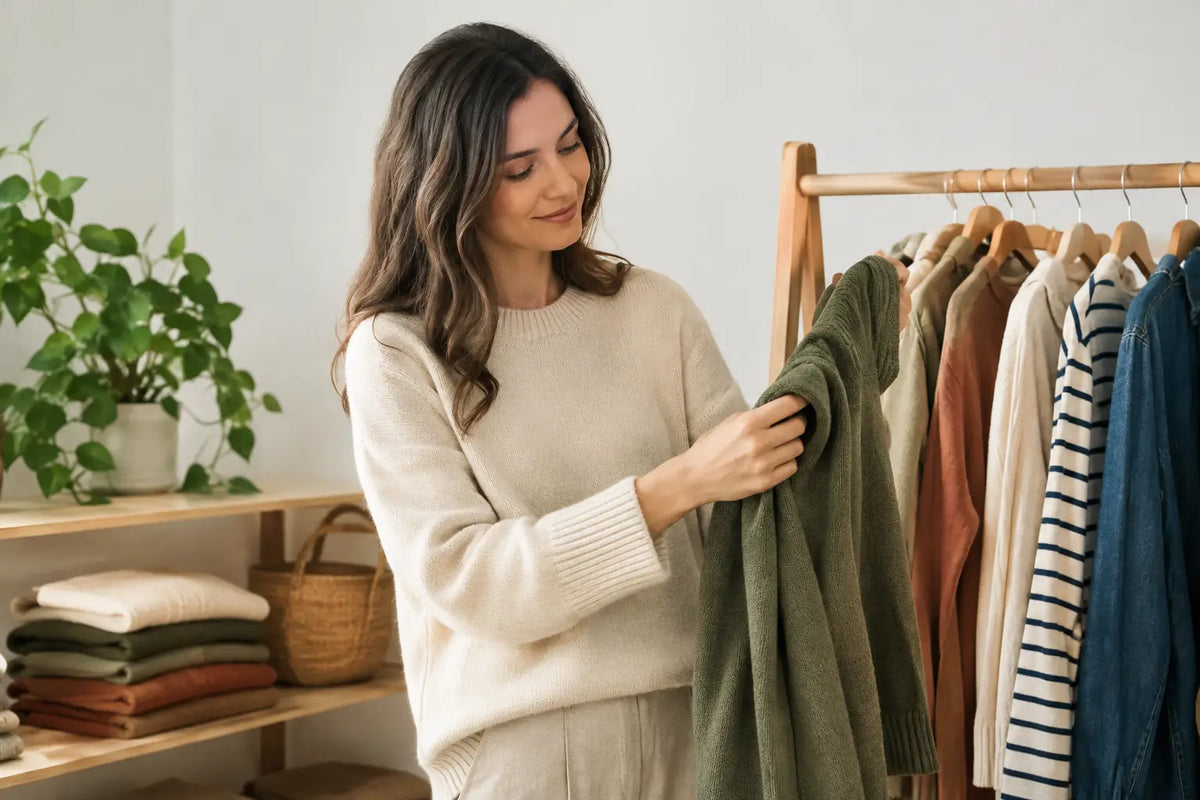
A T-shirt that twists after three washes is not a bargain. A sweater that loses its shape after one season is not a wardrobe staple. The slow fashion trends worth paying attention to start with a simple shift: buy fewer pieces that work harder, fit better, and stay in rotation.
That does not mean building a closet from expensive, precious clothes you are afraid to wear. It means choosing everyday items with enough quality and purpose to earn their place. The best basics should handle the commute, the weekend, the laundry basket, and another year of regular wear without becoming a compromise.
Which Slow Fashion Trends Are Worth Following?
Slow fashion is often reduced to a broad claim about sustainability. That is part of the picture, but it misses the practical reason many people are changing how they buy clothes. Disposable clothing creates friction. It fits inconsistently, wears out quickly, and leaves you replacing the same categories again and again.
The more useful version of slow fashion focuses on long-term utility. You buy with intention, care for what you own, and avoid treating every new color or cut as a required update. It is less about chasing a particular look and more about setting a higher standard for the clothes you wear most.
Better fabric, not just a better label
Fabric is where durability begins. A shirt can look sharp on a product page and still disappoint once it meets real life. Thin, unstable fabric may feel soft at first, but it can lose its structure quickly. Weak fibers and poor construction often show up later as pilling, stretched necklines, fading, or a body that no longer sits right.
The current move toward heavier, more substantial fabrics makes sense for basics. Weight alone is not proof of quality, but a well-made fabric with a balanced feel generally holds its shape better than something chosen only for a low price. For everyday tees, polos, and sweaters, comfort matters. So does recovery: the ability of a garment to return to form after repeated wear and washing.
Natural fibers can be a strong choice, especially when the fabric is well constructed. But material names are not a shortcut. Cotton varies. Blends vary. Even two shirts with the same fiber content can perform very differently depending on yarn quality, knit density, finishing, and construction. Read beyond the headline whenever details are available.
Fit is becoming a durability decision
Fit has a direct effect on how long clothes stay useful. A tee that is too short rides up. One that is too loose can look shapeless after a few wears. A tight shoulder or restrictive sleeve is more likely to stay in the drawer, no matter how good the fabric is.
That is why fit-specific essentials are gaining ground over one-size-fits-most basics. Classic, slim, and long fits answer different needs. They are not trend labels. They are practical choices that help a shirt sit correctly on your body and remain something you reach for.
A better fit also reduces unnecessary buying. When you have found a crew neck or V-neck that gets the length, chest, and sleeve right, you do not need to keep testing replacements. Buying the same dependable style again is not boring. It is efficient.
Fewer styles, stronger rotation
One of the clearest slow fashion trends is the return to a tighter wardrobe. Not a rigid uniform, and not a closet stripped of personality. Just fewer pieces that combine easily and get worn often.
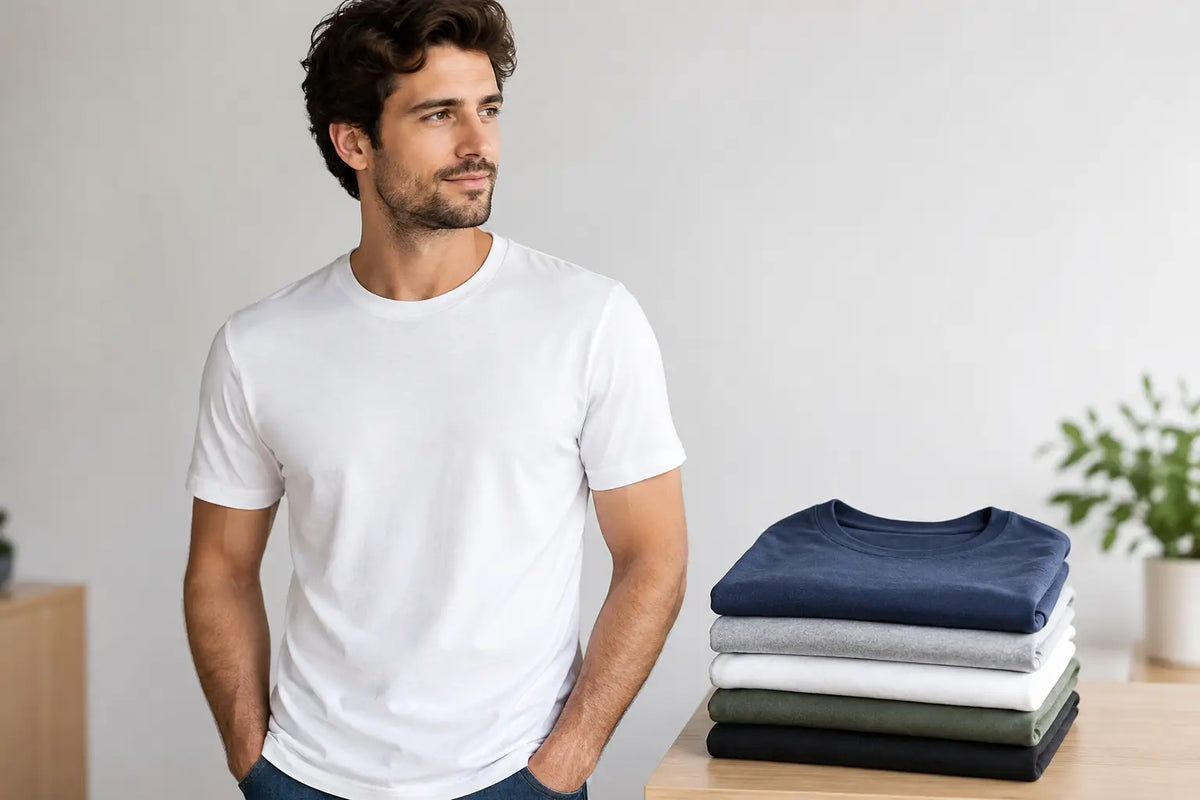
For many men, that starts with dependable foundations: well-fitting T-shirts, a couple of polos, knitwear that layers cleanly, and outer layers chosen for actual weather rather than a single occasion. Neutral colors make this easier because they work together without much thought. Navy, black, gray, white, olive, and earth tones are useful because they keep earning wear.
The trade-off is obvious. A smaller wardrobe asks you to be more selective upfront. You may spend more per item than you would on a fast-fashion alternative. But price only tells part of the story. Cost per wear is often more honest. A shirt worn eighty times is usually a better purchase than a cheaper one worn five times before it stretches, stains, or simply stops feeling right.
The Shift From Seasonal Drops to Reliable Essentials
Fashion cycles are built to create urgency. New drops suggest that what you bought last month is already behind the curve. Slow fashion pushes back by making repeat wear the goal, not a failure of imagination.
This does not mean trends disappear completely. Color, proportion, and styling will always change. The practical move is to let trends sit at the edges of your wardrobe rather than at its center. Try a current color in a cap or a layer. Keep your core pieces stable.
A good everyday wardrobe should also make getting dressed easier. If every shirt works with your jeans, chinos, or shorts, you spend less time building outfits and more time wearing clothes you trust. That is a benefit rarely mentioned in sustainability claims, but it matters. Good essentials remove small decisions from the day.
Bundles fit naturally into this approach when they solve a real replenishment need. Three quality tees in the fit you already wear can be more useful than three different impulse buys. The point is not to buy more because a multipack exists. It is to stock the items that already prove their value in your weekly rotation.
Care Is Part of the Purchase
A durable garment still needs reasonable care. This is not complicated, but it does require changing a few habits. High heat is hard on many fabrics and elastic components. Overwashing can fade color and wear down fibers before the garment has had much use.
Wash basics when they need washing, not automatically after a short, low-impact wear. Turn printed or darker garments inside out. Use cool water when appropriate, avoid aggressive cycles for knitwear, and skip the dryer when air-drying will do the job. These choices protect shape, color, and surface texture.
Storage matters too. Fold sweaters instead of hanging them for long periods, since hangers can pull the shoulders out of shape. Give shoes and heavier garments time to air out between wears. Small routines extend the life of the pieces you already own.
There is a limit, of course. Care cannot fix poor construction. If a collar waves after a few washes or seams begin to fail early, the problem is not that you did not baby the shirt. It is that the product was not made for the job. Good clothing should be easy to live with, not a maintenance project.
How to Shop With More Intention
Before buying, ask a few direct questions. Can you picture wearing the item at least once a week? Does it work with what you already own? Is the fit clear, or are you hoping it will somehow work when it arrives? And will the fabric still make sense after repeated washing?
Product details should help answer those questions. Look for clear information on fit, material, and care. Check measurements rather than relying only on a size label, particularly if length has been a problem in the past. If you already own a shirt that fits well, measure it and compare. It takes a minute and prevents a lot of returns.
Avoid buying something solely because it is discounted, limited, or being promoted heavily. A lower price does not create usefulness. The right piece is the one that fills a real gap, feels good the first time you wear it, and remains dependable after the newness is gone.
LEBASQ approaches essentials from that practical angle: straightforward fits, quality-driven fabrics, and clothing made for repeat wear. No fairy tales. Just the pieces that carry more of your everyday life.
The best slow fashion choice is rarely the most dramatic one. It is the T-shirt you wear every week because it still fits, still feels good, and still looks right. Start there, then let your wardrobe improve one useful piece at a time.

Laat een reactie achter
Deze site wordt beschermd door hCaptcha en het privacybeleid en de servicevoorwaarden van hCaptcha zijn van toepassing.