

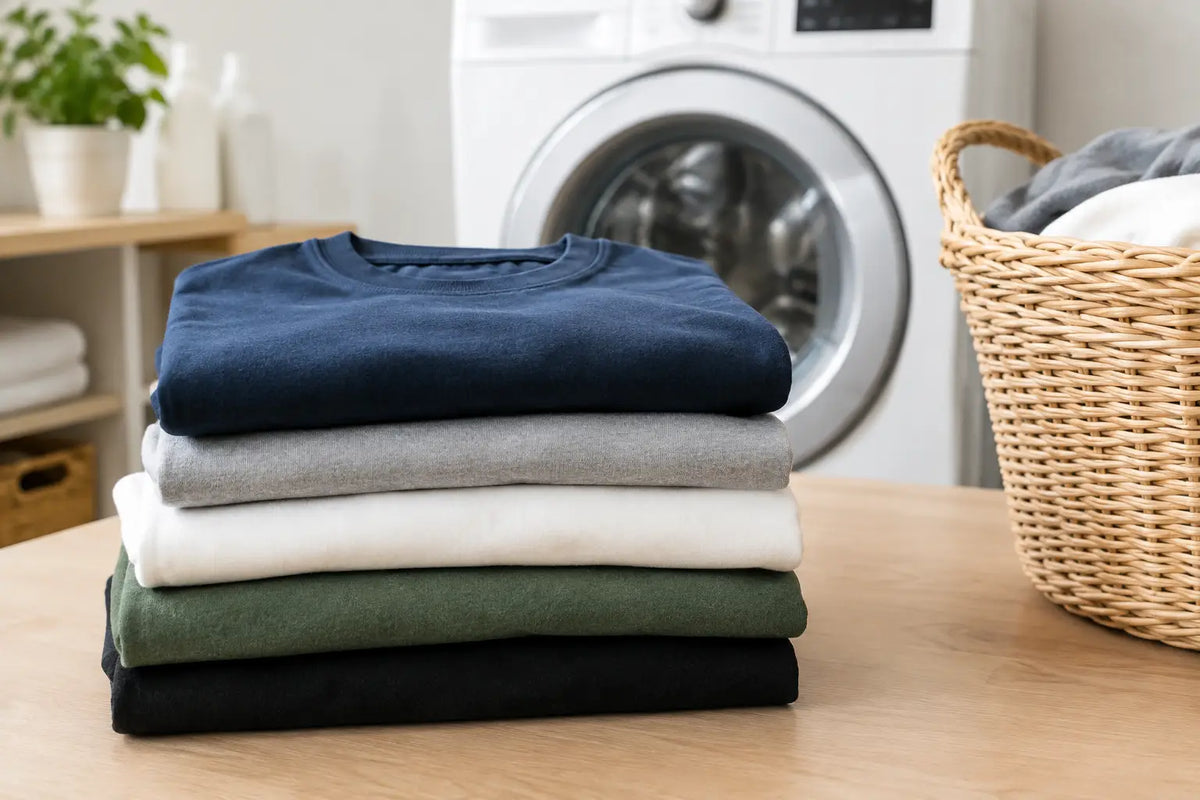
A heavyweight cotton tee earns its place through repeat wear. The fabric has more structure, more weight, and usually a better drape than a thin basic. It also deserves a little more care. If you are wondering how to wash heavyweight cotton tees, the short answer is simple: wash cool, use a gentle cycle, turn them inside out, and avoid high dryer heat.
That routine protects the things that make a substantial T-shirt worth owning - its color, shape, collar, and feel. You do not need special products or an elaborate laundry setup. You just need to avoid the few habits that cause most cotton tees to shrink, fade, twist, or wear out early.
Start With the Care Label
The care label is the final word for any individual tee. Heavyweight cotton can vary in construction, finish, dye process, and whether the fabric was pre-shrunk before it was cut and sewn. A 100% cotton shirt may still shrink a little, even when labeled pre-shrunk. That does not mean the garment is poorly made. Cotton is a natural fiber, and heat can tighten its fibers.
Check whether the label calls for machine washing, cold water, low tumble drying, or air drying. If the tee includes a print, embroidery, contrast panel, or garment-dyed finish, those details may call for extra care. When in doubt, follow the more conservative option.
How to Wash Heavyweight Cotton Tees
Wash heavyweight tees in cold water on a gentle or normal cycle. Cold water is the safer choice for cotton because it reduces the risk of noticeable shrinkage and helps darker colors hold their depth. Warm water can work for a heavily soiled white tee, but repeated warm or hot washes are harder on the fabric and color.
Turn each tee inside out before it goes into the machine. This is a small step with a real payoff. The outside of the shirt gets less direct friction from the drum, other garments, and the wash cycle. That helps reduce surface wear and keeps prints or dyed finishes looking cleaner for longer.
Use a mild liquid detergent and follow the dosage on the bottle. More detergent does not mean a cleaner T-shirt. Excess detergent can stay in dense cotton fabric, leaving it stiff or causing buildup over time. Heavyweight fabric absorbs more water than a lightweight tee, so a proper rinse matters.
Wash similar colors together. Keep white tees with whites, black and navy tees with dark loads, and brighter colors with comparable shades. New dark cotton shirts can release a small amount of dye in their first few washes. Separating the first wash is a sensible precaution, especially for black, deep green, burgundy, or garment-dyed tees.
Avoid overloading the washer. A packed drum creates more rubbing between garments and makes it harder for detergent to rinse out. Your shirts do not need their own cycle, but they need enough space to move.
What to Avoid in the Wash
Skip chlorine bleach unless the care label specifically allows it and the shirt is plain white cotton. Bleach can weaken cotton fibers and create uneven fading. For most everyday marks, a targeted stain treatment or oxygen-based bleach is the better choice.
Fabric softener is also usually unnecessary. It can leave a coating on cotton that reduces the natural, breathable feel of the fabric. If your water is hard and shirts feel rough after washing, use the correct amount of detergent first and make sure the machine is rinsing properly. The answer is not automatically more softener.
Do not wash heavyweight tees with rough items like jeans with exposed hardware, towels, or garments with zippers and hooks. Dense cotton is durable, but constant abrasion can dull the surface and stress the collar. A load of tees, sweatshirts, underwear, and other soft basics is a better match.
Drying Is Where Most Shrinkage Happens
The dryer is the biggest decision in cotton tee care. High heat is fast, but it is also the most common reason a well-fitting T-shirt comes out shorter, tighter, or slightly twisted. This matters even more with heavyweight cotton because you likely bought the tee for its precise fit and structured shape.
For the lowest shrinkage risk, air dry your tees. Lay them flat on a clean drying rack when possible, especially if you want to preserve the body length and shoulder shape. Hanging is fine for many heavyweight tees, but do not use a thin wire hanger that can leave marks around the shoulders while the fabric is wet and heavy.
If you prefer the dryer, use low heat and remove the shirts while they are still slightly damp. Smooth the collar, hem, and sleeves with your hands, then let the tee finish drying flat or on a broad hanger. This approach gives you the convenience of a dryer without exposing the shirt to a full high-heat cycle.
There is a trade-off. Air drying can leave cotton feeling a little firmer at first, while low tumble drying often creates a softer hand feel. If softness matters most, a short low-heat tumble followed by air drying is a practical middle ground.
Treat Stains Before They Set
Heavyweight cotton handles daily life well, but stains should not wait until the next full laundry day. Blot spills promptly instead of rubbing them deeper into the fabric. For food, oil, or sweat marks, apply a small amount of stain remover or mild detergent directly to the affected area and let it sit as directed before washing.
Use cool water for protein-based stains such as sweat, blood, or dairy. Hot water can set them. For an oil mark, work in a small amount of dish soap or a suitable laundry pre-treatment before washing. Test any stronger product on an inside hem first if the tee has a rich or unusual dye finish.
A clean tee does not need aggressive treatment. Repeated scrubbing, harsh chemicals, and hot water often do more damage than the stain itself.
Wash Less Often, When It Makes Sense
A heavyweight cotton tee does not always need washing after a short, low-sweat wear. If it is clean, odor-free, and has not picked up a stain, hang it up to air out before deciding. Washing less frequently reduces friction, water exposure, and color loss.
That said, do not stretch the rule too far. Tees worn during workouts, hot commutes, physical work, or a full day close to the skin should be washed after use. The goal is not to avoid laundry. It is to wash with purpose.
Between wears, use a wide hanger or fold the tee neatly once it is fully dry. Never store it damp. Cotton can develop mildew odor when moisture gets trapped in a laundry basket or drawer.
Keep the Collar Looking Clean
The collar often shows wear before the body of the shirt does. It can stretch from pulling the tee on too aggressively, get misshapen by high dryer heat, or collect product residue around the neckline. Pull the shirt on by opening the neck with both hands rather than yanking it over your head from one side.
After washing, gently reshape the collar while the shirt is damp. Run your fingers around the ribbing and lay it flat. This takes seconds and helps the neckline dry evenly. If a collar starts to look wavy, a light steam or low-heat iron can help, provided the care label permits it.
A quality heavyweight tee is built for rotation, not retirement after a season. Give it cool water, mild detergent, and less heat, and it will keep doing the quiet work a great basic is supposed to do.



Laat een reactie achter
Deze site wordt beschermd door hCaptcha en het privacybeleid en de servicevoorwaarden van hCaptcha zijn van toepassing.