

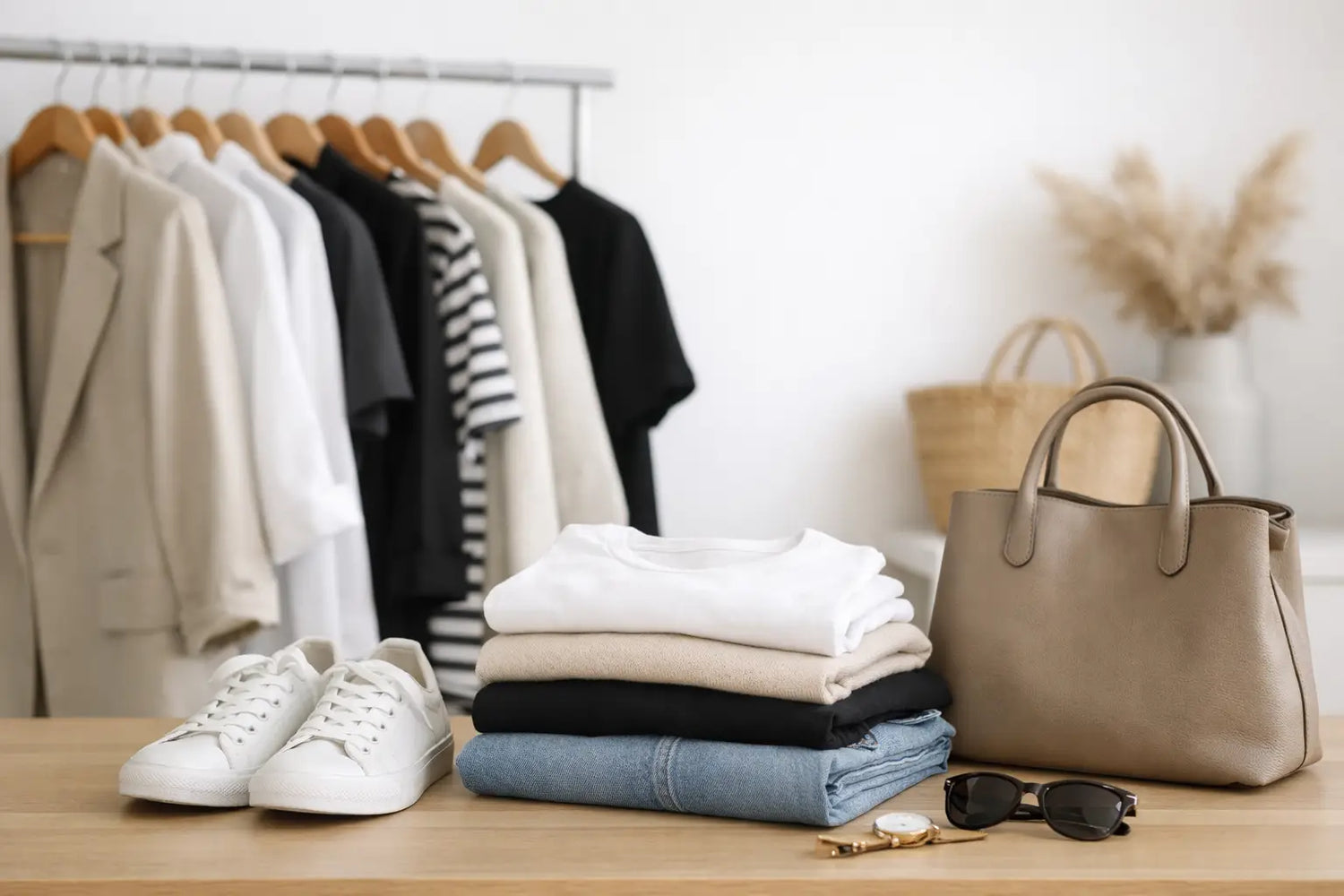
A closet full of clothes can still leave you with nothing you want to wear. That usually happens when every piece competes for attention instead of working together. A voorbeeld capsule garderobe met basics solves that problem with fewer, better items built for repeat wear.
This is not about owning the absolute minimum. It is about removing weak links: shirts that lose their shape, colors that do not pair well, and fits that make you hesitate before leaving the house. Start with dependable essentials, choose a limited color palette, and build from there.
What a capsule wardrobe with basics should do
A capsule wardrobe is a focused set of clothing that mixes easily and covers the situations you actually face. For most men, that means workdays, weekends, dinners, travel, and relaxed occasions. It does not need to cover a black-tie event or a ski trip unless those are part of your normal life.
Basics do most of the work. A well-cut T-shirt, a polo that holds its collar, and a sweater with a clean shape are not background items. They are the pieces you wear most often. If they fit well and last, getting dressed becomes faster and your wardrobe looks more consistent without looking uniform.
The trade-off is simple. A smaller wardrobe requires more discipline when buying. Every item needs a job. A graphic tee you wear twice a year may be fun, but it should not take the place of a great crew neck you reach for twice a week.
An example capsule wardrobe with basics
This example is built for a practical, casual-smart wardrobe in a four-season US climate. It includes enough variety for regular wear without turning your closet into a storage unit. Adjust the quantities based on laundry habits, your work dress code, and how often you travel.
Tops: the foundation
Start with nine to eleven everyday tops. Choose black, white, navy, gray, and a muted earth tone such as olive, stone, or dark brown. These colors work together without requiring much thought.
A reliable setup includes three crew neck T-shirts in white, black, and navy; two additional tees in gray and an earth tone; two long-fit or slim-fit tees if standard lengths tend to ride up; two polos in navy and a neutral shade; and one or two sweaters in gray, navy, or charcoal.
Fit matters more than the label on the hanger. A classic-fit tee gives room through the torso and works well as an everyday layer. A slim fit creates a cleaner line under an overshirt or sweater. A long fit can be the better call for taller men or anyone tired of T-shirts that shorten after washing. There is no universally best option. The right fit is the one that stays comfortable when you sit, reach, and move through a full day.
For core T-shirts, buying matching multipacks is practical rather than boring. You know the fit, the fabric feels consistent, and replacing worn favorites is straightforward. Brands such as LEBASQ focus on this part of the wardrobe for a reason: repeat-wear pieces need to be comfortable, durable, and easy to buy again.
Bottoms: keep the range tight
Four to five pairs of pants are enough for most casual wardrobes. Choose dark blue jeans, black or charcoal jeans, navy chinos, olive or khaki chinos, and one relaxed option such as dark denim or drawstring trousers in a refined fabric.
Avoid buying every bottom in the same cut. Slim-straight jeans might be your default, while chinos with a little more room can make the rotation feel less repetitive. The goal is consistency, not cloning the same outfit five times.
Denim should be dark enough to dress up with a polo or sweater. Chinos should be clean enough for a casual office but relaxed enough for weekends. Skip distressed finishes if you want maximum versatility. They set a specific tone and limit where the pants make sense.
Layers: make basic outfits look finished
Three layers are usually enough: an overshirt, a lightweight jacket, and a warmer outer layer. Think navy overshirt, olive field jacket, and a dark wool-blend coat or clean insulated jacket, depending on your climate.
Layers add structure to a T-shirt and pants without making the outfit feel overdone. A white crew neck, dark jeans, and a navy overshirt is simple, but it looks intentional because the proportions and colors are controlled.
Choose layers that can work over both tees and polos. If a jacket only works with one specific shirt, it is not doing enough in a capsule wardrobe.
Shoes and small essentials
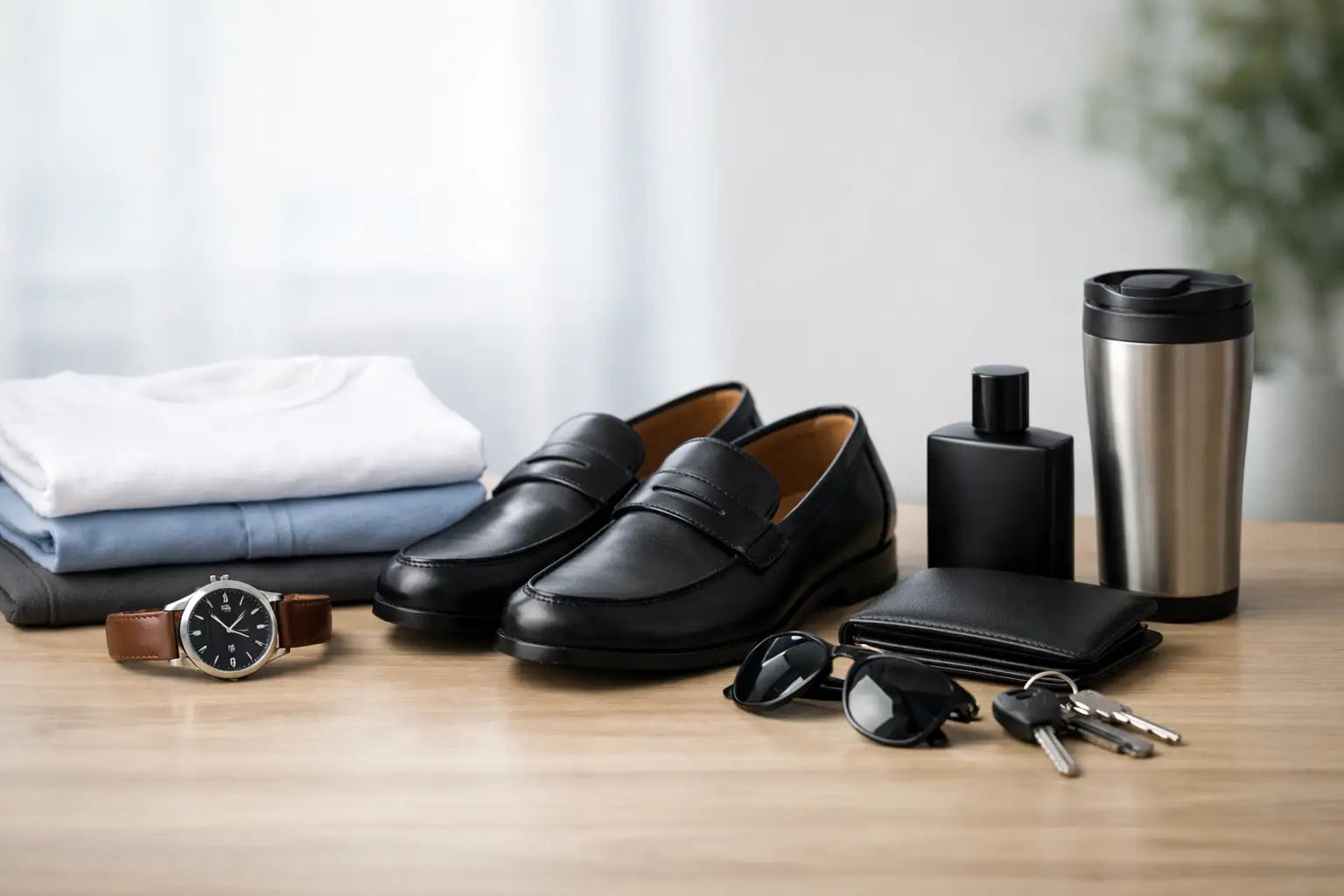
You do not need a wall of sneakers. Three pairs cover most needs: clean white leather sneakers, dark leather boots or chukkas, and a simple pair of loafers or minimal dark sneakers. Add a belt in a color that works with your boots, plus a neutral cap if it is part of your normal routine.
Keep logos restrained. Your clothes should be easy to combine, not dependent on matching a specific brand or graphic.
How the outfits come together
The value of this wardrobe becomes clear on a normal week. Wear a white crew neck with dark jeans and white sneakers for an easy default. Switch to a navy polo, chinos, and dark boots when you need to look sharper. Add a gray sweater over a white tee with navy chinos for a casual dinner or a cooler office.
For travel, use the same formula. Wear the bulkiest layer, pack two tees, one polo, one sweater, two pairs of pants, and two pairs of shoes at most. Everything should pair with everything else. That is the test.
A good capsule wardrobe does not mean every outfit looks identical. Color, fit, texture, and layering create enough variation. Navy chinos with a white tee feel different from black jeans with a charcoal sweater, even though both rely on the same quiet foundation.
Buy in the right order
Do not rebuild your wardrobe in one expensive afternoon. Start with the pieces that get the most wear and cause the most frustration. For many men, that is T-shirts first, then jeans or chinos, then a sweater and a versatile outer layer.
Before buying anything, take a quick inventory. Put aside items that fit well, feel good, and work with at least three other pieces. Be honest about the rest. A shirt that has been sitting unworn for a year is not a future essential.
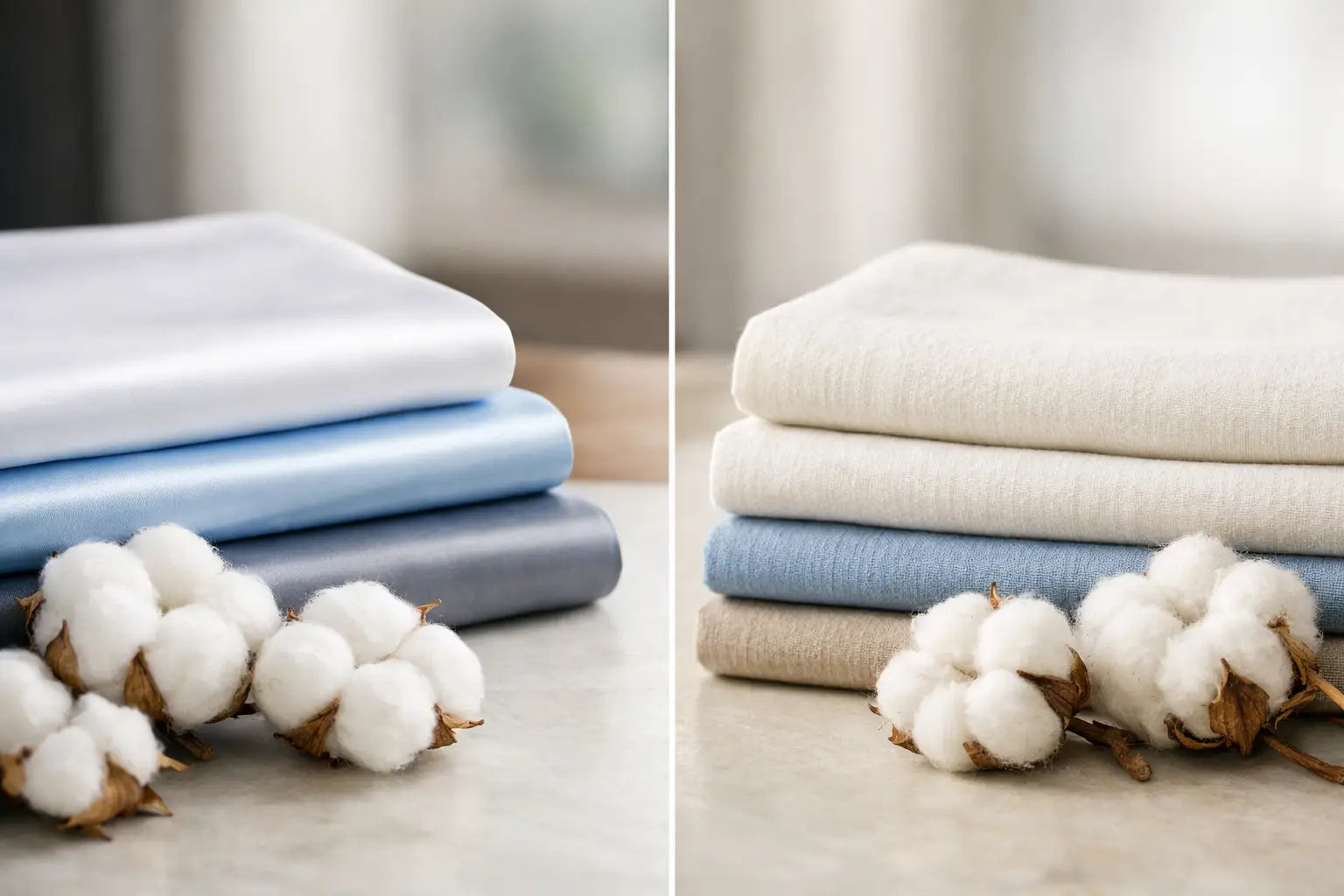
When you replace a basic, look for fabric that feels substantial without being stiff, seams that lie flat, and a collar that returns to shape after washing. Cheap basics can seem efficient at checkout, but they become costly when they stretch, fade, or need replacing after a short run.
Keep the wardrobe working
A capsule wardrobe only stays useful if you maintain it. Wash tees inside out, avoid excessive heat when drying, and fold knits rather than hanging them for long periods. Rotate shoes instead of wearing the same pair every day. Small habits extend the life of the items you depend on most.
Review the wardrobe twice a year. Replace worn staples, adjust for changes in fit or lifestyle, and resist adding pieces that do not connect with what you already own. You are not chasing a perfectly minimal closet. You are building a reliable one.
The best basic is the one you wear without thinking twice. Get that part right, and the rest of your wardrobe has room to work.

Laat een reactie achter
Deze site wordt beschermd door hCaptcha en het privacybeleid en de servicevoorwaarden van hCaptcha zijn van toepassing.