

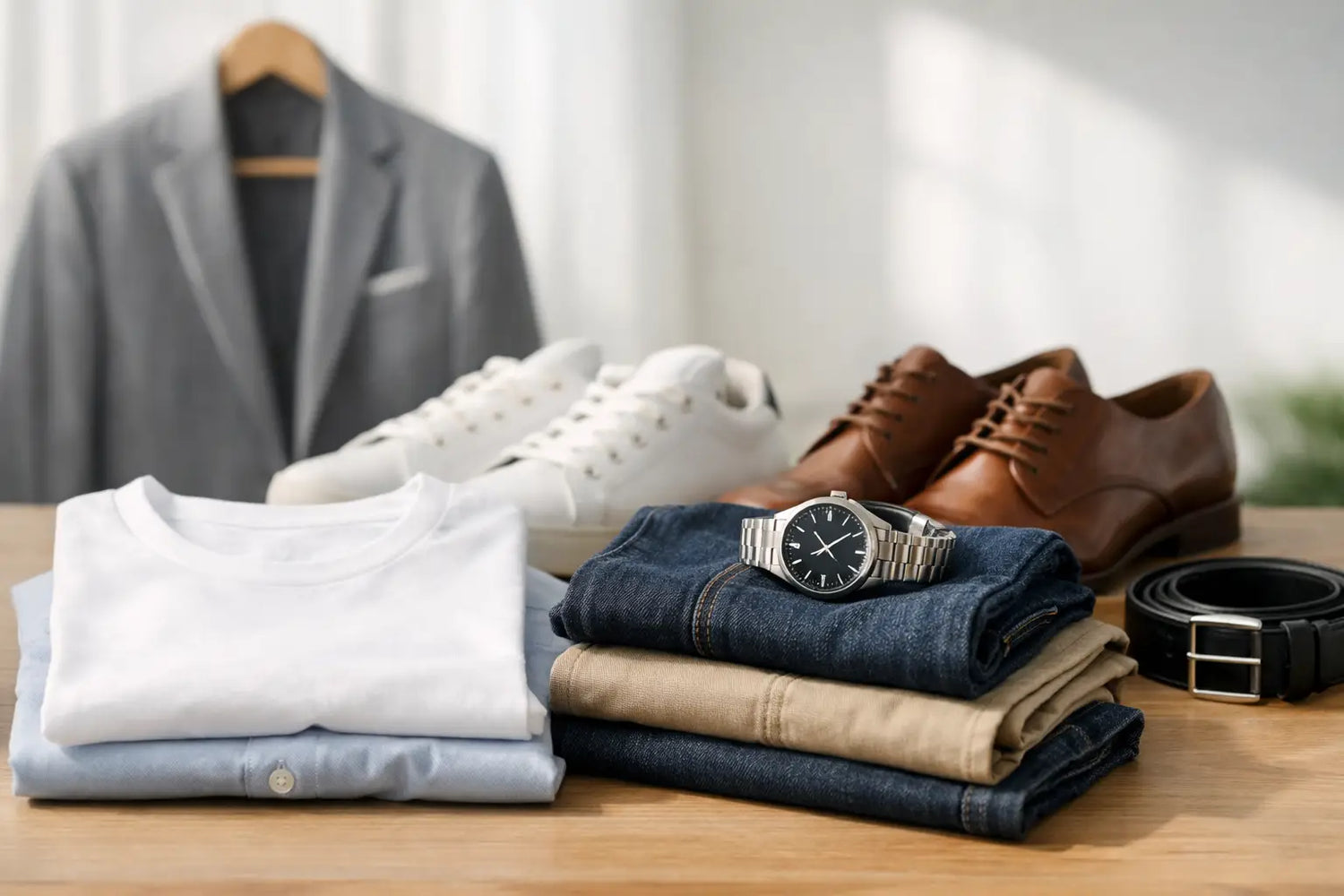
A T-shirt is only basic until it starts twisting at the hem, shrinking after two washes, or losing its shape by the end of the day. That is where a gids voor hoogwaardige herenkleding basics becomes useful. Not for trends, not for hype, but for the pieces you wear most - and notice most when they are not good enough.
Good basics do more work than statement pieces ever will. They sit closest to the skin, get washed most often, and carry most of your weekly wardrobe. If they fit badly or wear out quickly, the whole wardrobe feels cheaper than it is. If they are well made, getting dressed becomes simpler.
What a gids voor hoogwaardige herenkleding basics should actually cover
Most advice on men’s essentials stays vague. It says to buy quality, then stops there. That is not much help when two similar tees look almost identical on a screen but wear completely differently after a month.
A useful guide starts with function. High-quality basics should feel comfortable from the first wear, keep their shape over time, and work across different outfits without demanding attention. They should also solve real problems: sleeves that sit better, body lengths that do not ride up, collars that do not stretch, and fabrics that still look presentable after repeated washing.
Price matters, but cost alone tells you very little. An expensive basic can still be thin, unstable, or poorly cut. A better test is how the garment performs after regular wear. If it still fits properly, holds its colour, and does not look tired too early, that is where value starts.
Fabric first, always
If you want better basics, start with the fabric. Not because fabric is glamorous, but because it decides almost everything: comfort, durability, drape, breathability, and how the garment ages.
For T-shirts and polos, cotton remains the standard for good reason. It is breathable, familiar on the skin, and dependable for daily wear. But not all cotton is equal. The feel of the yarn, the density of the knit, and the finishing process all affect the result. A tee can feel soft in the packet and still lose structure quickly if the fabric lacks substance.
A heavier fabric often feels more premium, but heavier is not automatically better. It depends on how and when you wear it. If you want a T-shirt that layers cleanly under knitwear or overshirts, medium-weight cotton is often the sweet spot. If you run warm or want a lighter summer option, too much weight can become a drawback. The point is balance, not bulk.
Softness is another area where people get misled. Ultra-soft fabric can feel impressive at first touch, but sometimes that finish fades fast. A better sign of quality is fabric that feels smooth, stable, and comfortable without feeling flimsy. High wear basics need resilience more than showroom softness.
Fit matters more than branding
You can forgive a lot in fashion. With basics, you cannot. There is nowhere for bad fit to hide.
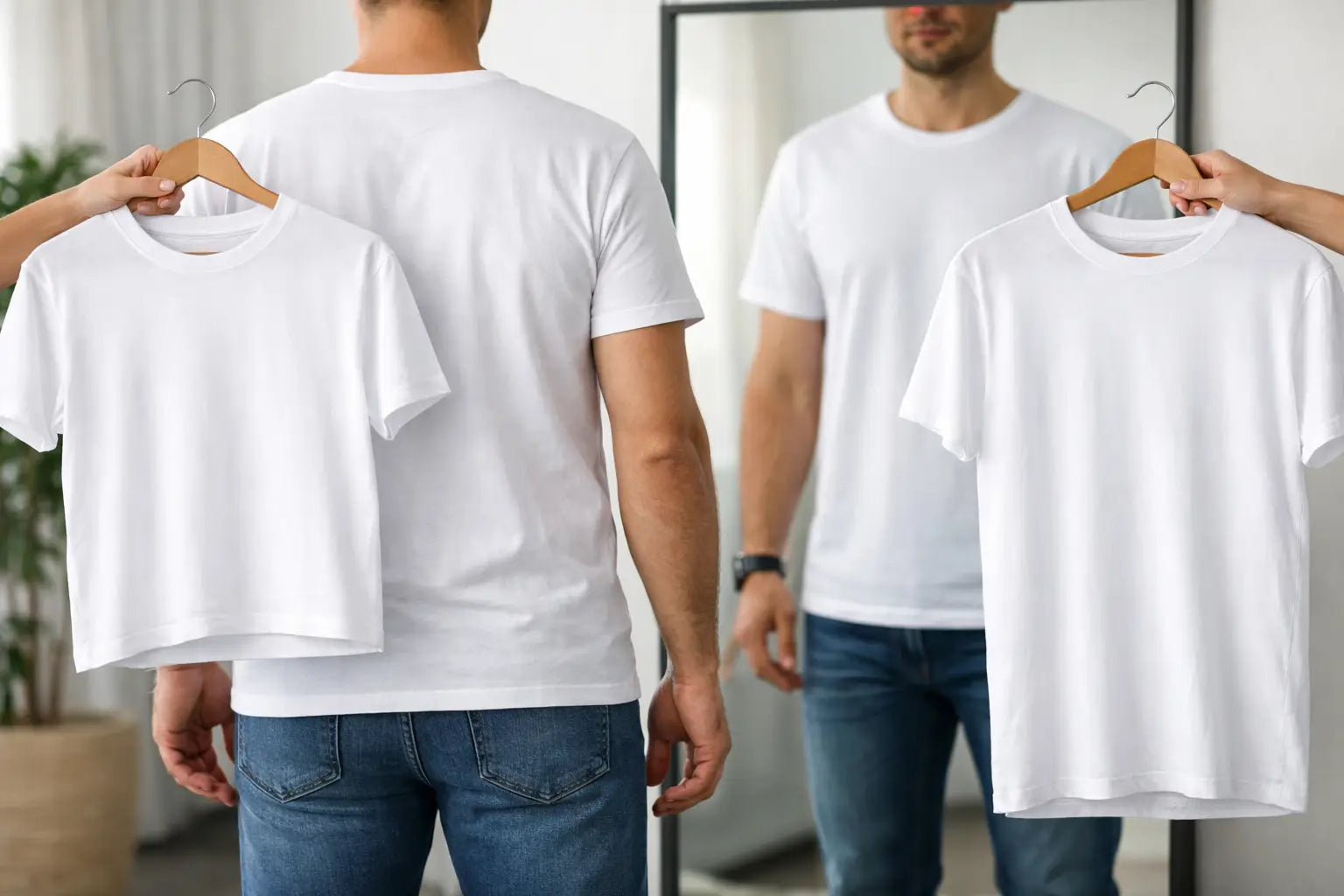
The best basics look quiet because the proportions are right. Shoulder seams should sit close to the natural shoulder. Sleeves should frame the arm without pinching. The body should skim rather than cling, unless you actively want a tighter fit. Length is especially important. Too short and the tee rides up. Too long and it looks careless, even with good fabric.
This is why fit options matter. One man’s perfect standard tee is another man’s boxy compromise. Slim fit works well if you prefer a cleaner line through the chest and waist. Long fit suits taller builds and also helps anyone tired of T-shirts losing coverage when sitting or moving. A classic fit is often the easiest all-round choice, especially if you want room without excess fabric.
A good brand does not pretend one cut works for everyone. It gives you options and explains them clearly. That is far more useful than oversized claims about style.
The details that separate decent from durable
Basics are won or lost in the small things. You will not always notice them on day one, but you will after ten wears and ten washes.
Start with the collar. On a crew neck, it should sit flat and recover its shape. If the rib feels weak or overly loose, the neckline will age badly. On a V-neck, the point should be clean and proportional - not so deep that it feels dated, and not so tight that it looks accidental.
Then look at stitching. Even seams, tidy finishing, and secure hems are not luxuries. They are signs the garment was made to last. Side seams should stay straight. Hems should not ripple too early. A polo placket should lie neatly rather than pulling open.
None of this needs to be flashy. In fact, the best basics rarely are. Quiet construction is usually a better sign than decorative extras.
T-shirts, polos and knitwear: where to be selective
Not every basic needs the same level of scrutiny, but some pieces earn more attention because they do more work.
T-shirts
T-shirts take the most punishment. They are layered, washed frequently, and worn across work-from-home days, weekends, travel, and everything in between. That makes them the foundation of any sensible wardrobe. Prioritise fit, fabric stability, and collar retention. If those three hold up, the tee is doing its job.
Crew necks are the safest choice for most wardrobes because they pair easily with overshirts, jackets, and knitwear. V-necks can work well too, especially if you prefer a cleaner line under a shirt or quarter zip, but the cut needs restraint. Too sharp and it dates quickly.
Polos
A good polo sits between T-shirt ease and shirt structure. It should feel polished without becoming stiff. The fabric needs enough body to hold shape, but enough softness to stay comfortable over a full day. Watch the collar. If it collapses too easily, the whole polo looks less considered.
Fit matters here in a different way. Too tight and it can feel try-hard. Too loose and it loses the cleaner silhouette that makes a polo useful.
Sweaters and lightweight knitwear
Knitwear does not get the same wash cycle as tees, but it still needs to hold shape and layer well. Look for clean cuffs, a neat neckline, and a weight that works across seasons. If it is too heavy, it becomes restrictive indoors. Too light, and it can lose form quickly.
The best knit basics are simple enough to wear often without feeling repetitive. That is the whole point.
Why buying fewer, better basics usually works out cheaper
Fast fashion trained people to think in unit price. One tee for less feels like value. Three months later, it is out of shape, and you buy again.
Better basics shift the calculation. You pay more upfront for stronger fabric, better fit, and more reliable construction, but the cost per wear often drops because the garment stays in rotation longer. That is especially true if you wear the same categories repeatedly - plain tees, polos, lightweight layers.
There is also a practical advantage. When you know a specific fit works, buying in multipacks makes sense. Not because you want more clutter, but because replenishing essentials should be easy. If a product has earned its place, buying it in a 3-pack is simply efficient.
That does depend on confidence in consistency. Multipacks only represent value when the fit and fabric are reliable from one piece to the next. Otherwise, you are just multiplying disappointment.
How to shop basics with less guesswork
A proper gids voor hoogwaardige herenkleding basics should make shopping simpler, not more complicated. The easiest approach is to assess each item through four questions.
First, does the fit solve a real need? That could mean a slimmer cut, extra body length, or a more balanced standard fit. Second, does the fabric feel built for repeated wear rather than first-touch impact? Third, do the finishing details suggest stability over time? And fourth, would you genuinely wear the item at least once a week in the right season?
If the answer to the last question is no, it is probably not a basic. It may still be a good garment, but it does not belong in the essentials category.
This is also where a more disciplined brand approach helps. A focused range built around fit, fabric, and long-term wear is often more useful than a huge assortment with endless slight variations. LEBASQ understands that well. Essentials should remove friction, not create more of it.
Care is part of quality
Even the best basics need decent care. Wash cooler when possible, avoid over-drying, and do not treat every garment like gym kit. Quality should make clothes more durable, not indestructible.
That said, good basics should not feel fragile. If a T-shirt only survives by being handled like a delicate knit, it is not much of a daily essential. Real quality lives in that balance between comfort and resilience.
The best wardrobe upgrades are often the least dramatic. A better tee length. A polo that keeps its shape. A sweater that layers properly and still looks right months later. Get those right, and the rest of your wardrobe has a stronger base to stand on.

Laat een reactie achter
Deze site wordt beschermd door hCaptcha en het privacybeleid en de servicevoorwaarden van hCaptcha zijn van toepassing.