


A shirt worn beneath an overshirt or button-down has one job: make the rest of your outfit feel better. It should not bunch at the waist, show through the fabric or leave you overheated before lunch. If you searched for comfortable shirts for under a shirt, that is probably what you want: an easy base layer that stays put and does not demand attention.
The right T-shirt is a small detail with a noticeable effect. It keeps the collar area cleaner, adds comfort when the temperature changes and gives an open shirt a more considered shape. But not every basic tee works. A heavy crew neck can look bulky, while a short, loose-cut shirt can ride up as soon as you move.
What makes a T-shirt comfortable under a shirt?
Comfort begins with fabric, but fit decides whether the T-shirt works as a layer. Under an overshirt, Oxford shirt or casual button-down, you need enough room to move without carrying excess fabric around the chest and waist.
A breathable cotton fabric is usually the most dependable choice. It feels natural against the skin, absorbs everyday moisture and works through most of the year. The fabric should have enough body to hold its shape after regular washing, but it should not be so thick that it turns a light shirt into a warm, restrictive outfit.
The neckline matters too. A crew neck gives a clean, classic line when you wear your shirt open. Choose a collar that lies flat and recovers after washing. A stretched neckline can make even a well-fitting shirt look worn out. A V-neck is the quieter option when the outer shirt is buttoned higher and you would rather keep the base layer out of sight.
Fit is the difference between layered and bulky
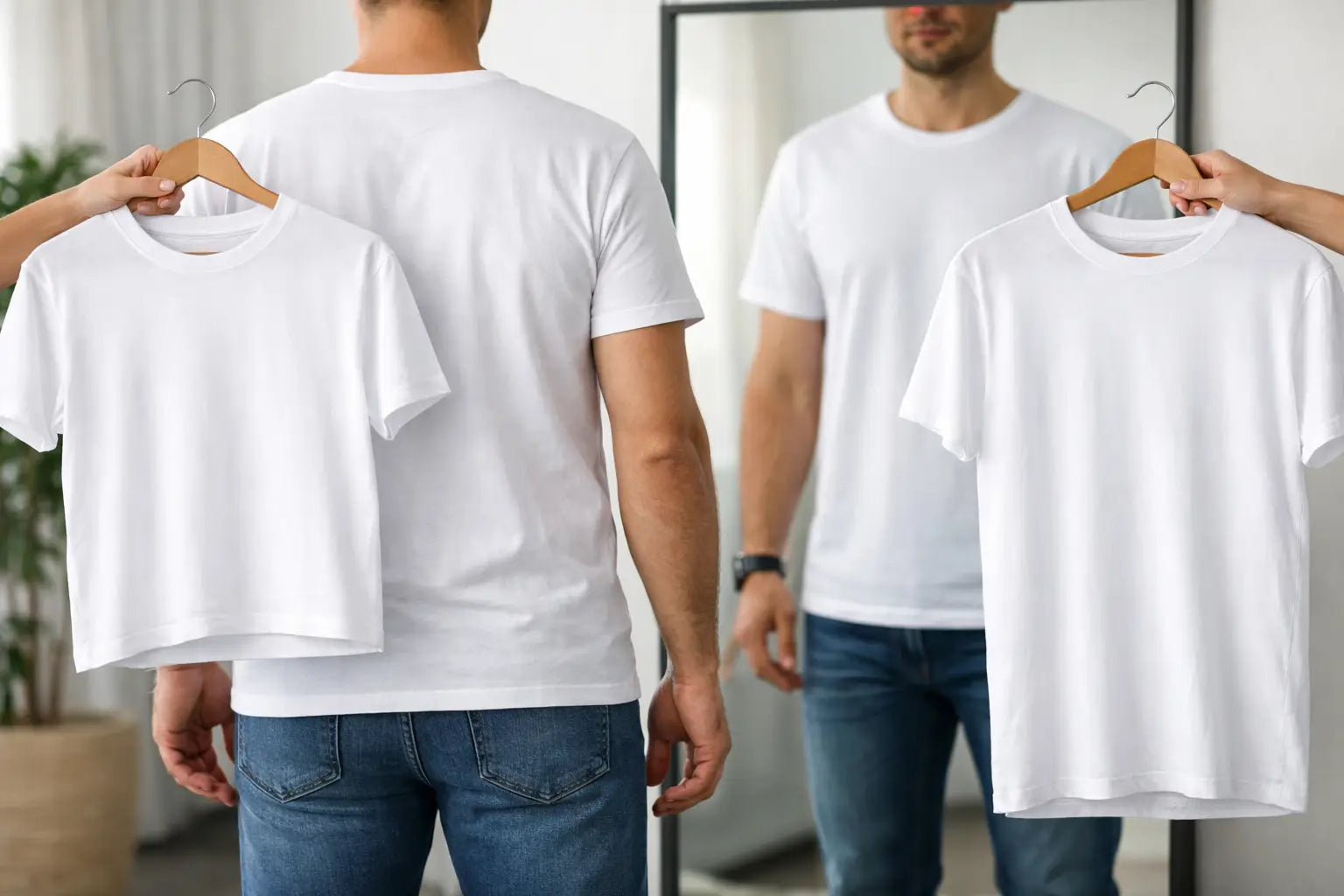
The most common mistake is sizing up for comfort. That often creates the opposite result. Too much fabric gathers beneath the arms, creases under the shirt and moves around during the day. A comfortable undershirt should follow your frame without feeling tight across the shoulders or chest.
A slim fit works well if you prefer a neat silhouette and usually wear fitted shirts. It reduces bulk and keeps the layers close to the body. The trade-off is simple: if you prefer more room through the midsection, a classic fit will feel easier and look more natural under a relaxed overshirt.
Length deserves the same attention. A standard T-shirt that ends above the waistband can gradually work its way upwards, especially when you sit, cycle or reach overhead. A long-fit T-shirt gives more coverage through the torso. It is particularly useful for taller men, but it also suits anyone who wants a base layer that stays in place under an untucked shirt.
There is no single best fit for everyone. The useful test is whether you can move normally without feeling the T-shirt pull at the shoulders or collect at the waist. If it disappears once you put your outer shirt on, you have the right fit.
Choose the right neckline for the way you wear your shirt
Your outer shirt determines more than the colour. It also tells you which neckline will look best.
A crew neck is the default for an open overshirt, denim shirt or casual flannel. The visible collar frames the outfit and creates a deliberate, relaxed look. White, black, navy and grey are the most useful colours because they work with nearly every shirt in your wardrobe.
For a smarter button-down worn partly or fully closed, a V-neck can be more practical. It remains hidden below the top buttons, which keeps the outfit clean. This is especially useful with lighter-coloured shirts, where a visible crew neck may distract from the overall look.
Avoid collars that are too high or too loose. A high collar can compete with the collar of your shirt. A loose collar loses its shape quickly and makes the layer beneath visible for the wrong reason. Good basics do not need to stand out. They need to perform.
Fabric weight should match the season and outer layer
A T-shirt under a shirt adds another layer, so fabric weight matters. In spring and summer, choose a lighter, breathable cotton tee. It gives you the comfort of a base layer without making a linen or cotton shirt feel heavy. A close but non-restrictive fit also allows air to move more freely.
In autumn and winter, a slightly more substantial T-shirt earns its place. It adds warmth under an overshirt, twill shirt or heavier flannel and gives the outfit more structure. The key is balance. A very thick tee beneath a fitted shirt will feel crowded, however soft the material is.
Synthetic-heavy fabrics may dry quickly, but they can feel less pleasant against the skin over a long day and can hold onto odour. For everyday layering, quality cotton remains hard to beat. It is comfortable, straightforward and easy to care for.
Colour: visible by design or invisible by choice
When the shirt is worn open, your T-shirt becomes part of the outfit. Keep it simple. A crisp white tee works with blue denim, olive overshirts and darker checks. Black creates a sharper contrast under pale or neutral shirts. Navy and charcoal are reliable alternatives when you want less contrast than black but more depth than white.
When the shirt is buttoned up, choose the base layer based on discretion. White is not always invisible under a white shirt. A shade closer to your skin tone can be less noticeable, particularly under thin cotton. This matters more in formal settings than it does with a casual overshirt, but it is worth knowing.
Graphic prints, large logos and bright colours are rarely the practical choice beneath a shirt. They can show through, clash with the outer layer and make getting dressed less flexible. A strong basics drawer is built around colours that work without thought.
Comfortable shirts for under a shirt: practical combinations
A white crew neck beneath an unbuttoned navy overshirt is the everyday standard for good reason. It is clean, balanced and works with jeans, chinos or tailored trousers. Choose a slim fit for a sharper outline, or a classic fit if the overshirt is cut more generously.
A black crew neck under a light blue denim shirt gives more contrast and suits an evening look without becoming overdone. Keep the T-shirt smooth and well fitted. Thick, baggy fabric can make the layers look accidental rather than intentional.
For work or occasions that call for a buttoned shirt, a V-neck in white or a skin-adjacent shade keeps the base layer discreet. The shirt should sit flat across the chest and remain long enough to stay tucked in if that is how you wear it.
With a checked flannel or heavier shirt jacket, a substantial cotton crew neck adds comfort without making the outfit stiff. This is where a durable tee matters most. Repeated friction from layers and regular washing will expose weak fabric and poor stitching quickly.
Build a rotation, not a one-off solution
One good T-shirt is useful. A small rotation is better. Wearing the same base layer repeatedly shortens the time it has to recover between washes, and it leaves you without an easy option when one is in the laundry.
A three-pack in your most-worn colour is a practical place to start. It gives you consistency in fit and makes weekday dressing simpler. Add a second colour once you know what works with the shirts you already own. Most men need fewer styles than they think, but they need those styles to fit properly.
Wash your T-shirts according to the care label, avoid unnecessary high heat and reshape the collar while the fabric is still damp. These small habits help the fabric, seams and neckline last longer. A T-shirt that keeps its shape remains comfortable under a shirt. One that twists, shrinks or stretches does not.
The best layer is the one you stop noticing after you leave home. Choose a breathable fabric, a fit that stays close without restricting movement and a length that does not ride up. Then let the rest of the outfit do its job.


Laat een reactie achter
Deze site wordt beschermd door hCaptcha en het privacybeleid en de servicevoorwaarden van hCaptcha zijn van toepassing.