




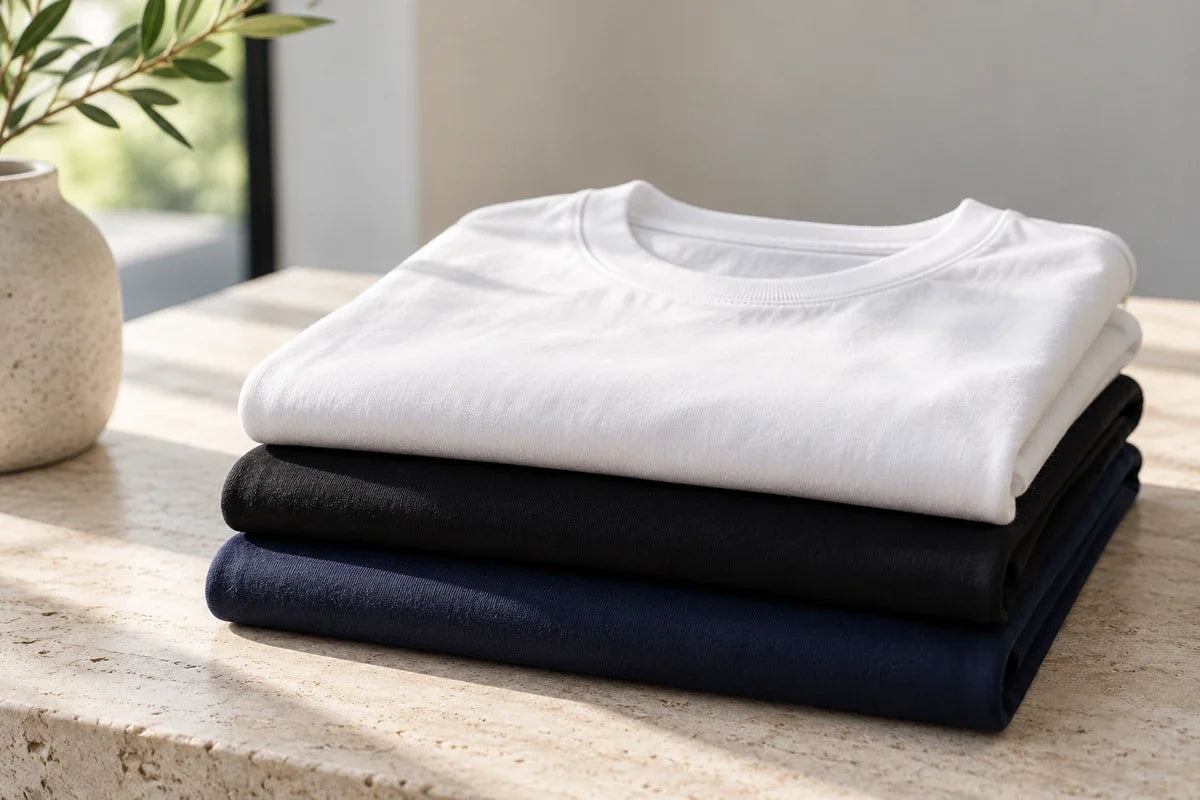
Does your T-shirt smell musty as soon as it comes out of the washing machine? Why does a sweaty smell sometimes linger, even after several washes? And does it matter whether you wear a cotton T-shirt or a Tencel™ shirt?
A freshly washed T-shirt should feel clean and smell fresh. Yet some odours can be stubborn. You may notice them as soon as you take your laundry out of the drum, or they may only return when you wear the shirt again. The washing temperature is not always to blame. Fabric composition, lingering residues and your laundry routine all play a part.
Fortunately, a musty smell does not mean your favourite basic T-shirt needs replacing. Understanding where the odour comes from helps you tackle the cause and preserve the quality of your clothing for longer.
Where does that musty smell in your T-shirt come from?
A musty smell can have several causes. It may develop while you wear a shirt, but unpleasant odours can also remain after washing. To find the right solution, it helps to distinguish between a sweaty smell and the musty smell of damp laundry.
Is the smell strongest under the arms? Sweat and body oil residues are likely to be involved. If the whole T-shirt smells stale, prolonged dampness or a dirty washing machine may be contributing.
How you store worn clothing matters too. A damp T-shirt left at the bottom of a laundry basket for several days has little chance to dry. Odours can develop before it even reaches the washing machine.

What role do sweat and bacteria play in clothing?
Although sweat is often considered the main cause of body odour, fresh sweat is largely odourless. The characteristic smell mainly develops when bacteria on the skin break down certain components of sweat and body oils.
As you wear your T-shirt, these substances come into contact with the fabric. The fibres absorb some moisture, while body oils and odour compounds can cling to the material.
This is particularly noticeable around the underarms, where warmth, moisture and friction come together. If odour-causing residues remain after washing, they can become noticeable again the next time you wear the shirt.
That explains why a T-shirt may smell clean after washing, yet develop a sweaty smell again after a short walk or a busy working day. Fresh warmth and moisture make the remaining odour compounds noticeable once more.
The aim is therefore to remove the underlying residues, rather than simply mask the smell.
Can a dirty washing machine cause unpleasant smells?
If several items smell musty after washing, the clothing itself may not be the source. The washing machine can also be responsible.
Small amounts of dirt, detergent and moisture remain in the machine after a wash. These residues can build up, especially in the rubber door seal, detergent drawer and hard-to-reach parts.
In a damp environment, bacteria and other microorganisms can develop in these deposits. The machine may then produce an unpleasant smell that transfers to your clean laundry.
Check the rubber seals and detergent drawer regularly. Remove visible dirt and run a maintenance programme when needed, following the manufacturer's instructions.
Leave the door and detergent drawer open after washing so the inside can dry properly. This prevents moisture from lingering unnecessarily.
How does the fabric affect unpleasant odours?
Some fabrics retain odours more easily than others. This depends on the structure of the fibres and how a material interacts with moisture and body oils.
Polyester, for example, absorbs relatively little moisture within the fibre itself, but readily attracts certain oily substances. Body oils and odour compounds can therefore cling to its surface. This is one reason some synthetic sports shirts develop a persistent sweaty smell despite regular washing.
Cotton and lyocell have different properties. Their fibres can absorb moisture, contributing to comfort. That does not mean they cannot retain odours. Natural and cellulose-based fabrics still need proper care.
Fabric quality matters alongside fibre type. During the production of combed cotton, shorter fibres and impurities are removed. This creates a more even yarn that generally feels smoother and is less prone to pilling.
This does not automatically affect odour development, but it contributes to the quality of T-shirts that are worn and washed regularly. Choosing the right material goes beyond how soft a shirt feels the first time you put it on. Read more about LEBASQ’s materials and quality.
What is the difference between cotton and a Tencel™ shirt?

Cotton and Tencel™ lyocell are both popular materials for comfortable men's T-shirts. They differ in structure, appearance and how they feel and should be cared for.
A cotton T-shirt usually feels a little firmer and has a natural, familiar appearance. Cotton absorbs moisture well, but can take longer to dry completely. Yarn quality and fabric density help determine how the shirt feels and retains its shape.
A Tencel™ shirt is made from lyocell, a fibre derived from wood cellulose. This material is known for its smooth surface, fluid drape and good moisture absorption. It often feels cooler against the skin, making it appealing if you prefer a light, flowing fabric.
Both materials have their advantages. A Tencel™ shirt is not immune to musty smells, and cotton does not necessarily retain odours more quickly. Odour development also depends on wear, the amount of residue and care.
These material differences are reflected in LEBASQ's collection. Steve's Crew and James' V-Neck are made from GOTS-certified organic cotton, while Marlon's T-shirts are made from 100% lyocell.
Your personal preference, desired fit and how you like a shirt to feel are the main considerations when choosing between cotton and lyocell.
Why does the smell remain after washing?
A washing machine cleans clothing through a combination of water, detergent, temperature and movement. If one of these elements does not contribute enough, some residues can remain in the fabric.
This can happen when a heavily worn T-shirt is washed on a programme intended for lightly worn clothing. A short cycle may not allow enough time to loosen accumulated body oils and other residues.
An overloaded drum can also reduce cleaning performance. Garments need space to move through the water and detergent. When shirts are tightly packed together, the wash solution cannot reach every area equally well.
With persistent odours, avoid automatically choosing the shortest programme. A full cycle suitable for the fabric can be more effective without requiring a higher temperature.
How do detergent and washing temperature affect the result?
Washing temperature affects how easily certain types of dirt are removed. Warm water can help loosen oily residues, for example, but higher temperatures are not suitable for every garment.
LEBASQ recommends washing T-shirts inside out at a maximum of 30°C. This helps protect the fibres, colours and fit from unnecessary wear. You can find the full instructions in the care and washing guide.
The detergent you choose is just as important. Some contain enzymes that help break down certain protein and fat residues, even at lower temperatures. Check that the product is suitable for the fabric and its recommended care treatment.
A mild detergent is generally a good choice for organic cotton and lyocell. Avoid harsh bleaching agents and follow the garment's specific care instructions.
If a T-shirt smells strongly of sweat, gently pretreating the affected areas with a suitable liquid detergent may help. This gives the detergent time to work on localised residues before the full wash begins.
What happens if you use too much detergent?
Adding extra detergent may seem sensible when dealing with stubborn smells, but it can have the opposite effect.
If you use more than necessary, the machine may struggle to rinse it all away. Residues can leave a T-shirt feeling stiffer and contribute to build-up in the fabric.
The right dose depends on more than the amount of laundry. Water hardness and how dirty the clothing is also matter.
Follow the recommended quantity on the packaging and avoid routinely adding more than needed.
Fabric softener is usually unnecessary for a quality basic T-shirt too. It can leave a coating on the fibres that affects the moisture absorption of some materials. LEBASQ T-shirts do not need fabric softener to retain their softness.
How do you remove a musty smell from a T-shirt?
Removing a musty smell starts with identifying its cause. A smell concentrated around the underarms needs a different approach from clothing that has become musty after staying damp for too long.
Harsh cleaning products are usually unnecessary. Targeted treatment can reduce many common odours while treating the fabric gently.

Here is how to tackle a musty T-shirt:
- Check the care label. Find the correct temperature and programme. Lyocell and shirts containing elastane need particular care.
- Pretreat localised smells. If permitted, apply a small amount of suitable liquid detergent where the smell is strongest. Follow the contact time on the packaging and test an inconspicuous area if unsure.
- Wash the shirt inside out. This brings the inner surface, which touches your skin, into better contact with the wash water. Choose a full programme suited to the fabric.
- Leave enough space in the drum. Avoid filling the machine completely so water and detergent can circulate and the rinse can work properly.
- Check the result before storing the shirt. If it still smells unpleasant after drying, repeat the treatment if needed and check that the machine itself is clean.
Avoid harsh products or household mixtures when their effects on the fabric are unclear. Incorrect treatment can discolour, damage or distort quality materials.
With the right approach, a stubborn smell can often be reduced without unnecessarily shortening your T-shirt's lifespan.
Why does the right drying method matter?
A clean T-shirt can still become musty if it does not have enough opportunity to dry.
During colder, damper months such as October, laundry can stay wet for longer indoors. Moisture evaporates more slowly in poorly ventilated rooms. Prolonged dampness creates favourable conditions for microorganisms that can cause unpleasant smells.
Take your T-shirt out of the washing machine as soon as possible and give it the right conditions to dry.

LEBASQ recommends laying T-shirts flat to air dry. This prevents the weight of the wet fabric from pulling on the shoulders and reduces the risk of stretching.
Lay the shirt out on a suitable drying rack in a well-ventilated room. Avoid tumble drying and prolonged exposure to strong sunlight.
Once the shirt is completely dry, fold it neatly before putting it away. This helps preserve the original fit, particularly with soft, fluid fabrics.
Discover LEBASQ's high-quality T-shirts
A good T-shirt is worn again and again. That is why both the choice of material and the way you care for it deserve attention.
LEBASQ develops high-quality men's T-shirts with a timeless appearance and attention to fit, comfort and finish. From substantial organic cotton to fluid lyocell, the collection offers different styles for those who prefer a V-neck, crew neck or extra length.
Choose a material that suits you and care for it well to get more from your everyday basics.
Looking for T-shirts that feel good and stay looking their best? Explore LEBASQ's collection and find your new favourite basic.



Leave a comment
This site is protected by hCaptcha and the hCaptcha Privacy Policy and Terms of Service apply.