

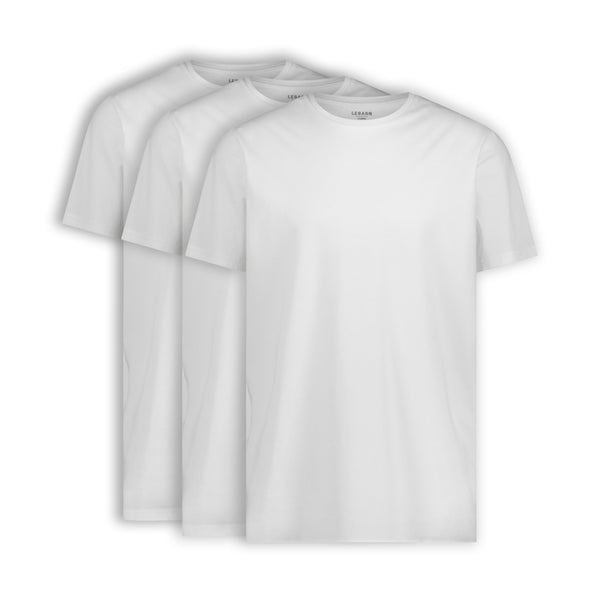



The short answer: white T-shirts stay white when you wash them with whites only, at 30°C, inside out, with the right dose of a mild detergent, and dry them flat out of the tumble dryer. Most greying and yellowing comes from colour transfer, detergent and deodorant build-up, and heat, not from age. Chlorine bleach usually makes things worse; an occasional soak in oxygen-based bleach is the safer reset.
I'm Lucas Hillen, founder of LEBASQ, a Dutch men's basics brand from Amsterdam (not to be confused with the painter Henri Lebasque). I've worked in basics for more than 15 years, and white tees are the product people ask me about most. Here's what works.
Why white T-shirts turn grey or yellow
A white shirt rarely "wears out" its colour. It usually picks something up. There are four common causes:
- Colour transfer. One navy sock or a pair of new jeans in the drum is enough to give a load of whites a grey or bluish tint.
- Residue build-up. Too much detergent, fabric softener, body oils and sweat that don't fully rinse out slowly settle into the fibres. White fabric shows that film as a dull, greyish cast.
- Deodorant and sweat. The yellow patches under the arms are mostly a mix of sweat and antiperspirant residue that hardens over time, especially when exposed to heat.
- Heat. High wash temperatures and tumble drying can set stains and help residue bond to the fabric. Heat is also hard on elastane and on the rib around the neck.
The washing routine that keeps whites white
Nothing here is complicated. The trick is doing it every time, not once a month.
- Wash whites only with whites. Not "light colours", not grey marl. Only white. If you don't have a full load, wait or wash a smaller load; mixing is how the grey creeps in.
- Turn shirts inside out. This protects the outer surface and puts the side that touches your skin, where sweat and deodorant sit, in direct contact with the wash water.
- 30°C maximum. That's what we recommend for every LEBASQ T-shirt. A good modern detergent cleans everyday wear well at that temperature, and you avoid shrinkage and setting stains.
- Dose properly. More detergent does not mean cleaner. Excess soap that isn't rinsed out is one of the main reasons whites turn dull. Follow the dose on the pack for your water hardness and load size.
- Skip the fabric softener. It leaves a coating on the fibres. Good cotton doesn't need it to stay soft.
- Don't overload the drum. Shirts need room to move through the water. A packed drum washes and rinses worse.
- Dry flat, out of the dryer. Lay the shirt flat on a rack in a well-ventilated room, and take it out of the machine as soon as the cycle ends. A damp shirt left in the drum can start to smell musty.
The full set of rules, per fabric, is in our care and washing guide.
How to deal with yellow underarm stains
Prevention is easier than cure. Let your deodorant dry fully before you put on a white shirt, and don't let worn shirts sit in the laundry basket for a week. The longer sweat and deodorant stay in the fabric, the harder they are to remove.
For stains that have already formed, our care guide suggests pre-soaking the area for about 30 minutes in cold water with a tablespoon of white vinegar, then washing as normal. Rubbing gently with a damp cloth also helps with fresh deodorant marks. Always test a treatment on an inconspicuous spot first.
Bleach or no bleach?
Chlorine bleach seems like the obvious fix, but on T-shirts it often backfires. It weakens fibres, can damage elastane, and can actually cause yellowing on whites. We advise against it for all our shirts.
If a white shirt has already gone dull or yellow, a soak in water with an oxygen-based bleach is the gentler option. Use it occasionally, follow the instructions on the pack, and check the care label first. For lyocell and blends with elastane, be extra careful and stick to mild detergent.
A note on optical brighteners: many detergents contain them to make whites look brighter. They don't remove dirt; they reflect light. For organic cotton we recommend a mild detergent without optical brighteners.
Does the T-shirt itself make a difference?
Yes, partly. Care does most of the work, but fabric plays a role in how well a white shirt holds up:
- Weight. A denser fabric is less see-through and keeps its clean look longer. Our Steve's Crew in white is 190 g/m² in 100% GOTS-certified organic cotton; the Miles's Crew in white is 180 g/m² with 5% elastane for stretch.
- Fit. A shirt that rides up and gets tucked and untucked all day wears faster at the hem. Our Long Fit is 3–6 cm longer in the body than Regular Fit (78 cm in size M, measured flat), with the same width and sleeves.
- Rotation. This is the one people underestimate. If you own one white tee, you wear and wash it twice as often as when you own two. That's why most of our basics come as 3-packs, and why a white V-neck like James' V-Neck is worth having alongside your crew necks if you wear tees under shirts.
When is a white T-shirt beyond saving?
If a shirt is still grey after an oxygen-bleach soak and two careful washes, or the underarms stay stiff and yellow, it's time to retire it from the front line. It can still serve as a gym or sleep shirt. When you replace it, buying several identical whites at once makes the rotation easier. You can see all our options in the white collection.
FAQ
What temperature should I wash white T-shirts at?
We recommend a maximum of 30°C, inside out. Higher temperatures increase the risk of shrinkage and can set stains rather than remove them.
Can I use bleach on white T-shirts?
Avoid chlorine bleach: it weakens fibres and can cause yellowing. For dull or yellowed whites, an occasional soak in oxygen-based bleach is the gentler option, after checking the care label.
Why do my white T-shirts go grey?
Usually because of colour transfer from other laundry, or a build-up of detergent, softener and body oils. Wash whites separately, use the right dose and skip fabric softener.
How do I prevent yellow armpit stains?
Let deodorant dry before dressing, wash worn shirts soon, and avoid the tumble dryer. For existing stains, pre-soak in cold water with a little white vinegar before washing.

Leave a comment
This site is protected by hCaptcha and the hCaptcha Privacy Policy and Terms of Service apply.