


A T-shirt that twists after three washes, loses its colour or rides up at the waist is not a basic. It's a bad buy. Anyone looking for sustainable men's basics is therefore not looking for marketing talk or a green label as such, but for clothing that simply works - in fabric, fit and lifespan.
What makes sustainable men's basics truly sustainable
Sustainability doesn't start with a slogan. It starts with how often you actually wear a garment. A basic that fits well, feels good and stays looking good doesn't disappear to the back shelf after one season. That is exactly the difference between disposable clothing and a strong basic wardrobe.
For men, it usually comes down to the same core question: will this shirt, this polo or this sweater still look good six months from now? If the answer is no, it was never a sustainable choice, even if the story on the label sounds different.
The most sustainable basics are therefore often also the most functional. They have to work every day, combine easily and stand up to a lot of washing. Less impulse, more use. That sounds sober. It is.
Look beyond the material alone
Many men start with the fabric. Understandable. Cotton, organic cotton, blended yarns or heavier jersey say something about comfort and quality. But material alone never tells the whole story.
A good T-shirt is more than a choice of fibre. The thickness of the fabric plays a part, as does how tightly or loosely the yarn is knitted. A thin shirt can be pleasantly airy, but can also turn see-through, go baggy or wear out faster. A heavier quality often feels sturdier and keeps its shape better, although in midsummer that can be less airy. So it depends on how and when you wear it.
Finishing counts too. Think of seams that don't pull, a collar that lies flat and a hem that doesn't go wavy. These aren't small details. They are exactly the points where cheap basics often fall short.
Fit is not a detail but the reason you keep wearing something
A basic can be technically as responsible as you like, but if the fit isn't right, it stays in the wardrobe. And clothing you don't wear is by definition not sustainable.
That's why fit matters just as much as fabric quality with sustainable men's basics. Some men want a Slim Fit that looks close without being tight. Others look for Long Fit precisely because standard lengths come up short, especially after a few washes. There are also plenty of men who simply want a calm, straight fit that works under anything.
The right fit prevents not only frustration, but also replacement. You don't have to keep searching for a shirt that is just a bit longer, a sleeve that hangs better or a neckline that doesn't stretch. A good basic solves a recurring problem. That is exactly why it lasts longer in your wardrobe.
Buying less only works if the quality is higher
The idea behind sustainable buying is simple: fewer pieces, more use. In practice, that only works if the quality really is higher. Otherwise you end up buying again anyway, just with better intentions.
A strong basic wardrobe is therefore not about as much choice as possible, but about a few fixed items you can count on. Crew necks for every day. Maybe a V-neck under a shirt. A polo that is smart enough for work but stays casual. A sweater that doesn't go faded at the elbows straight away. That kind of clothing beats trend pieces that are fun for one season in the long run.
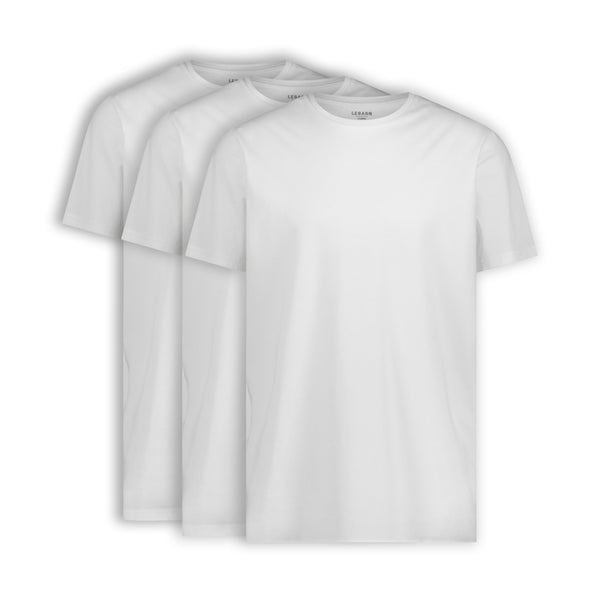
Multipacks fit well with that, provided the quality is consistent. Buying three of the same good shirts is often smarter than five different mediocre ones. You simplify your wardrobe, save time and avoid constantly falling back on inferior alternatives.
How do you recognise quality without wearing the product first?
Buying basics online calls for a critical eye. You can't feel the fabric straight away, so you have to learn to read what is there.
First, look at concrete product information. A brand that is serious about essentials names its fits clearly, for example Slim Fit, Long Fit or Regular Fit. That sounds obvious, but many brands stay vague. With basics in particular, clarity is a sign of quality.
Then look at how the fabric is described. Is anything said about weight, softness, shape retention or how the garment holds up after frequent wear? Then at least you get information you can use. Vague claims about luxury or premium without explanation say little.
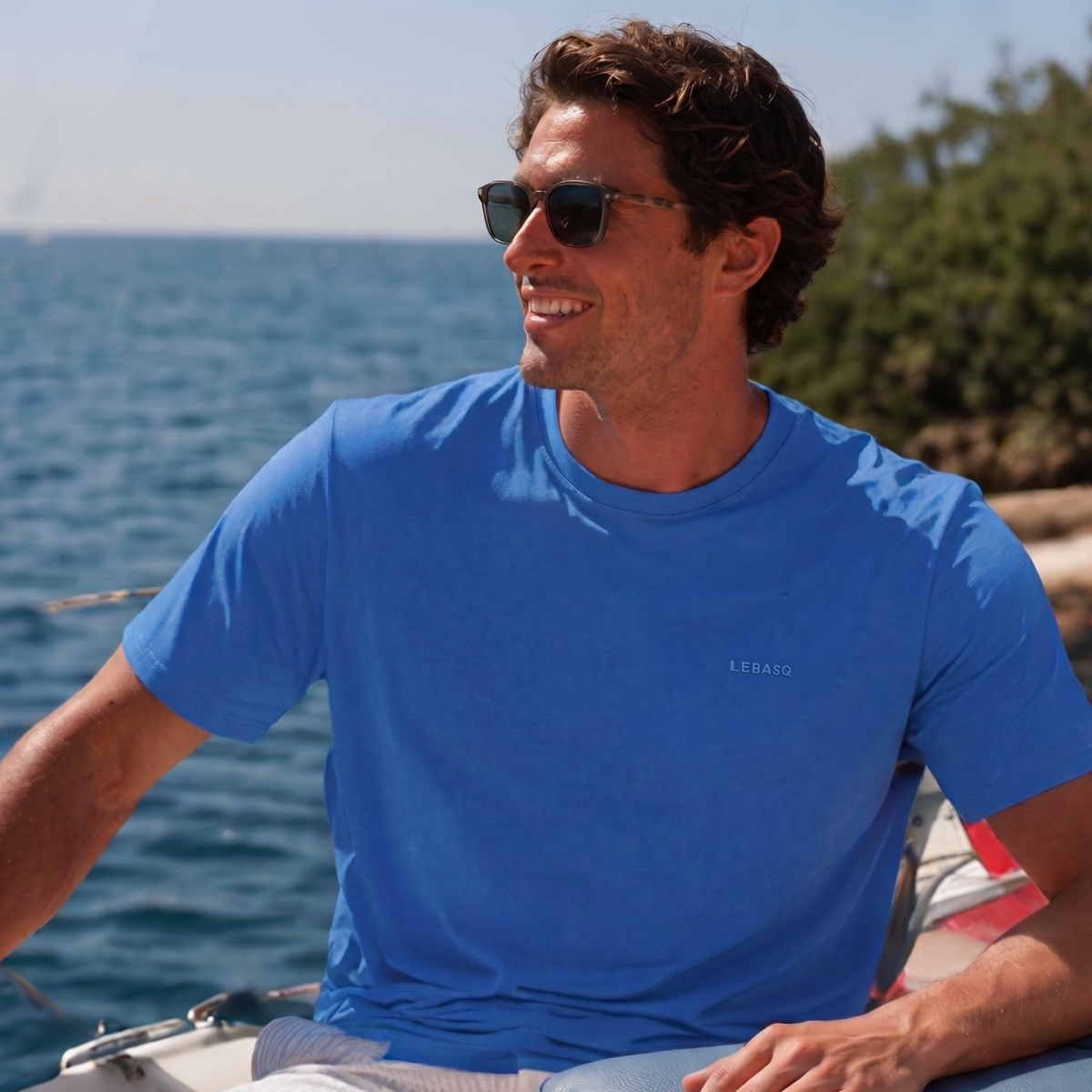
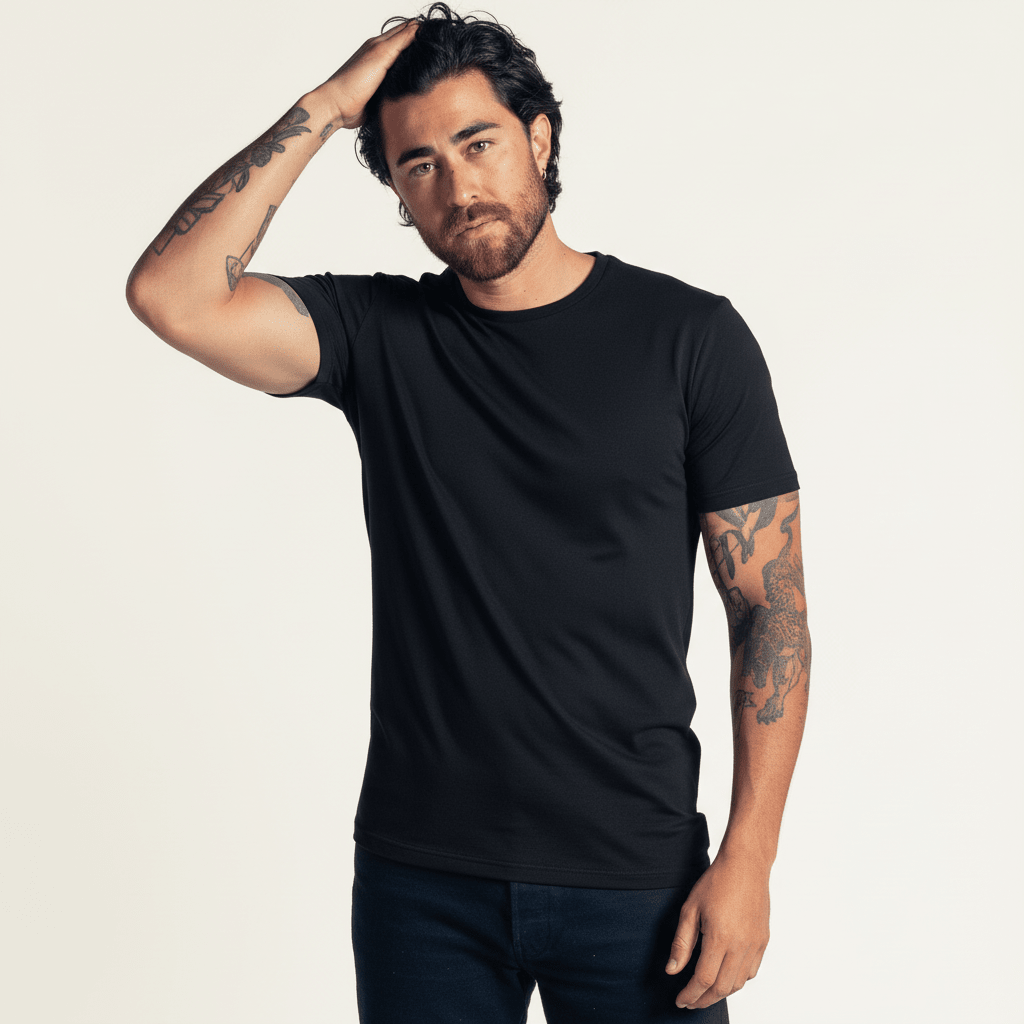
Photos help too, especially if you look closely at the neckline, shoulder line and length. A neat rib, a calm silhouette and a fabric that doesn't look paper-thin often give a lot away. Not foolproof, but useful.
Sustainable men's basics also call for proper care
Even the best basic lasts a shorter time if you treat it badly. Sustainability doesn't stop at purchase. Washing at too high a temperature, over-drying in the dryer and washing too often quickly shorten its life.
For basics, a simple rule usually applies: wash less harshly and less hot than you think you need to. A T-shirt worn for one day under an overshirt doesn't always need to go straight onto a heavy programme. Washing at a lower temperature and air-drying keeps colour, shape and elasticity intact for longer.
That doesn't mean everything has to be fragile. Good basics should stand up to normal use. But normal use is something different from unnecessarily heavy strain. Anyone who washes carefully often finds that a solid shirt stays good for much longer than expected.
Cheap per piece is often expensive per month
Many fast-fashion basics look attractive because the entry price is low. Until you notice the rib going slack, the fabric feeling thinner or the shirt losing its shape. Then you buy again. And again.
Try calculating it differently. Not the price per piece, but the price per wear. A slightly more expensive shirt you happily wear for two years is often better value than a cheap alternative you replace after a few months. That's not theory, it's simply how clothing costs work in practice.
For many men, that is also the reason to buy basics more consciously. Not out of idealism alone, but because it brings peace of mind. Less searching, less disappointment, less clutter in the wardrobe.
What to look for when choosing sustainable men's basics
If you want to buy with purpose, you don't need to be a textile expert. You mainly need a few good questions. Does the fit sit the way you really wear it? Is the fabric sturdy enough for frequent use? Will the model probably hold up after washing? And does the item go with at least half of what is already in your wardrobe?
That last one is often underestimated. A basic is only strong if it can handle many combinations. White, navy, black, grey and other calm shades aren't exciting, but they are effective. They raise how often you wear something. And a high wearing frequency is exactly what makes a purchase more sustainable.
There is also no universal best choice. Someone who sweats a lot or is often on the move has different requirements from someone who wears basics mainly at the office or at home. One wants a lighter fabric with plenty of freedom of movement, the other prefers a sturdy shirt that keeps its close shape. So sustainable is not only a property of the product, but also of the match with how you use it.
Certifications help, but don't tell you everything
A certification such as GOTS says something concrete about the origin and processing of organic cotton. At LEBASQ, that applies to Steve's Crew and James' V-Neck, made from 190 gsm combed, pre-shrunk, GOTS-certified organic cotton. But a certification doesn't tell you how a shirt looks after twenty washes. So also look at fabric weight, finishing and fit: a shirt you wear for years is the most sensible choice.
A calm wardrobe is often the smartest wardrobe
Sustainable men's basics are ultimately not about more clothing, but about better clothing. Less noise. More certainty. You don't want to wonder every morning whether a shirt is still presentable, whether a collar will keep its shape or whether a hem is riding up again.
Basics in particular should be boringly reliable. That is not a lack of character, but an advantage. If the foundation is right, the rest of your wardrobe works better. A brand like LEBASQ understands that starting point well: no big story, just essentials that are meant to last.
Anyone who wants to buy smarter therefore starts not with trends but with the pieces that come out of the wardrobe most often. That's where the most can be gained - for your style, your comfort and the lifespan of what you wear.
So don't choose the shirt that only seems good enough today, but the shirt you will still put on without hesitation a year from now.