


You often buy a men's crew neck T-shirt without thinking too long about it. Until your wardrobe is full of shirts that are just slightly off. Too wide at the neck, too short after two washes, too thin in fabric or stiff on the skin. Only then do you notice how much difference a good basic T-shirt makes.
The tricky part is that almost every brand says its T-shirts are good. Premium, soft, perfect fit: the words seem the same everywhere. But with a crew neck, it isn't about big promises. It's about details you feel and see every day. How the neckline stays in place. How the fabric drapes. How the shirt holds up after frequent wear and washing.
Why a men's crew neck T-shirt is so often the best choice
The round neckline is the most versatile neckline you can choose. Simply put: it almost always works. Under an overshirt, with chinos, with jeans or just on its own. It looks clean, without drawing attention to the chest or neck, and so it keeps your outfit calm.
That calm character is exactly its strength. A crew neck doesn't need to stand out to be good. In fact, the best shirt is often the one you don't think about because it simply does what it should. Give comfort, hang well and look polished from morning to late in the day.
For many men a crew neck is also more practical than a V-neck. The neckline stays neater under a sweater or cardigan and usually looks slightly sturdier. That makes it suitable for everyday use, especially if you are looking for basics that aren't trend-sensitive.
Fabric matters more than you think
With a T-shirt, almost everything starts with the fabric. Not only the feel on the skin, but also the lifespan, the fit and how the shirt holds up after washing. A good-quality men's crew neck T-shirt feels sturdy without being heavy and soft without going limp.
Cotton remains the logical base for many men. That is fair, but not all cotton is the same. A smooth, tightly knitted fabric looks more refined and often keeps its shape better. A looser or thinner quality can feel airy, but shows wear sooner. That needn't be a problem if you mainly want a summer shirt. For daily, long-term use, a bit more body is usually the better choice.
The finish of the fabric matters too. A shirt can be soft on day one but lose its shape after a few washes. Then you are really buying short-term comfort. If you would rather replace less often, pay attention to consistency: does the fabric stay compact, does the colour stay even, and does the shirt twist after washing?
Fit: not tighter, but better
A good T-shirt doesn't have to fit tightly to be flattering. That is a mistake many men make. They look for a slim silhouette and end up with a shirt that pinches at the shoulders or chest. The result looks forced rather than polished.
A better fit follows the body without clinging to it. The shoulder seams should fall on or just at the end of your shoulders. The sleeves can be close-fitting but shouldn't cut in. Around the chest and waist you want to see a line, not tension.
This is also where the most important trade-off sits. Some men want a close fit for under an overshirt or blazer. Others want a little more room for everyday comfort. Neither is inherently better. It depends on your build and how you wear the shirt. But almost always: a shirt tailored to the body looks stronger than a standard, shapeless basic.
Length is not a detail
A lot of frustration with basics comes down to length. A shirt that rides up after a few movements feels restless all day. Too short often looks cheap. Too long can look sloppy, especially if the hem sticks out below a sweater or jacket.
The right length ends roughly halfway down the fly, sometimes a little lower depending on your height and torso. If you often wear overshirts or open jackets, a T-shirt can be slightly longer as long as it looks deliberate. If you often wear it untucked over jeans or chinos, balance matters more than extra length.
For taller men or men with a longer torso, this is often the difference between a shirt you leave hanging and one you keep reaching for. Fit options such as slim fit or Long Fit solve a problem that standard sizes often leave unaddressed.
A good neckline keeps its shape
On a crew neck, the neckline is not an afterthought. It is the most visible detail of the whole shirt. A nice round neckline sits neatly without being tight and without gaping. Too wide quickly looks lifeless. Too high or too tight feels less natural.
More important still: the neckline has to keep its shape. That doesn't happen by itself. The rib trim, the rib structure and the way it is attached to the shirt make a big difference. A cheap trim stretches out sooner and starts to wave. Then even an otherwise good shirt quickly looks worn.
Precisely because the crew neck is so simple, mistakes like this stand out immediately. Simplicity forgives little. That is also why quality in essentials is not abstract. You see it straight away.
Choosing colours: fewer, but better
Anyone buying a men's crew neck T-shirt often tends to take lots of colours. Understandable, but a tight base is usually smarter. White, black, Navy and grey cover most of your week. That lets you build a wardrobe where everything works together faster.
White looks fresh, but demands more of the fabric and finishing. A thin white shirt shows more quickly that quality was skimped on. Black is forgiving and strong, but has to stay deep in colour. Navy is often a touch softer than black and easy to combine. Grey sits nicely in between.
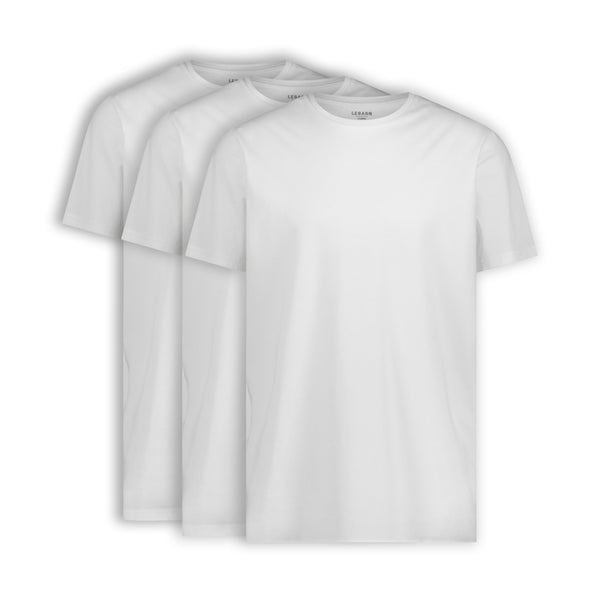
If you really wear your basics often, repetition works better than variety. Then a multipack is not only better value but above all more practical. You don't have to keep searching for that one shirt that fit well. You simply top up with the same model that has already proven itself.
What to look for when buying online
Choosing a T-shirt online remains partly a matter of experience, but you can prevent a lot of disappointment by looking in a targeted way. First look at how a brand talks about its product. Is it mostly about mood and lifestyle, or about fabric, fit and durability? For essentials, that focus says a lot.
Then check the product information. Not only the size, but also the fit description. Is it slim fit, regular fit or Long Fit? Is anything said about shrinkage, fabric weight or how the shirt drapes on the body? The more concrete that information, the more serious the product usually is too.
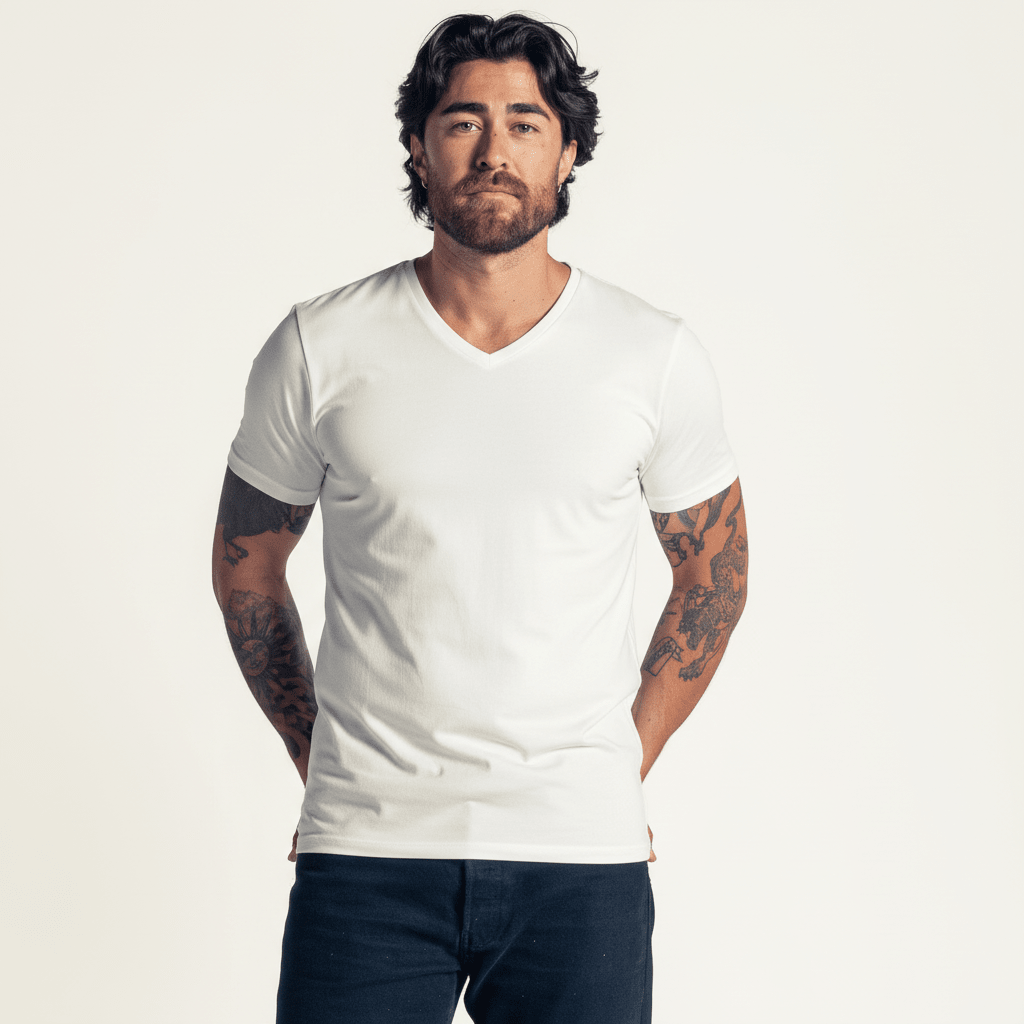
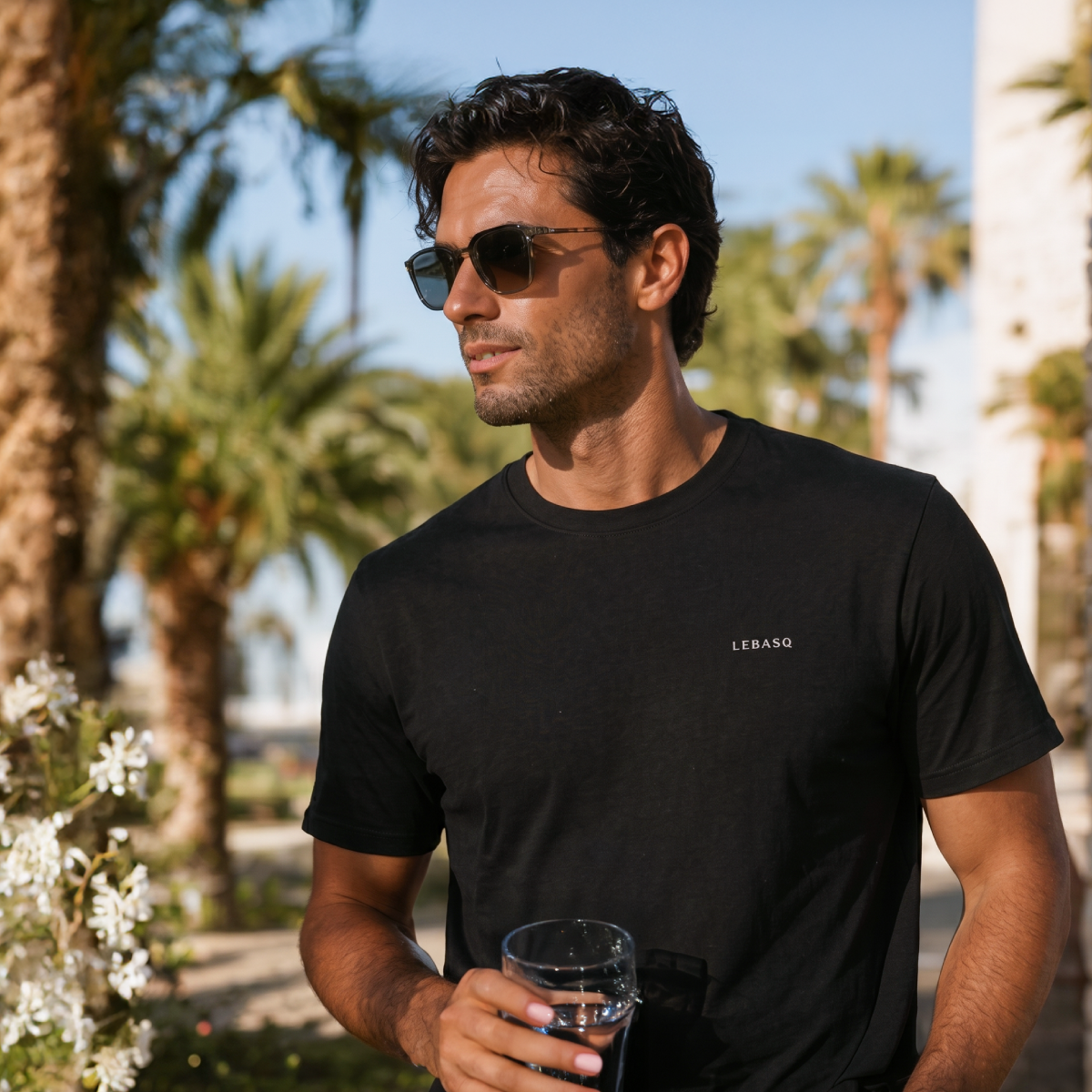
Images help, but only if they are honest. A shirt can look perfect on a model and in real life still be too thin or too short. That is why clear product language is often more valuable than beautiful campaign images. At a brand like LEBASQ that is exactly where the emphasis lies: no big story, but attention to fit, material and everyday use.
Durability isn't in a slogan
A men's crew neck T-shirt only becomes truly more sustainable when you wear it for a long time. That sounds simple, but that is where it often goes wrong. Many cheap basics look attractive on price, but quickly become shapeless or faded. Then you buy again and end up spending more in the end: in money, time and materials.
Durability therefore starts with a product made to be worn often. Sturdy fabric, a consistent fit and neat finishing matter more than big words. Good care helps too. Wash at a lower temperature, preferably don't tumble dry too hot and give dark colours a little extra attention. That noticeably extends the lifespan.
That doesn't mean every more expensive shirt is automatically better. Sometimes you are mainly paying for brand experience. So the core stays the same: look at what you get, not just at what is promised.
The best choice is often the simplest
The right crew neck is usually not the most eye-catching shirt in your wardrobe. It is the shirt you wear three times a week without irritation. One that sits well under an overshirt, is strong enough to wear on its own and after months is still right in neckline, length and shape.
That is why it pays to be more critical about basics than about trend pieces. A trend you wear occasionally. A good T-shirt you wear constantly. Then fabric, fit and finish simply have to be in order.
So don't buy on impulse, but for repeatability. If you find a shirt that really fits well, you don't want just one. You want enough to make the rest of your week easier. That is usually the best test for a basic worthy of its name.