


A T-shirt that already looks tired after three washes is no bargain. If you wash often - because you actually wear your basics instead of saving them - you quickly notice which shirts hold their shape and which only look good on day one. The best T-shirts for frequent washing aren't recognisable by a big promise, but by fabric, construction and fit that stay upright even after many rounds in the washing machine.
What makes a T-shirt strong enough for frequent washing?
Not every good T-shirt is automatically suited to heavy use. Some shirts feel soft and luxurious in the store, but lose their shape, colour or neckline after a few washes. Then you're really just buying short-term comfort.
With frequent washing, it's all about balance. The fabric must be sturdy enough to handle wear, but not so heavy that the shirt turns stiff. The fit must be snug enough to stay neat, but not so tight that seams pull sooner or the fabric distorts faster. And the finish simply has to be right.
A good everyday shirt usually comes down to three things: consistent fabric quality, a neckline that doesn't sag and a body that doesn't twist after washing. That sounds basic. It is. That's exactly why it so often goes wrong.
Best T-shirts for frequent washing - look at the fabric first
Fabric is the foundation. If it isn't good, a nice cut or a clean colour won't help you for long. For T-shirts that go in the wash often, cotton remains the safest choice, provided the quality is good.
Combed cotton is often a better option than coarser cotton, because the short fibres have been removed. This gives a smoother, stronger surface. You notice it not only in how it feels to wear, but also in how the shirt ages. Less pilling, less frayed appearance, a calmer fabric.
Fabric weight matters too. An extremely thin shirt feels airy, but usually wears out faster under the arms, at the collar and along the hem. A very heavy jersey can feel warm and be less flexible to wear under a shirt or sweater. For most men, the best middle ground is a fabric that feels sturdy without becoming bulky.
Elastane can help, but only in limited amounts. A small percentage adds some shape retention, especially in a slim fit T-shirt. Too much stretch often comes at the expense of the natural feel of cotton and can give a less stable fit after many washes. The rule here: functional is good, excessive stretch is not.
Fit determines how a shirt ages
Many people look first at colour and size when choosing a T-shirt. Understandable. But fit is at least as important when you're looking for the best T-shirts for frequent washing. A wrong fit wears out faster, simply because the fabric is under tension in the wrong places.
A shirt that is too tight pulls at the shoulders, chest and side seam. After repeated washing you'll see it in a neckline that gapes or a body that loses its straight line. A shirt that is too loose has more movement in the fabric, so it twists or loses its shape sooner.
That's why it pays to choose a fit that really suits your body. Slim fit works well when the shirt follows your body without pinching. Classic fit is better if you want more freedom of movement and less tension on the seams. Long Fit can be a smart choice if you find that standard lengths end up just too short after washing. Shrinkage doesn't have to be big to be annoying.
A good T-shirt doesn't just look good on the hanger, but also after twenty wears and washes. That calls for a fit that is built for daily use.
Look at the details you only appreciate later
The quality of a T-shirt rarely lies in eye-catching details. It's the small, functional choices that make the difference in the long run.
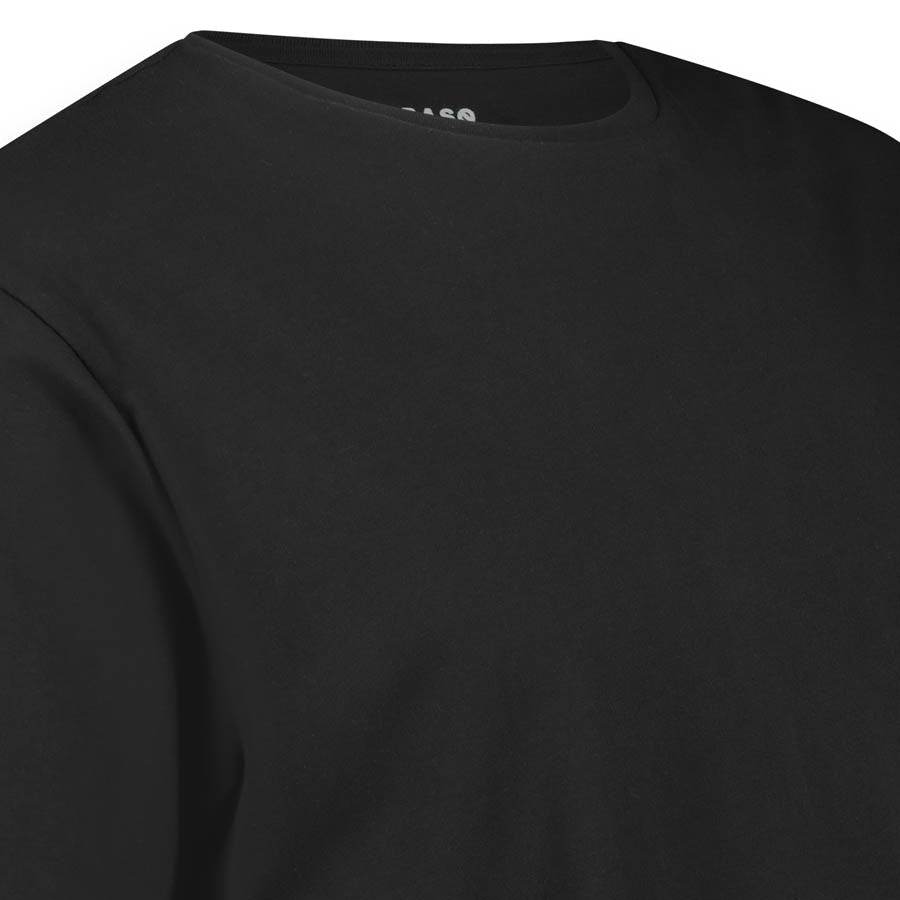
The neckline is the best-known example. A rib collar that is too thin or too floppy quickly loses tension. After that, even an otherwise fine shirt looks worn out. A sturdy, springy rib keeps the neckline tighter and neater, even after many washes.
Stitching counts too. Straight, even seams are not only better looking, but also more durable. Crooked side seams or sloppy finishing often go hand in hand with torque in the fabric - that familiar problem where a shirt twists after washing. Suddenly the side seam sits more towards the front or back. That's not just down to the washing machine. It usually starts in production.
For everyday basics, the fewer frills the better. Big prints, heavy appliqués and showy finishes may look fun on the rack, but they often age worse than a clean, well-made plain shirt.
Colour retention isn't a given
A T-shirt that loses its colour quickly looks cheaper than it is. You see it immediately with black, Navy and dark grey. If you wash often, look not only at fabric and fit, but also at how a shirt is dyed and finished.
Dark colours are the most critical in practice. They show fading, wash streaks and surface wear sooner. That doesn't mean you should avoid them, only that quality becomes visible faster here. A good black T-shirt stays deep in colour for longer and doesn't turn dull or brownish after a short time.
Lighter colours have a different advantage: they show general wear less quickly. White remains popular because it looks fresh and is widely versatile, but it does call for a fabric that doesn't quickly turn see-through or dingy. Here too, the difference lies in the basics, not in marketing talk.
Care labels help, but they don't fix poor quality
Yes, washing properly helps. Washing inside out, choosing lower temperatures and limiting the dryer extend the life of almost any shirt. But a weak T-shirt won't suddenly become strong because of it.
That's an important distinction. Many brands like to shift the responsibility towards care, while the real question is: does this shirt stay good-looking with normal use? A basic has to withstand a normal life. Not just hand washing and careful hoping.
If you wash often, you'll get more from a well-made shirt than from a shirt with a long label full of warnings. Of course you can gain life with smart care, but the basics must already be right before the first wash cycle starts.
How do you spot the best choice without endless testing?
You don't have to be a textile expert to recognise quality. There are a few practical signals that almost always tell you something.
First, feel the fabric. Not just whether it's soft, but whether it feels compact and stable. Then look at the neckline. Does it spring back neatly, or does it already look loose? Next, take the shirt by the hem and side seam. Does the whole thing feel straight and solid, or thin and a bit restless?
Also read between the lines of the product information. Brands that are serious about basics usually talk about material, fit and durability in use. Not just about style or look. If everything is about imagery and little about build quality, you often know enough.
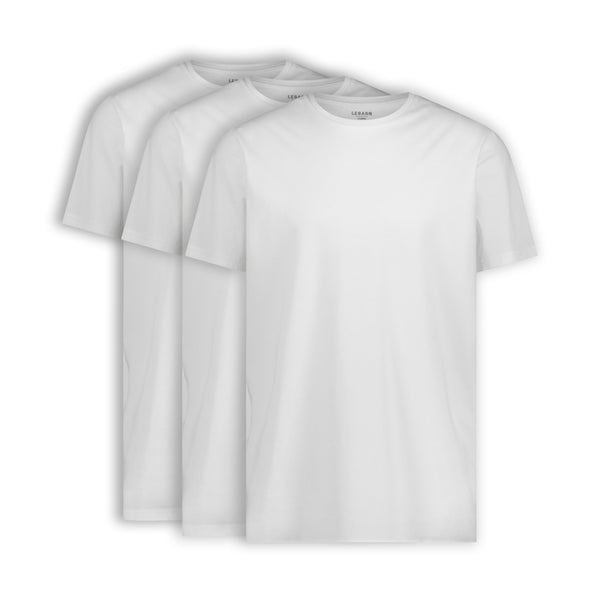
And pay attention to how a brand builds its range. A specialist in essentials usually thinks more carefully about things like neckline, length, fabric weight and multipacks than a brand that mainly sells T-shirts as a side product. That's no guarantee, but it is often a good sign. LEBASQ fits exactly in that category: product first, exaggeration out.
When paying more is really better - and when it isn't
A higher price tag can be justified. Better cotton quality, stronger finishing and a more consistent production process simply cost more. Especially if you wear and wash your T-shirts often, a better basic can work out cheaper in the end than replacing them again and again.
Still, expensive isn't automatically durable. Some premium shirts invest mainly in branding, packaging or trend-driven details that add little to daily use. Then you're paying for impression, not for lifespan.
The smartest choice is usually in the middle: shirts that are clearly built on quality, but remain intended as essentials. That's where value arises. Especially if you buy several pieces and set up your basic wardrobe properly in one go.
The best T-shirts for frequent washing are usually the simplest
That may be the least exciting answer, but it is the honest one. The best T-shirts for heavy washing are rarely the most eye-catching. They're the shirts that fit well, keep their shape, feel pleasant and still make sense in your wardrobe after lots of wear.
So look less at hype and more at repetition. Would you want to wear this shirt twice a week? Can it be washed often without you having to tiptoe around it? If the answer is yes, you're in good shape.
A strong T-shirt proves itself not in the product photo, but on an ordinary Tuesday morning - clean, well-fitting and ready for another round.