


A three-pack of T-shirts can look like an easy win: fewer orders, a lower price per shirt, and a drawer that is ready for the week. But the real question is not whether the bundle costs less at checkout. It is whether you will still reach for those shirts after dozens of washes. Zijn multipacks echt voordeliger op lange termijn? Often, yes - but only when quality, fit, and actual use are part of the calculation.
For everyday basics, the best value is rarely the lowest sticker price. It is the item that stays comfortable, keeps its shape, and earns its place in your weekly rotation.
When a multipack is genuinely a better buy
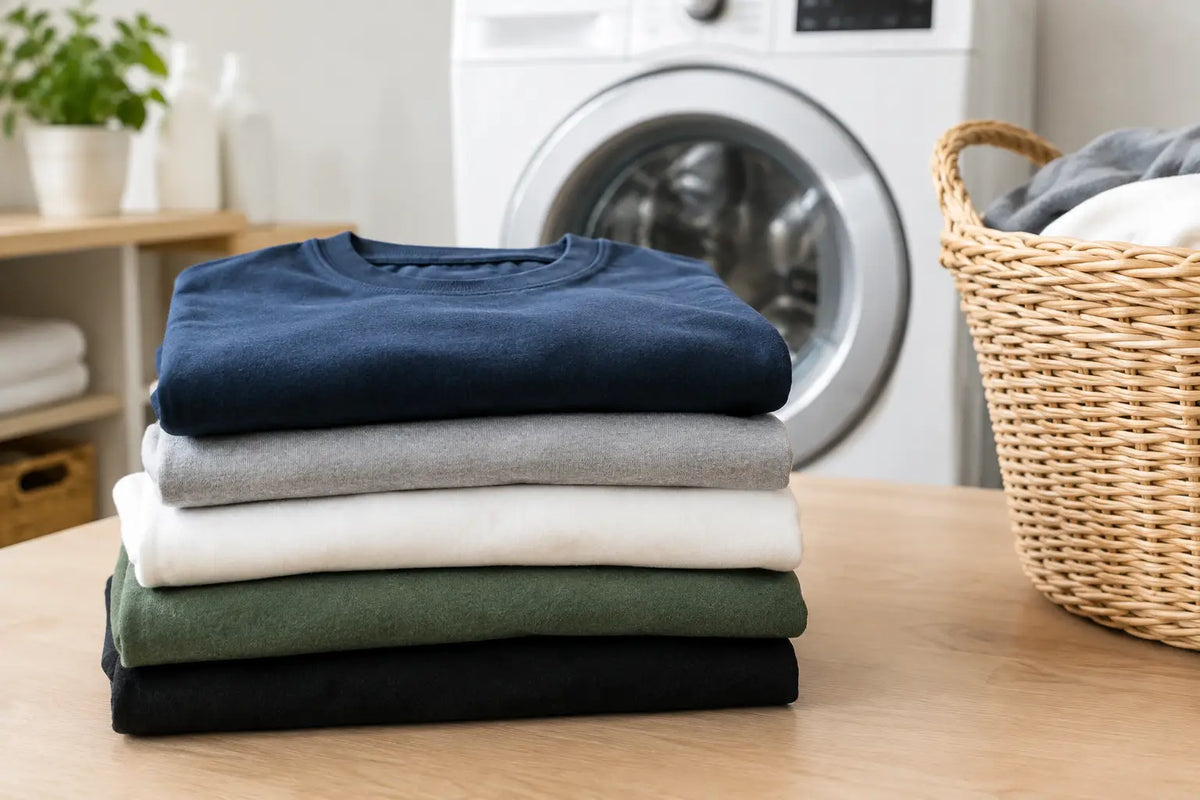
A multipack is financially useful when each item in it solves a recurring need. Think of crew necks you wear under an overshirt, fitted tees you use for work and weekends, or polos that reliably cover casual plans. If you already replace or rotate these pieces regularly, buying several at once reduces the cost per item without creating excess.
The math starts with unit price. If one premium tee costs $35 and a three-pack costs $90, the immediate saving is clear: $30 per bundle, or $10 per shirt. That is a real advantage, but it is only the first layer.
The stronger measure is cost per wear. A $30 shirt worn 60 times costs 50 cents per wear. A $15 shirt that loses its collar, twists at the seams, or becomes an awkward fit after 10 wears costs $1.50 per wear. The cheaper choice cost more in the way that matters: it had to be replaced sooner.
This is why multipacks work especially well for essentials. Basic clothing is not meant to sit untouched for a special occasion. It is meant to do the work. When the fabric, construction, and fit hold up, owning three reliable versions of the same item is practical, not repetitive.
Zijn multipacks echt voordeliger op lange termijn?
They are when you would have bought the items anyway and when all pieces get worn. They are not when a discount encourages you to buy the wrong fit, the wrong color, or more shirts than your routine needs.
A bundle can be a false saving if one shirt stays in the package or two end up at the back of the drawer. In that case, the effective price of the shirt you actually wear rises fast. Buying three for $90 is not a deal if you only use one. You did not buy a $30 shirt. You bought a $90 shirt with two unused extras.
Before choosing a pack, ask a simple question: can I name the days or situations where I will wear every item? For neutral-color tees, the answer is usually easy. For a bold color, a highly specific cut, or a seasonal piece, it may not be.
Quality decides the long-term value
A multipack should not mean a compromise in materials. In fact, buying multiples makes fabric quality more relevant, because the items will be washed and worn often.
Look for a fabric that feels substantial enough for repeated use without being stiff or heavy. Cotton quality, knit density, recovery, and finishing all influence how a shirt feels after the tenth wash, not just the first try-on. A good everyday tee should keep a clean neckline, resist becoming see-through, and remain comfortable against the skin.
Construction matters too. Check whether seams lie flat, whether the collar has enough structure, and whether the body is cut to move naturally. These details sound small because they are small. Wear them every week, and they become the difference between a favorite shirt and one you stop choosing.
Care also affects value. A durable shirt can still wear out early if it is washed too hot, dried aggressively, or mixed with rough items. Follow the care label, wash basics inside out when possible, and avoid treating every load like it needs maximum heat. Better care extends the life of every shirt in the pack, which improves the value of the original purchase.
Fit is not a detail
The most durable T-shirt is not valuable if the fit is wrong. A shirt that rides up, hangs too wide, or pulls across the chest will get less wear no matter how well it is made.
That is where a defined fit selection matters. Classic fit works for those who prefer more room through the body. Slim fit gives a cleaner line without excess fabric. Long-fit tees can solve a common problem for taller men or anyone tired of shirts coming untucked. The right option depends on your proportions and how you wear your basics, not on a trend.
If you are trying a brand or cut for the first time, buying one item first can be the sensible move. Test it during a normal week. Sit in it, wash it, layer it, and see whether you reach for it again. Once you know the fit works, a multipack becomes a straightforward way to replenish what you already use.
This is not hesitation. It is buying with intention.
Convenience has value too
Long-term value is not only about dollars. Running out of clean, dependable basics has a cost in time and attention. You make rushed purchases, settle for a shirt you do not like, or spend time rebuilding a wardrobe one replacement at a time.
A well-chosen three-pack simplifies that cycle. You know how the shirts fit. You know how they feel. You have enough rotation to avoid over-washing a single favorite. That last point matters: spreading wear across several shirts gives each piece a break and can help the whole set last longer.
For a wardrobe built around everyday essentials, consistency is useful. Three identical tees in colors you actually wear can make getting dressed faster while still leaving room for jackets, trousers, sneakers, and personal style. Uniform does not have to mean dull. It can simply mean fewer weak links in your closet.
When buying singles makes more sense
Multipacks are not automatically the right answer. Singles are better for testing a new fit, trying an unfamiliar fabric, or adding a color that will not see frequent use. They also make sense when your wardrobe already has enough basics and you only need one replacement.
The same applies when the bundle mixes items unevenly. A three-pack with two colors you wear and one you avoid is less valuable than a single color you will use constantly. Discounts should support your habits, not override them.
Be equally careful with very low-priced packs. If the price seems unusually low, consider what may be missing: fabric weight, shape retention, finishing, ethical production standards, or quality control. Low cost is not automatically poor value, but it deserves a closer look. The goal is not to pay more for a label. The goal is to pay once for clothing that keeps doing its job.
A practical way to judge any apparel bundle
Use a simple four-part check before you buy. First, compare the unit price against singles. Second, estimate how often you will wear every piece. Third, confirm the fit and fabric are proven for you. Finally, consider replacement timing: are you buying ahead because you genuinely need a rotation, or because the discount feels hard to ignore?
If the answer is clear across all four, the bundle is likely a smart purchase. LEBASQ builds its packs around this everyday logic: dependable essentials, clear fit options, and enough consistency to make repeat wear easy.
A good multipack does not need a dramatic promise. It should give you several shirts that fit well, wash well, and make tomorrow morning simpler. That is the kind of value that lasts beyond the checkout page.


Hinterlasse einen Kommentar
Diese Website ist durch hCaptcha geschützt und es gelten die allgemeinen Geschäftsbedingungen und Datenschutzbestimmungen von hCaptcha.