
A T-shirt can be made from excellent cotton and still end up at the back of the drawer if the fit is wrong. That is why this guide to men’s T-shirt fits focuses on what you actually feel and see when you wear one: shoulder placement, chest room, body length, and how the fabric moves through a normal day.
The right fit is not about following a trend or squeezing into the smallest size possible. It is about finding a shape that works with your build, your routine, and the way you prefer your clothes to sit. A dependable T-shirt should look considered on its own and work just as well under an overshirt, sweater, or jacket.
Start with the four fit points that matter
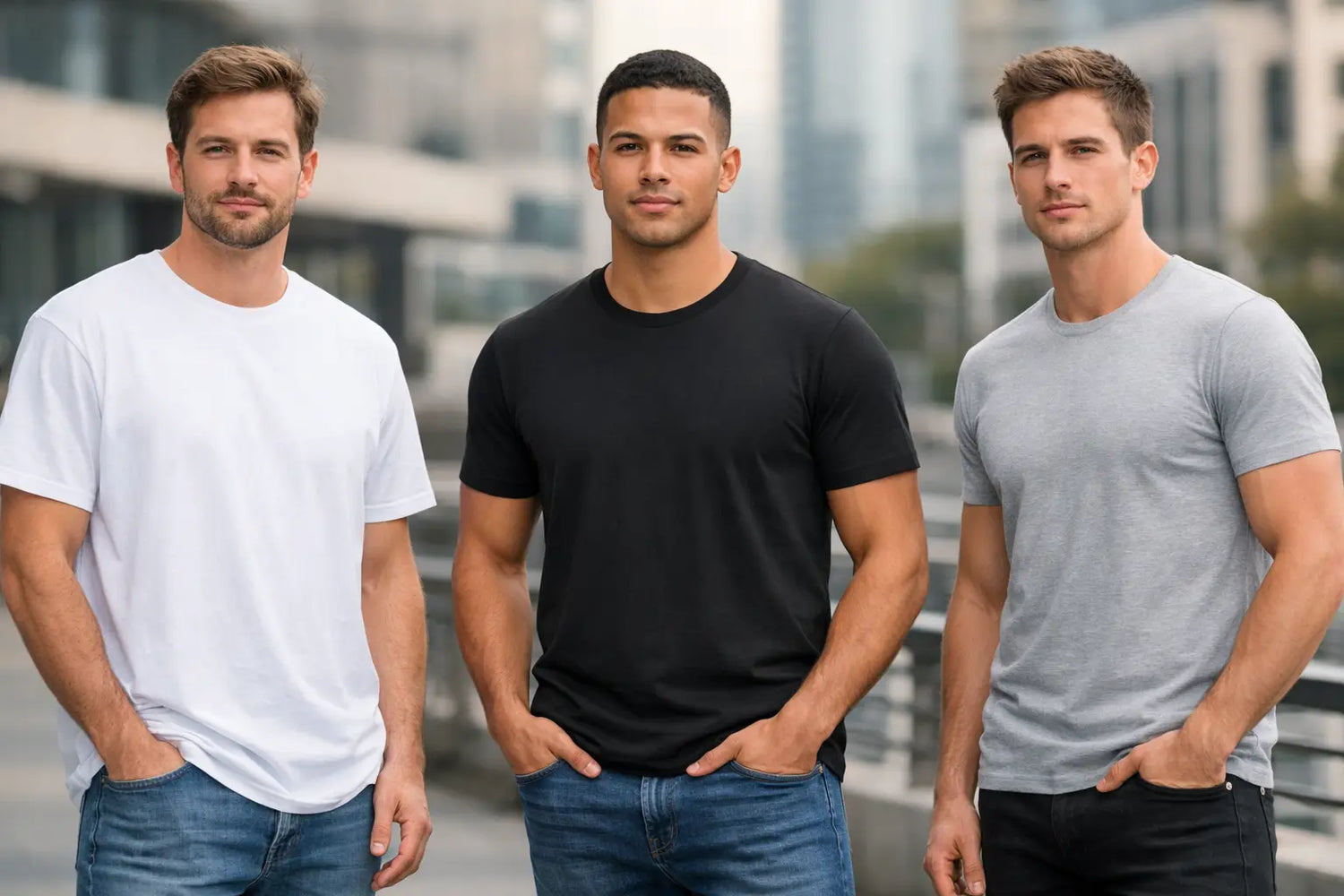
Before choosing between slim, classic, long, or relaxed fits, understand the parts that define any good T-shirt. The shoulder seam should sit close to the edge of your shoulder. If it lands high toward your neck, the shirt is likely too small. If it drops well down the upper arm, it is either too large or intentionally oversized.
Across the chest, you want enough room to move without the fabric pulling into horizontal lines. A little shape is good. Strain is not. Check this while reaching forward, sitting, and lifting your arms, not only while standing still in front of a mirror.
The sleeves should finish around the middle of your upper arm for most standard T-shirts. A slimmer fit often has a closer sleeve, while a relaxed fit gives more room and may run slightly longer. Neither is automatically better. The key is proportion: a narrow sleeve can balance a lean frame, while extra room can better suit broader arms and shoulders.
Finally, look at length. A regular tee should generally cover the waistband and finish around the middle of the fly. It should stay covered when you raise your arms, but not bunch heavily over your pants. Length is one of the most overlooked reasons a T-shirt feels wrong.
Guide to men’s T-shirt fits: find your baseline
For most wardrobes, a classic fit is the baseline. It has a clean shoulder, comfortable room through the chest and torso, and a straight or gently shaped body. It does not cling, but it does not hang like a box either. This is the fit that earns its place in rotation because it works with jeans, chinos, shorts, and layers without asking for much thought.
A classic fit is a practical choice if you are unsure where to start, if your body shape fluctuates, or if you prefer your clothes to feel easy rather than close. It also suits men with a broader chest or midsection who find that slim cuts pull at the front.
That said, classic does not mean loose. If the shoulders are dropping, the sleeves flare away from the arms, and the body folds into excess fabric, go down a size or choose a more tailored cut. Comfort should never mean giving up shape.
Slim fit: closer, not restrictive
A slim-fit T-shirt follows the body more closely through the chest, sleeves, and waist. It is designed to create a sharper line, especially when worn under a jacket or open shirt. For men with lean, athletic, or proportionally narrow builds, it can remove the extra fabric that makes standard tees look untidy.
The trade-off is simple: slim fit leaves less margin for error. If the chest pulls, the sleeve digs in, or the fabric rides up when you sit, it is too small. Sizing up may solve the tightness, but it can also make the shoulders too wide. In that case, a classic fit is probably the better cut.
Slim fit works best when it looks natural. You should be able to breathe, bend, and move without constantly adjusting the hem. A fitted T-shirt should frame your body, not announce every detail of it.
Long fit: built for extra coverage
Long-fit T-shirts add length through the body, and sometimes use a more streamlined shape to keep that extra length from looking loose. They solve a familiar problem for taller men and anyone with a longer torso: a standard T-shirt that rides above the waistband after a few movements.
The right long fit gives you coverage without turning into a tunic. The hem should sit lower than a regular tee, but it should not extend so far that it shortens the appearance of your legs. This is especially relevant if you are average height and simply prefer more coverage. Choose a moderate extension rather than the longest available option.
Long fit also works well for layering. It stays in place beneath a hoodie or overshirt and avoids the constant tugging that comes with a tee that is just slightly too short. If standard sizes fit your shoulders and chest but fail at the waist, length is the issue, not necessarily size.
Relaxed fit: room with intention
A relaxed-fit T-shirt provides more space through the body and usually the sleeves. It can feel easy, modern, and comfortable in warmer weather, but it needs structure to avoid looking accidental. The shoulders, neckline, and fabric weight do most of that work.
A relaxed tee is useful if you prefer air around the torso, have a muscular or broad build, or want a more casual silhouette. Pair it with straight or tapered pants to keep the overall shape balanced. Loose on top and loose on the bottom can work, but it is a deliberate style choice rather than the easiest everyday formula.
Do not confuse relaxed with oversized. Oversized fits use dropped shoulders, substantial extra width, and intentionally exaggerated proportions. Relaxed fit is quieter. It should still look like your T-shirt, just with more room to move.
How fabric changes the fit
Fit is not only the pattern on paper. Fabric affects how a T-shirt sits after an hour, a wash, and a full day of wear. A lighter fabric can drape softly and feel cool, but it may reveal more lines underneath and lose its shape sooner. A denser cotton jersey tends to hold a cleaner silhouette and gives the collar and sleeves more definition.
Stretch matters too. A small amount of stretch can improve recovery and comfort in a closer cut. Too much stretch can make a T-shirt feel thin or cause it to cling where you would rather it did not. For an everyday essential, look for fabric that feels substantial enough to stand on its own while staying comfortable against the skin.
Shrinkage is another reason to avoid buying a T-shirt that only just fits before its first wash. Follow the care label, wash in cool water when appropriate, and avoid unnecessary high heat. A well-made shirt should hold up, but proper care protects both the fabric and the fit you chose.
Choose size by your body, not the label
A medium is not a universal measurement. Brands use different blocks, fabrics, and intended silhouettes. Your usual size is a useful starting point, not a rule. Use the product’s size chart, then compare it to a T-shirt you already own and genuinely like.
Lay that favorite shirt flat and measure the chest from underarm to underarm, the body length from the highest shoulder point to hem, and the sleeve length if that is an area you notice. Compare those measurements with the garment measurements, not only your body measurements. This gives you a far more reliable result when shopping online.
If you are between sizes, let the fit decide. Size down only if you want a closer silhouette and the shoulders still align properly. Size up if you want extra room, have a broader chest, or expect minor shrinkage. For tall men, first look for a long fit rather than automatically going up a size. A larger size adds width as well as length, which often creates a less precise shape.
Build a T-shirt rotation that actually gets worn
Most men do not need every fit in every color. They need a small set of reliable options that cover real situations. A classic-fit crew neck is the everyday foundation. A slim-fit tee can make sense for cleaner layered looks. A long fit is worth adding if regular lengths consistently come up short.
Buying quality basics in a multi-pack is practical once you know your fit. It keeps the shirts you reach for most consistent, makes getting dressed easier, and avoids the common cycle of replacing cheap tees that lose their shape too quickly. At LEBASQ, fit options are designed around this simple idea: better basics should make daily dressing less complicated.
The best T-shirt fit is the one you stop thinking about after you put it on. It stays where it should, moves with you, and still looks right at the end of the day.


Hinterlasse einen Kommentar
Diese Website ist durch hCaptcha geschützt und es gelten die allgemeinen Geschäftsbedingungen und Datenschutzbestimmungen von hCaptcha.