

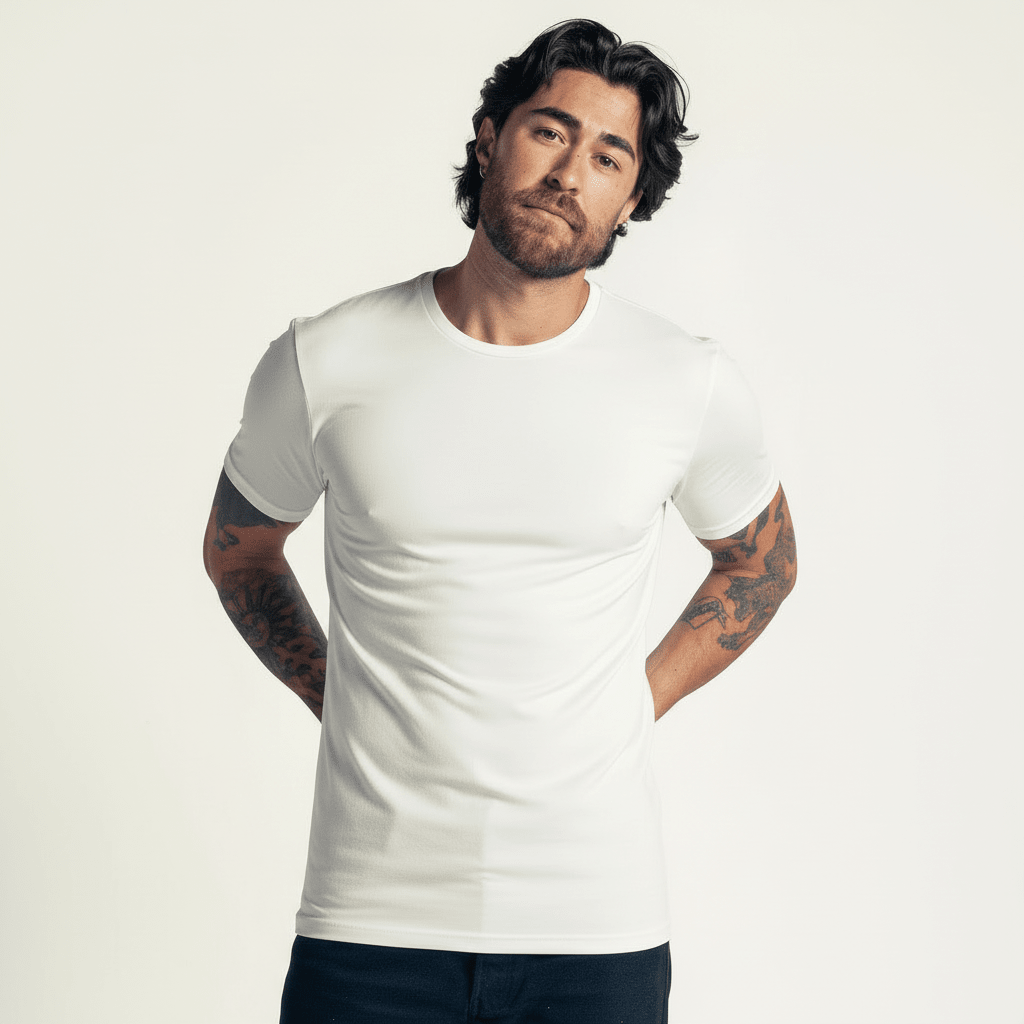
A T-shirt seems simple, until you've bought ten of them that lose their shape after a few washes. Then the question suddenly becomes relevant: how do you choose premium basics that not only feel good in your hands, but stay good in everyday life? That's exactly where the difference lies between just a basic and a basic you can truly rely on.
How to choose premium basics without the marketing hype
You don't recognise premium basics by big promises. You recognise them by how they perform when you wear them often. A good shirt fits better straight away, drapes neater, chafes less, and holds its shape longer. That sounds obvious, but with basics it often goes wrong. Because they seem simple, quality is easily underestimated.
The right choice therefore doesn't start with colour or trend, but with use. Do you wear a shirt under an overshirt, under a blazer, on its own, to the office, and at weekends? Then it needs to do more than just win the first impression. Premium basics need to be consistently good.
Start with the fabric
The fabric determines more than most people think. Not just how a basic feels, but also how it drapes, how warm it is, how quickly it wears out, and how it comes out of the wash. If you want to choose premium, material isn't a detail — it's the foundation.
Cotton remains the logical choice for many basics, especially T-shirts and polos. But cotton isn't automatically premium. Fibre length, fabric density, and finish make the difference. A smooth, firm jersey often feels immediately more compact and neater than a thin, loose quality that quickly goes limp.
Heavier isn't always better, by the way. A thicker fabric can feel luxurious, but also too warm or too stiff. For a basic you want to wear often, balance matters more. You're looking for a fabric that's soft, stays breathable, and has enough body to drape well. Not paper-thin, not excessively heavy.
Also pay attention to how the fabric responds to stretch. Pull a shirt lightly apart and see if it springs back immediately. A premium basic holds its shape better. You notice this especially at the collar, shoulders, and hem.
The fit makes or breaks everything
Even the best fabric can't save a bad fit. That's why the second question is just as important: what is the garment meant for and how do you want it to fall? A basic should be simple, but never shapeless.
A slim fit works well if you want a tighter, neater silhouette — for example under an overshirt or blazer. A regular fit gives more room and often feels relaxed for daily use. A long fit can make exactly the right difference if standard lengths always fall too short on you. That's not a minor detail — it's a practical problem many men recognise.
Anyone wondering how to choose premium basics that truly fit needs to look beyond size S, M, or L. Length, chest width, sleeve length, and the way a shirt runs along the body matter more than just the label at the neck. A shirt that looks good on the hanger but rides up or pulls at the shoulders during movement will rarely get worn in practice.
The best basic is often the one you forget the moment you put it on. Not because it's invisible, but because it doesn't bother you anywhere.
Look at the finish
The finish is where a lot of difference becomes visible. Not conspicuously, but decisively. Check the neckband. It should be firm, sit neatly, and not immediately start to wave. Look at the seams along the shoulders and sides. They should run straight and lie flat.
With premium basics you often see a cleaner construction. Fewer sloppy stitches, better symmetry, a hem that doesn't twist after washing. These aren't minor cosmetic flaws. They say something about how seriously a garment has been put together.
Details like a neat collar on a polo, shape-retaining cuffs on a sweatshirt, or a cap that doesn't sag after a few wears also tell you a lot. Basics have few embellishments. That's exactly why weak finishing stands out even faster.
Think in cost per wear
A premium basic costs more at the till. That's true. But the relevant question isn't just what something costs, but what it delivers over time. If you buy three cheap shirts that quickly shrink, twist, or lose their colour, you often end up spending more than on a few strong basics you wear consistently.
Cost per wear is a straightforward way to look at it. A shirt that stays good and comes out of the wardrobe weekly pays for itself faster than an impulse buy that disappears to the back after two months. With basics, value almost always works on the long term.
That's why multipacks make sense for many people, as long as the quality holds up. Not because more is always better, but because you simply need basics often. If the fit, fabric, and finish are right, restocking in one go is just practical.
Pay attention to what happens after washing
Many basics impress on day one. The real test begins after five or ten washes. Shrinkage, colour loss, and a limp collar are often the first signs that a basic is less premium than it appeared.
You don't need to be a textile expert to assess this smartly. Check whether a brand is clear about care, materials, and expected performance. A basic designed for frequent use should be honest about that. Not just about softness, but also about how the product stays looking good.
You can extend a lot yourself with normal care: washing at lower temperatures, not drying too hot, and keeping dark colours separate. But a truly good basic shouldn't be entirely dependent on careful handling. Everyday clothing needs to handle a normal routine too.
Colour is less casual than it seems
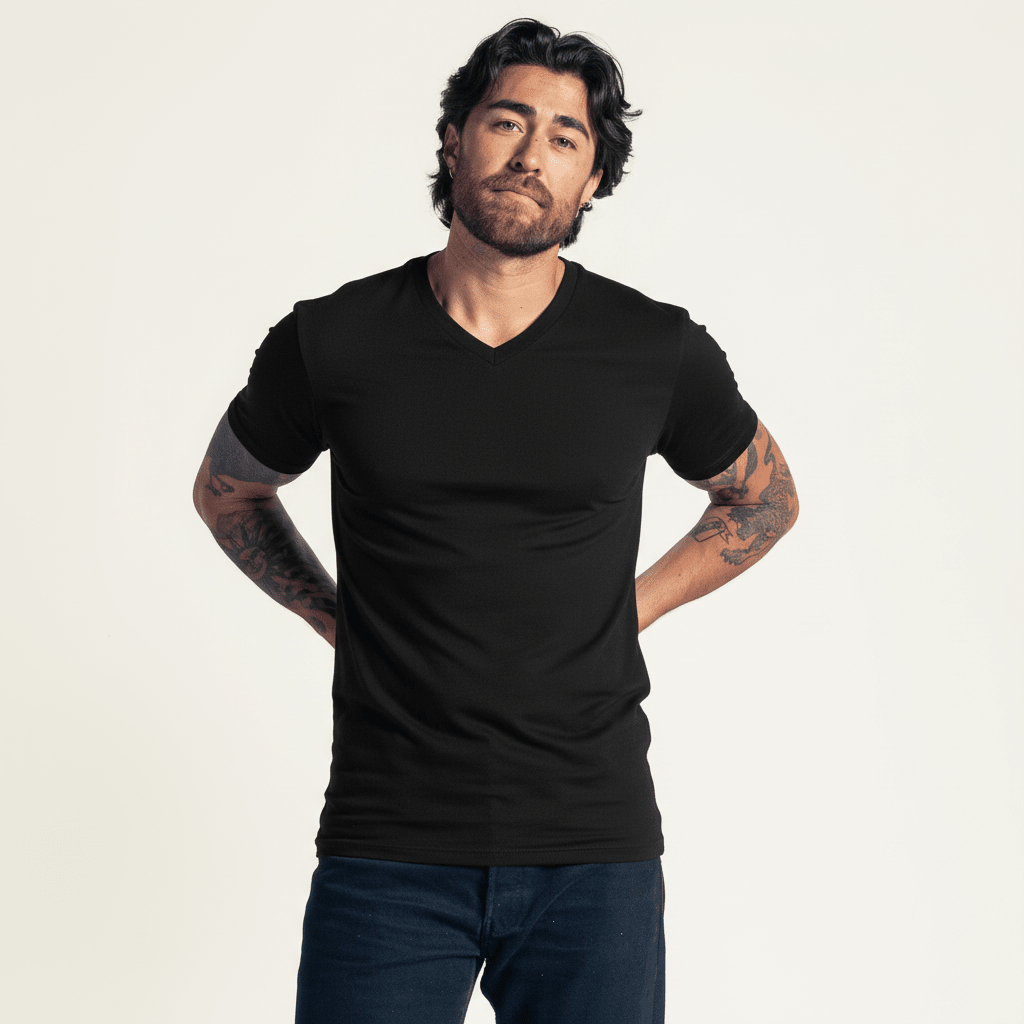
With premium basics, colour isn't about seasonal hype — it's about versatility. White, black, navy, grey, and calm earth tones work because they combine easily and stay relevant for a long time. That makes them functional.
There's nuance, though. A bright white shirt looks fresh but demands more in terms of care. Black is strong and versatile, but shows fading faster if the dye quality is weak. Navy is often more forgiving and just as broadly wearable. Grey can be perfect, as long as the fabric doesn't look cheap.
The best choice therefore depends on how you wear a basic. Under a shirt? On its own with jeans? To the office under a fine-knit jumper? Choosing premium also means choosing smartly within your own routine.
Buy fewer different basics, but better ones
Many wardrobes are full of basics that almost make the cut. Too tight, too short, too thin, too quick to fade. The result is that you keep buying without ever being truly satisfied. A stronger approach is simpler: choose a small number of proven styles and build on those.
That requires a little more attention upfront. You test a fit. You pay attention to the fabric. You see how a basic holds up after wearing and washing. But after that, buying becomes much easier. Less doubt, fewer disappointing purchases, more consistency in your wardrobe.
That's also the strength of a brand that limits itself to essentials and stays sharp on them. No noise, no unnecessary experiments, just clothing with a clear purpose. LEBASQ sits exactly in that space.
How to choose premium basics when buying online
Buying online requires a little more discipline, but not necessarily more risk. You can assess a lot without holding a product, as long as the information is concrete. Look at material composition, fit description, and product photos where you can actually see the fabric structure. Also check whether different fits are offered, such as slim fit or long fit. That often signals that wearability problems have been thought through.
Vague product descriptions are usually not a good sign. If a basic is sold purely on feel and image, you're missing the information that actually matters. A premium essential can be explained in practical terms. That builds trust.
Also check whether a brand is clear about delivery, returns, and size selection. Not because that says anything about the fabric, but because basics are often repeat purchases. If the first shirt is good, you want to be able to restock quickly and easily.
The best premium basic isn't necessarily the most expensive
There's a point at which a higher price delivers little extra value. A higher price tag doesn't guarantee a better basic. Sometimes you're mostly paying for a name, packaging, or campaign. With essentials, that's rarely what makes your wardrobe better.
Premium means something different in practice: strong materials, a considered fit, neat finishing, and a product made to be worn often. It doesn't need to be more than that. Or less.
So when you're standing in front of the rack again, or hesitating online between yet another quick replacement or a better foundation, look at it plainly. Does the fabric feel right? Does the fit work for your body? Will it likely hold up after real use? Then you're usually closer to the right choice than any marketing promise will get you.


Leave a comment
This site is protected by hCaptcha and the hCaptcha Privacy Policy and Terms of Service apply.