

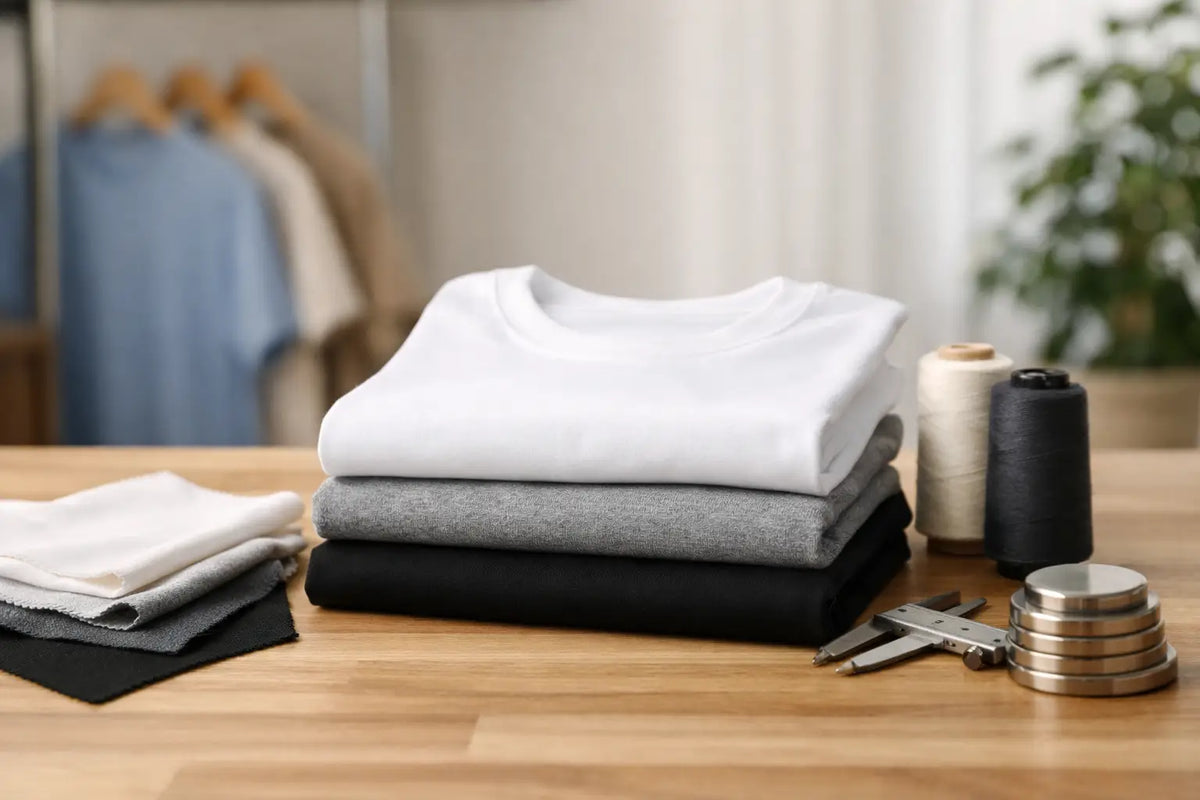
A T-shirt can look right on a product page and still feel wrong the moment you put it on. Often, the difference is fabric weight. This guide to tshirt fabric weights explains what those numbers actually mean, how they affect everyday wear, and how to choose a tee that earns its place in regular rotation.
Weight is not a shortcut for quality. A heavier shirt is not automatically better, and a lightweight shirt is not automatically flimsy. The right choice depends on your climate, how you like a tee to sit on your body, and whether you want it to work alone or under other layers.
What T-Shirt Fabric Weight Means
T-shirt fabric weight measures how much a section of fabric weighs, usually expressed in GSM or ounces per square yard. GSM means grams per square meter. The higher the number, the more material is packed into the fabric.
In the US, you may also see ounces per square yard, often written as oz. A 4.5 oz tee is roughly 150 GSM, while a 6 oz tee is around 200 GSM. The conversion is useful, but the exact number is less important than knowing where it sits on the spectrum.
Fabric weight affects opacity, drape, warmth, drying time, and how substantial a shirt feels in your hand. It also changes the way a tee responds to repeated washing. But it does not tell the full story. A well-made 160 GSM combed cotton T-shirt can feel more refined and last longer than a poorly knit 220 GSM shirt.
Guide to T-Shirt Fabric Weights by Range
Lightweight: roughly 120 to 150 GSM
Lightweight tees are made for heat, movement, and easy layering. They feel airy, dry faster after washing, and take up less space in a bag. In warm weather, that can be exactly what you want.
The trade-off is that lightweight fabric is more likely to show the outline of an undershirt, chest, or waistband, especially in white and lighter colors. It may also feel less structured through the shoulders and sleeves. That is not a flaw when the fabric is intentionally chosen for a soft, breathable result. It just means the shirt has a different job.
Choose lightweight when you live somewhere hot, want a clean layer under an overshirt or sweater, or prefer a close, barely there feel. Pay attention to knit quality and fit. A thin tee that twists at the side seams or loses its collar shape will not improve with more wear.
Midweight: roughly 160 to 190 GSM
Midweight is the most useful range for a daily T-shirt. It has enough body to wear on its own without feeling heavy, yet remains comfortable across most of the year. For many wardrobes, this is the dependable middle ground.
At this weight, cotton tends to look more polished than a lighter jersey. The fabric is generally more opaque, the collar has more presence, and the shirt is less likely to cling. It also layers well under a jacket without creating bulk.
If you are buying core basics in multiples, midweight is usually the practical choice. It handles commuting, weekends, travel, and repeat washing without demanding special treatment. The fit still matters. A slim-fit midweight tee creates a cleaner line, while a classic fit offers more room through the chest and torso. A long fit can solve the common problem of a shirt riding up when you move or sit.
Heavyweight: 200 GSM and above
Heavyweight T-shirts have a denser, more substantial feel. They hold their shape well, sit away from the body, and can make a simple outfit feel more intentional. This is the range for people who want a tee with visible structure rather than the soft drape of a lighter jersey.
A heavyweight shirt can be especially useful in cooler weather or as a standalone layer. It is typically more opaque and may be more forgiving if you do not want fabric clinging around the midsection. It also tends to feel durable, though durability still comes down to construction, fiber quality, and care.
There are compromises. Heavy fabric can feel too warm in summer, takes longer to dry, and may not sit as smoothly under a fitted sweatshirt or jacket. It can also feel stiff at first, particularly in 100% cotton. Some people like that break-in period. Others want softness from the first wear.
Weight Changes the Way a Tee Fits
Fabric weight and fit should be considered together. The same pattern behaves differently in a light jersey than it does in a dense knit.
Lightweight fabric follows the body more closely. In a slim fit, that can look sharp but may reveal more than you expect. Midweight fabric gives a fitted T-shirt more shape without making it restrictive. Heavyweight fabric creates a straighter silhouette, so it can make a relaxed or classic cut look more deliberate.
Length matters too. A longer tee in a lightweight fabric can drape naturally, while the same added length in a heavy fabric may feel more pronounced. If regular shirts often come untucked or expose your waistband, a long-fit style can be a better solution than simply sizing up. Sizing up usually adds width where you do not need it.
Shoulders are another useful check. A good shoulder seam should land near the edge of your shoulder, unless the shirt is designed as an oversized fit. Heavy fabric makes an incorrect shoulder fit more obvious because it holds its shape. Lighter fabric can hide it at first, then stretch and shift over time.
Why Weight Alone Does Not Define Quality
A fabric specification is useful, but it is not a verdict. Two shirts with the same GSM can perform very differently. Start with the fiber. Long-staple, combed cotton generally creates a smoother and stronger yarn than short, rough fibers. Ring-spun cotton often feels softer than open-end cotton, although both can be appropriate depending on the intended feel.
Then look at the knit. Jersey is the familiar T-shirt knit, with a soft face and natural stretch. A tighter knit usually improves opacity and helps the shirt keep a cleaner surface. Ribbing at the collar matters as well. A collar that is too thin or poorly recovered is often the first part of a tee to look worn out.
Construction deserves equal attention. Clean side seams, stable neck binding, reinforced shoulder tape, and consistent stitching are not glamorous details, but they determine whether a shirt stays dependable. A dense fabric with weak seams is still a weak garment.
Finally, consider shrinkage. Cotton can shrink, especially during the first wash and dry cycle. Responsible brands account for expected shrinkage in the pattern or pre-shrink the fabric. Follow the care label, but do not assume every cotton T-shirt will remain identical after high heat.
Choosing the Right Weight for Your Routine
Think about when the tee needs to work hardest. For a hot commute, gym-adjacent errands, or travel through warm climates, lightweight fabric can be the sensible option. For a reliable everyday shirt that works with jeans, chinos, shorts, and an open overshirt, midweight is hard to beat.
Choose heavyweight when you prefer a more structured look, wear T-shirts as your main outer layer, or spend much of the year in cooler temperatures. It is also a strong option if you value a shirt that feels substantial the second you pick it up.
Color changes the decision. White, light gray, and pale colors benefit from a little more weight because they are more prone to transparency. Black, navy, and deeper colors can work well in lighter fabric without looking sheer. If you want one weight that covers the most situations, midweight remains the practical default.
How to Make a T-Shirt Last at Any Weight
The fastest way to shorten a tee's life is repeated high-heat drying. Wash inside out in cold water when possible, use a moderate amount of detergent, and avoid overloading the machine. Air drying is easiest on cotton fibers and collars. If you use a dryer, lower heat is the safer choice.
Do not judge a T-shirt only on day one. A good basic should still look right after weeks of wear: collar lying flat, side seams staying straight, fabric remaining comfortable, and fit holding steady. That is the standard worth buying for.
The best fabric weight is the one you reach for without thinking. Choose enough substance for confidence, enough softness for comfort, and a fit that stays right through a full day. That is what turns a simple T-shirt into an essential.

Leave a comment
This site is protected by hCaptcha and the hCaptcha Privacy Policy and Terms of Service apply.