


You can tell a good polo the moment you put it on. No pulling buttons, no limp collar, no fabric that looks tired after three washes. Anyone searching for the best polo shirts for men usually isn't looking for anything spectacular. They want a shirt that simply works - in fit, in fabric and in how often you reach for it without thinking.
What sets the best polo shirts for men apart
The market is full of polos, but many miss exactly what matters. They are too thin, too stiff, too short or too loose in all the wrong places. On a hanger that is less obvious. In daily wear it is not.
The best polo shirts for men feel good straight away, keep their shape and stay neat around the neck and collar. That sounds logical, but it is rarer than it should be. Many brands design for looks rather than wearability. The result is a polo that looks great on day one but loses its sharpness after a few wears.
Above all, a good polo has to be reliable. Not just for a dinner or the office, but also on an ordinary workday, on the go, or on a weekend when you want to look put together without wearing a dress shirt. It is precisely this versatility that makes the polo strong - as long as the basics are right.
Start with the fabric
Fabric matters more than most men think. Not just how a polo feels, but also how it drapes, breathes and ages. The classic choice is cotton piqué. It has structure, looks polished and gives you that recognisable polo look. A good piqué feels firm but not harsh, and has enough body to let the collar and torso hang well.
Still, not every piqué is automatically good. Coarsely woven versions can quickly feel stiff. Very light fabrics sometimes look nice in the packaging, but they show more through and lose their shape sooner. For everyday wear, a slightly heavier, good-quality cotton often works better. It wears more calmly and stays convincing for longer.
There are also jersey polos. These feel smoother and often softer, almost like a T-shirt with a collar. That can be great if you want maximum softness, but it gives a less distinct polo character. So it is not a matter of right or wrong. It depends on what you expect. If you want a polo that looks smarter, piqué usually wins. If comfort comes first, jersey can be interesting.
A small amount of stretch can help, especially if you want a slimmer fit without tension across the chest or shoulders. Too much elastane is less ideal. The fabric then quickly feels sporty rather than refined, which undermines the understated look that makes a good polo so strong.
Fit makes or breaks the polo
A polo should follow the body, neither pinching nor hanging loose. That seems obvious, but this is exactly where things often go wrong. Many men buy a polo the way they buy a casual T-shirt: quickly, going by the size label, without really paying attention to proportions.
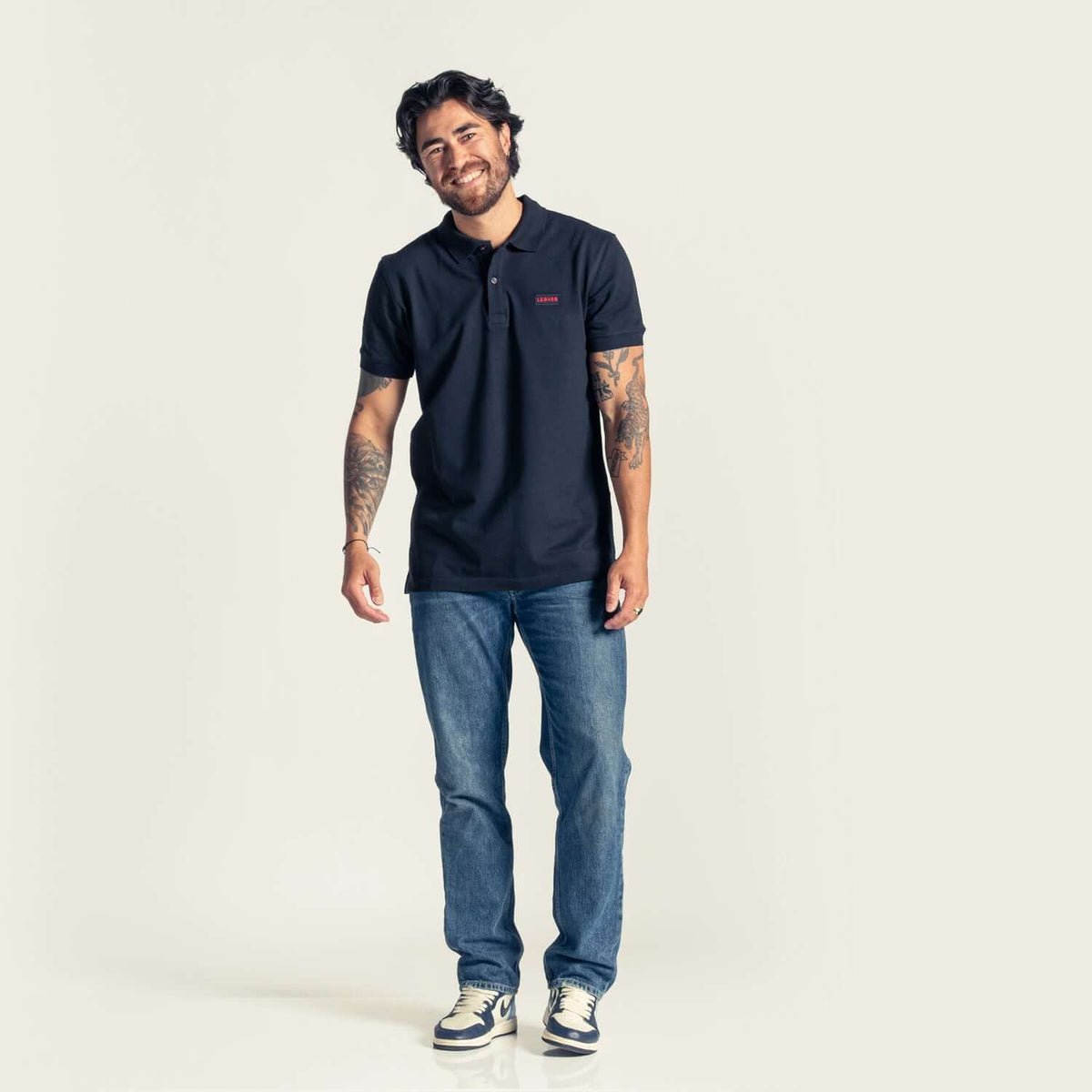
The shoulder seams should sit close to your own shoulder line. The sleeves can hug the upper arm slightly, but should not restrict it. Through the torso you want room to move, without excess fabric around the waist or lower back. A polo can look polished, but it should still be a basic that is easy to wear.
Length is at least as important. Too short and the polo rides up as soon as you sit or move. Too long and it looks bulky, especially when worn untucked. For most men, a length that falls neatly below the belt, without dropping far towards the seat, works best. For polos meant for everyday wear in particular, that balance point is crucial.
Body type plays a role here. A slim fit works well if you want a sleeker silhouette and want to emphasise your shoulders or chest a little. A regular fit gives more room and often feels relaxed, but it still needs shape. Looseness without structure quickly looks cheap. So the best choice is not the tightest or the roomiest fit, but the one that consistently sits well throughout an ordinary day.
Look at the details that are often underestimated
With polos, quality often lies in the small things. The collar is the best example. A good collar stands up without getting hard. It doesn't curl up straight away and doesn't flop outwards. That largely determines whether a polo looks polished or tired.
The placket also deserves attention. Two or three buttons are usually enough. More important is that the placket lies nice and flat and doesn't pull. When the button band bulges, the fit is often off or the finishing too light.
The hem and side vents say a lot too. A clean finish at the bottom helps the polo hang well. Small vents at the sides can improve freedom of movement and stop the fabric pulling across the hips. Not necessary on every model, but often a sign that wearing comfort has been thought through.
Then there is colour fastness. A navy, white, black or anthracite polo should stay calm and deep in colour after repeated washing. If a polo fades quickly, even a good fit looks less impressive. With essentials, everything comes down to repeatability. You want to know that the same shirt will still look good months from now.
Which colour works best?
For most men, a strong polo wardrobe doesn't start with eye-catching colours. Navy, black, white, grey and perhaps olive green are often the smartest choices. They combine easily, look grown-up and stay usable in almost any setting.
That doesn't mean colour has no place. A muted burgundy, light blue or sand can work very well, especially in spring and summer. But if you are looking for the best polo shirts for men as the foundation of your wardrobe, versatility almost always beats originality.
A polo is at its best when it needs little explanation. You put it on with chinos, smart shorts or jeans and it works. That is exactly why it pays to invest in colours you can wear often, rather than seasonal colours that stay in the wardrobe after a few weeks.
Cheap is often more expensive
A low-quality polo looks like a decent deal at first glance. Until the collar goes soft, the fabric looks thinner and the fit stretches out. Then you buy again. And again. Cheap on paper, not in practice.
With premium basics you pay for something tangible: better fabric, cleaner finishing, a fit that has had more thought put into it and a product that can handle repeated wear. You notice that not only in how the polo looks, but also in how often you choose it. A good shirt pays for itself because it doesn't need replacing after a short time.
That is also why multipacks make sense for many men. Once you have found a polo that really fits well, you don't want just one. You want several colours or simply a spare. Not out of luxury, but out of convenience. Essentials only truly work when you can rely on them.
When a polo really is the right choice
The strength of the polo lies between formal and casual. It is smarter than a T-shirt and more relaxed than a dress shirt. That makes it one of the few basics you can use in several ways without changing outfit.
For an office without a strict dress code, a well-fitting polo is often just enough. Under a light overshirt or with smart trousers it looks polished without becoming stiff. At the weekend the same polo works well with denim or shorts, as long as the fabric and fit are strong enough.
There are limits. For truly formal occasions a dress shirt remains the better choice. And on very hot days an ultra-light T-shirt can be more comfortable. But for many everyday situations the polo is strong precisely because it doesn't feel like a compromise. It fills the gap between ease and polish.
How to keep your polo looking good for longer
Wash polos inside out at 30 degrees and undo the buttons first, so the placket doesn't stretch. Dry them flat or on a wide hanger and skip the tumble dryer: heat makes the collar go limp sooner. Shape the collar after washing and it will dry properly. Not sure about your size? Check the polo size chart.
How to spot a polo you'll wear often
The best purchase is rarely the polo with the biggest logo or the loudest marketing. It is usually the model that still fits well after a long day, still looks good and doesn't ask for corrections. You don't have to fold the collar back down. You don't have to keep tugging at the hem. That kind of ease is better proof of quality than any sales pitch.
Anyone who looks seriously at the best polo shirts for men ends up coming back to the same questions. How does the fabric feel after a few hours? Does the fit hold up? Does the length suit how you actually wear it? And does the finishing still look neat after it comes out of the wash?
That is exactly where a brand like LEBASQ wants to excel: essentials without detours, made to be worn often and to stay good for a long time. No more story than necessary. Just clothing that does its job.
So don't buy a polo because it looks good in a product photo, but because it holds up in your daily life. That is where real quality begins - not at the first impression, but at the tenth wear.