

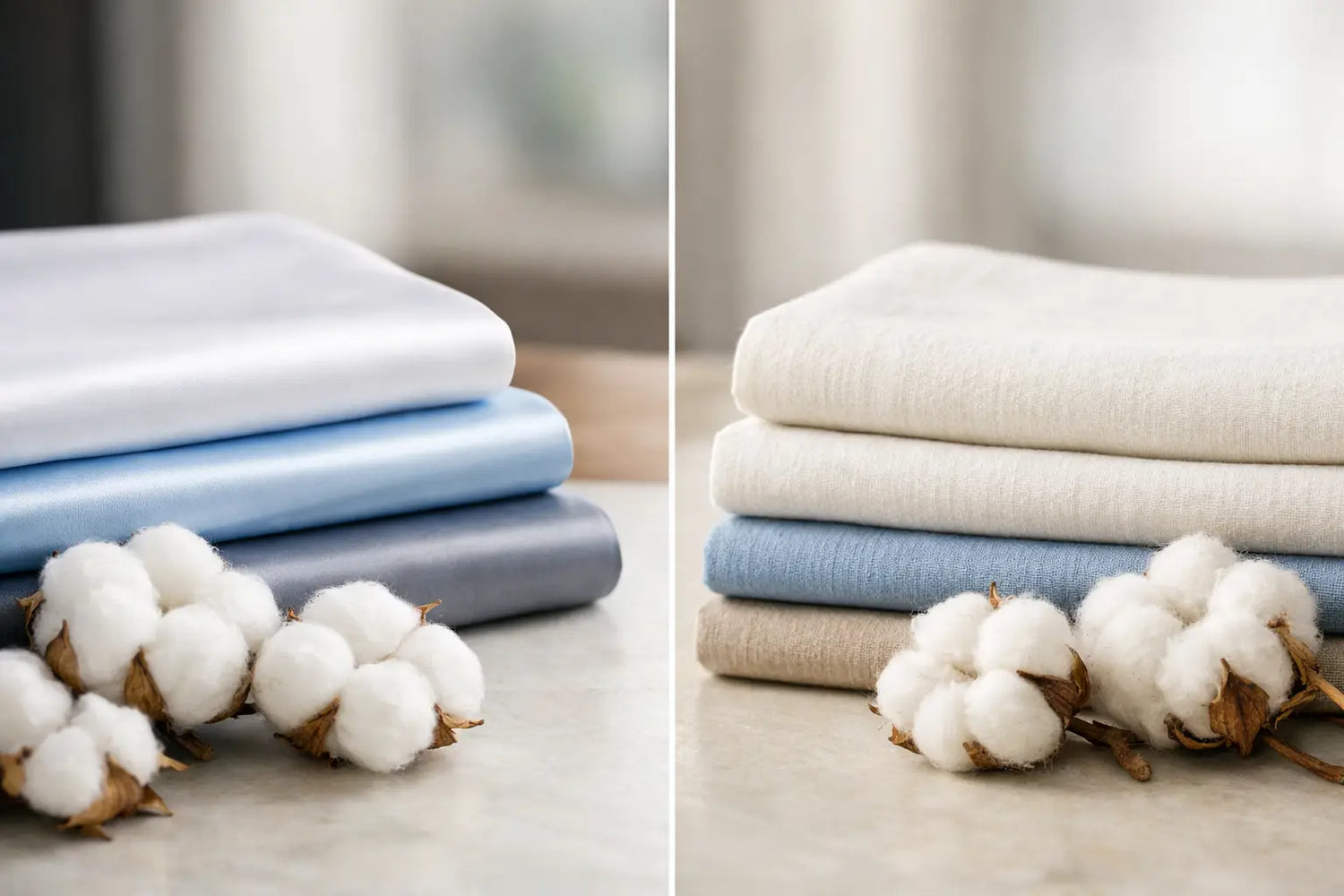
A T-shirt can be labeled 100% cotton and still feel completely different from another 100% cotton T-shirt. The reason is often in the finish. Mercerized cotton versus regular cotton is not a question of one being real cotton and the other being synthetic or inferior. Both start with cotton. What changes is how the fiber is treated and what that treatment does for the finished fabric.
For everyday basics, this difference matters. It affects softness, color, surface appearance, durability, and how polished a garment looks after a long day. The better choice depends on what you expect from the piece.
What Is Regular Cotton?
Regular cotton is cotton fiber that has been spun into yarn and knitted or woven into fabric without undergoing mercerization. It may still be combed, ring-spun, pre-shrunk, garment-dyed, brushed, or treated in other ways. “Regular” does not mean low quality. A well-made regular cotton jersey can be soft, substantial, breathable, and built for years of wear.
The quality of regular cotton depends heavily on the fiber length, yarn construction, fabric weight, knit density, and finishing. Long-staple cotton generally produces smoother, stronger yarn than shorter fibers. Ring-spun yarn tends to feel softer than open-end yarn. A tightly constructed jersey often holds its shape better than a loose one.
In other words, the cotton label alone does not tell the whole story. Construction is what turns a natural fiber into a dependable T-shirt, polo, or sweater.
What Is Mercerized Cotton?
Mercerized cotton is cotton that has been treated with a controlled sodium hydroxide solution, usually while the yarn or fabric is held under tension. The process changes the structure of the cotton fiber. It swells and becomes rounder, smoother, and more reflective.
The result is a cleaner-looking fabric with a subtle sheen. Mercerized cotton also takes dye more effectively, which can create deeper, more color-fast shades. It is typically stronger than untreated cotton and can feel smoother against the skin.
Mercerization is a finish, not a fiber category. A garment can be made from premium long-staple cotton and mercerized, or from more basic cotton and mercerized. The treatment improves certain properties, but it cannot make weak yarn or poor construction perform like a well-made fabric.
Mercerized Cotton Versus Regular Cotton: The Real Differences
The clearest difference is appearance. Mercerized cotton has a smoother surface and a mild luster. It does not need to look shiny in a formal or synthetic way. In a quality fabric, the effect is more refined than glossy. Colors can look richer, especially black, navy, charcoal, and saturated seasonal tones.
Regular cotton has a more natural, matte finish. That is often exactly what people want from a classic crew neck or relaxed everyday tee. It looks familiar, easy, and understated. A matte cotton jersey can also develop character over time, while mercerized fabric tends to maintain a more finished appearance.
Strength is another meaningful difference. Mercerization generally improves cotton’s tensile strength, helping fibers withstand wear. That can be useful in garments that see regular rotation, frequent washing, and friction around the collar, underarms, and seams. Still, stronger fibers do not guarantee a longer-lasting garment. Thin fabric, weak stitching, or poor fit can shorten a garment’s life regardless of the finish.
Color performance also favors mercerized cotton. The altered fiber structure absorbs dye more readily, so color often looks clearer and stays more consistent through washing. If you want a black tee that keeps looking black rather than fading quickly toward gray, mercerized cotton can be a smart option. But proper dyeing and careful care matter just as much.
How Each Fabric Feels in Daily Wear
Both fabrics are breathable because both are cotton. Neither automatically runs hot. The difference is in surface feel and fabric behavior.
Mercerized cotton often feels smooth, crisp, and slightly more structured. It can give a lightweight polo or T-shirt a cleaner drape, which is useful when you want a basic that looks considered without feeling overdressed. It is especially well suited to polos, fine-gauge knitwear, and elevated tees that need to work beyond the couch or gym.
Regular cotton can feel softer, more relaxed, and more familiar, particularly after a few washes. A good regular cotton jersey has that broken-in comfort many people want from a daily T-shirt. It is the reliable choice when comfort and an easy matte look are the priority.
Neither feel is universally better. A smooth, mercerized tee may feel too polished for someone who likes a heavier, lived-in jersey. A standard cotton tee may feel too casual for someone building a sharper, more minimal wardrobe. Fit also changes the experience. A slim-fit tee benefits from fabric with clean recovery and drape, while a classic fit can work well in a softer, more relaxed cotton.
Does Mercerized Cotton Shrink Less?
Mercerization can improve dimensional stability, but it does not make cotton shrink-proof. Cotton can still shrink when exposed to high heat in the washer or dryer. The final shrinkage depends on whether the fabric was pre-shrunk, how it was knitted, and how the garment is finished before it reaches you.
For a dependable basic, look beyond the word “mercerized.” Check whether the garment is pre-shrunk and follow the care label. Washing in cold water and drying on low heat or air drying will help both mercerized and regular cotton retain their fit longer.
This matters most with precision fits. If you buy a long-fit or slim-fit T-shirt because standard lengths and proportions do not work for you, preserving the original shape is not a small detail. It is part of getting value from the garment.
Care for Mercerized and Regular Cotton
The care routine is straightforward for both. Wash similar colors together in cold water, turn printed or darker garments inside out, and avoid overloading the machine. Use a mild detergent and skip excessive bleach, which can weaken cotton fibers and affect color.
Drying is where most unnecessary wear happens. High dryer heat can cause shrinkage, dull the surface, and shorten the life of elastic trim around collars and cuffs. Low heat is a safer choice. Air drying is even gentler, though it may leave some fabrics feeling slightly stiffer until worn.
Mercerized cotton does not require complicated treatment. Its refined finish is durable, but it is still cotton. Treat it like a good everyday garment, not something delicate and not something disposable.
Which One Is Better for T-Shirts and Polos?
For a classic, casual T-shirt, regular cotton is often the right answer. A quality regular cotton jersey offers breathability, softness, and a natural finish that works with denim, shorts, sweats, and overshirts. It is uncomplicated in the best way.
For a tee that needs to look sharper, mercerized cotton has an advantage. The smoother surface, richer color, and cleaner drape can make a simple crew neck feel more intentional. It is a strong option for dinners, travel, casual offices, or any situation where a basic should look put together without trying too hard.
Polos are where mercerized cotton often makes particular sense. The subtle luster helps the collar and knit texture look more refined, while improved strength supports a garment that gets worn repeatedly. A good mercerized polo can bridge the gap between a T-shirt and a button-down without feeling stiff.
Price can be higher with mercerized cotton because the finishing process adds cost. That premium is worthwhile when it serves the garment’s purpose. It is less useful when the fabric underneath is thin, poorly made, or paired with weak construction. Pay for quality you can wear, wash, and notice.
What to Look for Beyond the Fabric Name
The best everyday basics are not chosen by one fabric term. Look at the full build: fiber quality, fabric weight, knit density, collar construction, stitching, shrinkage control, and fit. A durable T-shirt should still sit properly after repeat washes. A polo should keep its collar shape. A black tee should not lose its depth after a short season.
Mercerized cotton versus regular cotton is a useful comparison because it helps set expectations. Mercerized cotton is smoother, stronger, and more polished. Regular cotton is more matte, relaxed, and familiar. Both can earn a place in a practical wardrobe.
Choose the fabric that matches the job. Keep regular cotton for easy daily comfort. Reach for mercerized cotton when you want a basic with a cleaner finish and stronger color presence. The point is not to own more clothes. It is to own essentials that keep doing their job.


Hinterlasse einen Kommentar
Diese Website ist durch hCaptcha geschützt und es gelten die allgemeinen Geschäftsbedingungen und Datenschutzbestimmungen von hCaptcha.