

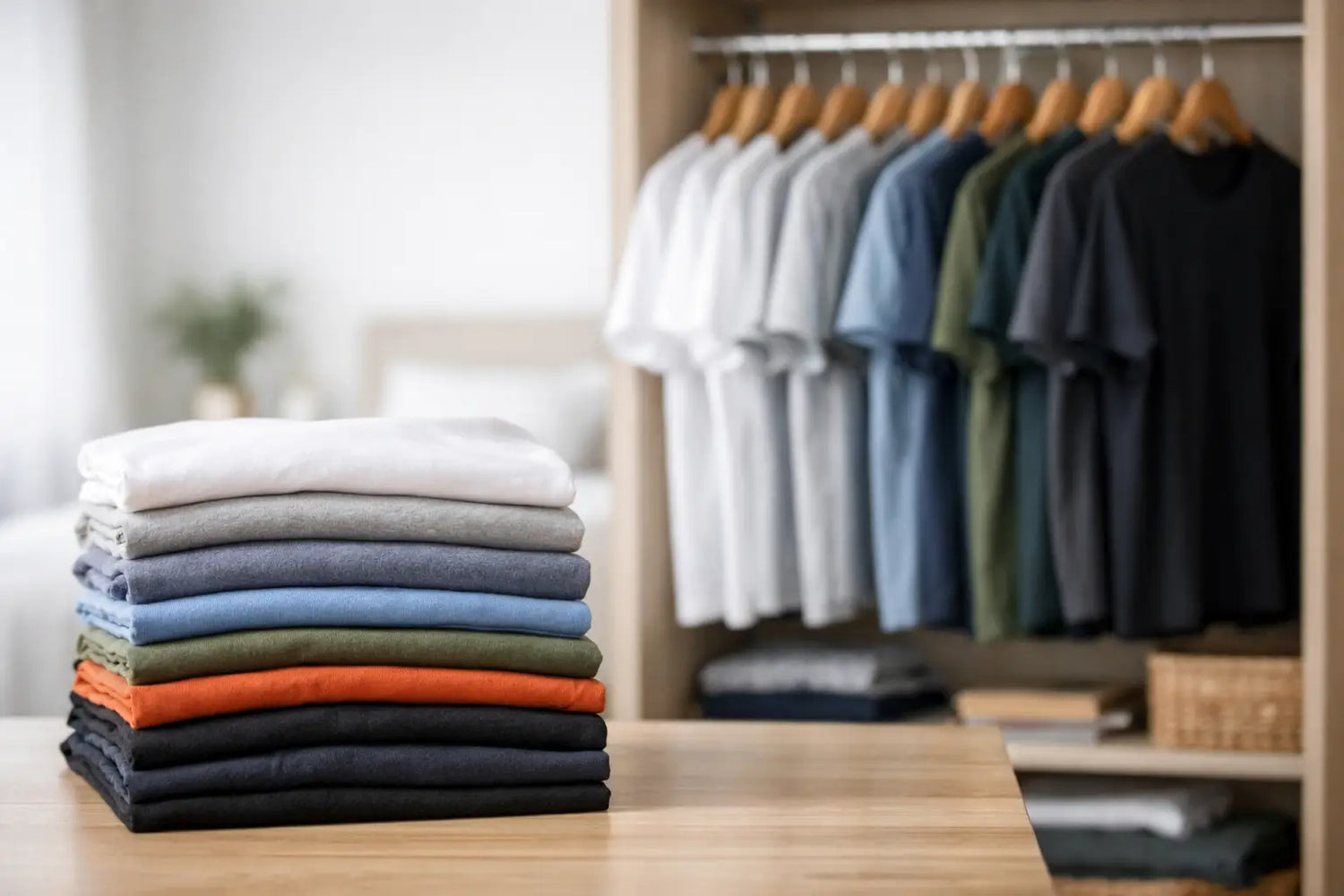
The question “hoeveel tshirts heb je echt nodig” has a simpler answer than most wardrobes suggest: enough to get through your actual week without turning laundry into an emergency. For many men, that is not 20 graphic tees bought over several years. It is a small, dependable rotation that fits well, feels right, and still looks good after repeated washes.
A good T-shirt earns its place through wear, not through good intentions. If you reach for it every week, it matters. If it stays folded at the bottom of the drawer because the collar is stretched, the length is wrong, or the fabric feels thin, it does not.
How Many T-Shirts Do You Really Need?
For most people, 8 to 12 quality T-shirts is the practical range. That gives you enough variety for a normal week, a few backup options, and room for laundry without filling a drawer with shirts you barely wear.
The exact number depends on your routine. Someone who works from home in T-shirts, trains in the evening, and washes clothes once a week may need 12 to 15. Someone who wears button-downs or polos to work and does laundry twice a week may be perfectly set with six to eight.
The goal is not a minimalist number for its own sake. The goal is fewer decisions, fewer worn-out compromises, and a rotation that works when life gets busy.
Start with your laundry schedule
Laundry is the most useful starting point. Count how many days you normally go between loads, then add a few shirts for unexpected plans, warm weather, or a missed wash day.
If you do laundry weekly, seven everyday T-shirts is the bare minimum. In practice, it is tight. One coffee spill, one workout, or one hot commute can leave you reaching for something you would rather not wear. Ten gives you breathing room.
If you do laundry every three or four days, six to eight T-shirts can be enough. This only works if the shirts are genuinely interchangeable in comfort and fit. A drawer full of options is less useful when only two of them are reliable.
Account for how you wear them
Not every T-shirt has the same job. A tee worn under a sweater or overshirt can often be worn once and washed. A shirt worn alone on a humid summer day should generally go straight to the laundry. Workout shirts belong in their own category, especially if you train frequently.
For a practical everyday wardrobe, think in three groups: shirts for daily wear, shirts for training or physical work, and a few cleaner-looking tees for dinners, travel, or casual plans. They can overlap, but they should not all carry the same load.
If your T-shirts are your main uniform, build the rotation around that fact. If you wear them mainly on weekends, do not buy a weekly supply out of habit.
A Better Rotation Beats a Bigger Drawer
More T-shirts do not automatically mean more choice. Usually, they mean inconsistent quality. You own several that fit differently, shrink differently, and age differently. Then the same two or three shirts become your defaults while the rest take up space.
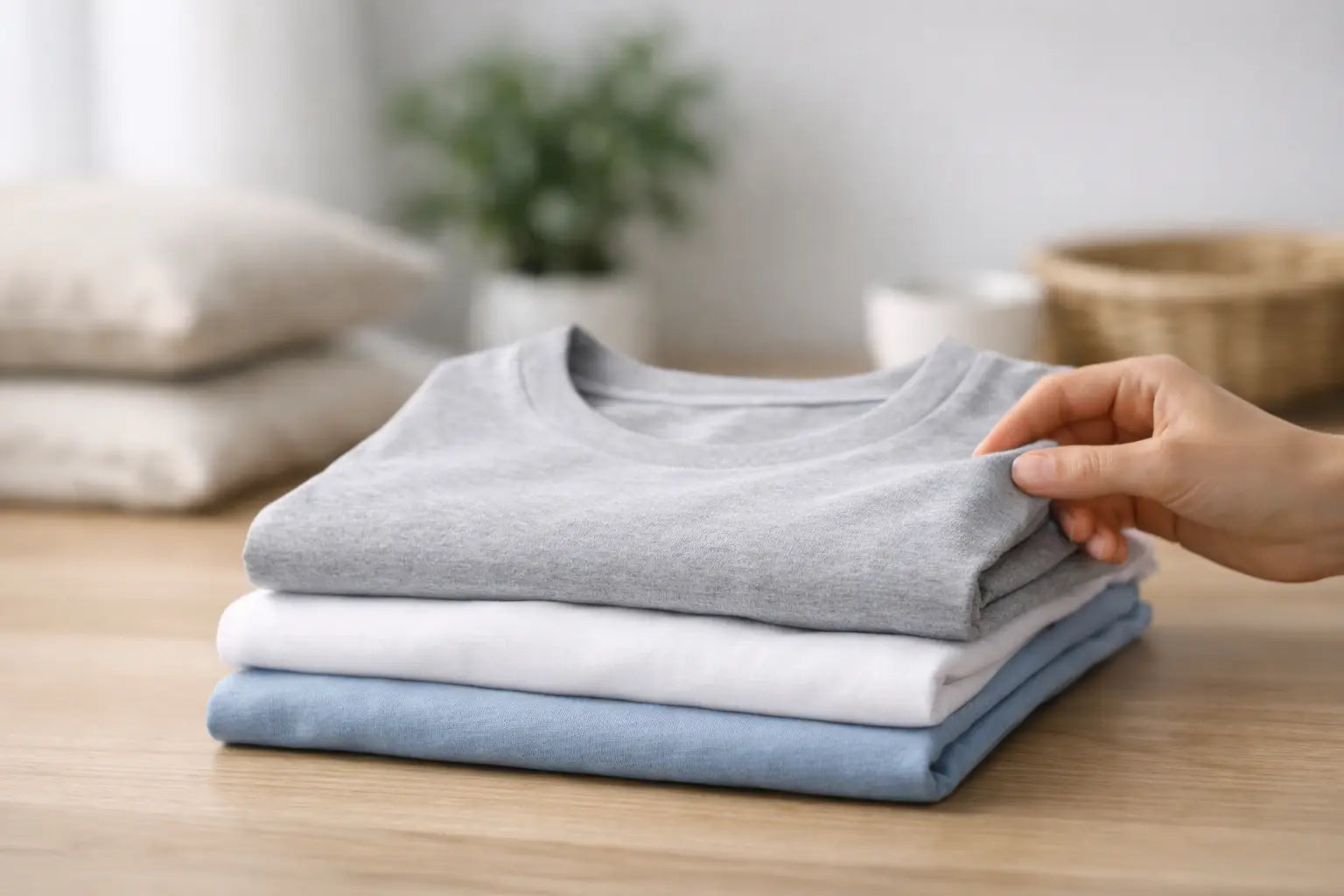
A better approach is to choose a consistent fit and stock it with purpose. A three-pack is useful here because it creates a real rotation rather than a one-off purchase. When the fabric, cut, and color are consistent, getting dressed takes less thought.
For most wardrobes, neutral colors do the heavy lifting. Black, white, navy, gray, and muted earth tones work with denim, chinos, shorts, and layers. You do not need every color. You need colors you will wear on an ordinary Tuesday.
A practical 10-shirt rotation might include four dark tees, three light or white tees, two mid-tone options, and one shirt reserved for a cleaner casual look. That is enough visual variation without forcing you to manage a collection.
Fit Changes the Number You Need
The wrong fit makes people overbuy. When a shirt is too short, too boxy, too tight through the chest, or too loose at the waist, it becomes a backup shirt. You keep it because it is technically usable, then avoid it whenever possible.
Get the fit right and you need fewer shirts. A classic fit works well if you want an easy, straight silhouette. A slim fit can look cleaner under an overshirt or jacket without feeling restrictive. A long fit is useful if standard T-shirts ride up, especially for taller men or anyone with a longer torso.
Pay attention to length before anything else. A T-shirt that exposes your waistband every time you lift an arm will not become more wearable with time. It will just become another shirt you leave in the drawer.
Fabric matters just as much. A premium everyday tee should feel comfortable against the skin, keep its shape, and have enough weight to hang cleanly rather than cling or go transparent. Heavier is not always better, especially in heat, but flimsy fabric is rarely a good long-term trade.
When You May Need More Than 12
There are reasonable exceptions. You may need a larger rotation if you live in a hot climate, commute by bike, work in a hands-on role, travel often, or prefer to wash clothes less frequently. In those cases, 14 to 18 everyday T-shirts is not excessive if they are all worn regularly.
You may also want a separate set for exercise. Do not let sweaty gym shirts reduce the number of clean, presentable T-shirts available for the rest of your week. Four to six dedicated training shirts is often enough for people who work out several times a week and do regular laundry.
The same goes for white T-shirts. They are useful, but they show wear and stains faster than darker colors. Keeping a few extra white tees can be practical, provided you replace them when they no longer look crisp. A faded white shirt is not an essential. It is just an old shirt.
When You Probably Need Less
If you own 25 T-shirts but rotate through five, you do not need a larger drawer. You need a reset. Pull out every shirt you have worn in the last month, excluding sleepwear and workout gear. That is your real baseline.
Then check the rest honestly. Does it fit now? Does the collar lie flat? Is the fabric still comfortable? Would you choose it for a casual dinner, a coffee run, or a day of travel? If the answer is no, it is not serving your wardrobe.
Keep a small number of old tees for painting, garage work, or sleeping if you truly use them. But do not call a stack of worn-out shirts a backup plan. It is clutter disguised as preparedness.
Replace T-Shirts by Condition, Not by Calendar
There is no fixed expiration date for a good T-shirt. The right time to replace one is when it stops doing its job. Look for a stretched neckline, twisting side seams, thinning fabric, persistent odor after washing, fading that looks tired rather than intentional, or a fit that has changed beyond recovery.
Care makes a noticeable difference. Wash in cold water, avoid excessive heat, and do not overload the dryer. Heat is especially hard on cotton fibers, elastic collars, and printed finishes. If you want your best T-shirts to last, treat the dryer as a tool, not the default setting.
Buying fewer, better shirts also makes replacement easier. Instead of periodically ordering a random mix and hoping for the best, you can replenish the styles you already know work. That is the appeal of well-made essentials: less searching, more wear.
A T-shirt drawer should feel easy. Build it around the days you actually live, choose a fit you trust, and keep enough clean shirts to make laundry a routine instead of a problem. When every tee is one you would gladly wear out the door, you have enough.

Leave a comment
This site is protected by hCaptcha and the hCaptcha Privacy Policy and Terms of Service apply.