


A T-shirt that twists after one wash, a collar that loses its shape, sleeves that stop at the wrong place - these are small frustrations, but they add up. If you are looking for comfortabele kleding voor elke dag, comfort should mean more than soft fabric on day one. It should mean clothes that fit properly, move easily, and remain dependable after repeated wear.
The best everyday wardrobe is not built around more options. It is built around better ones. A few well-made tees, polos, and sweaters can cover most casual days without making getting dressed feel like a decision.
Comfortabele kleding voor elke dag should work harder
Everyday clothing has a practical job. It needs to work on the commute, at your desk, through a casual dinner, and during a slow weekend. That does not require complicated styling. It requires fabric with substance, a fit that makes sense, and construction that holds up.
Softness is a good starting point, but it is not the whole story. Some lightweight fabrics feel great in the fitting room and disappoint after a few washes. They can become thin, lose their shape, or cling in places they should not. A quality everyday basic balances comfort with recovery. It should feel good against your skin while retaining its structure.
That balance also changes with the garment. A crew neck T-shirt should sit cleanly at the collar and keep its neckline. A polo needs enough body to look sharp without feeling stiff. A sweater should offer warmth without turning into a bulky layer you want to remove as soon as you get indoors.
Comfort is not one feature. It is the result of several details working together.
Start with fabric you will want to wear again
Fabric is the first thing you notice, and usually the reason you keep reaching for a piece. For daily basics, look for materials that feel breathable, smooth, and substantial enough to maintain their shape. The right weight matters. Too light, and a shirt can look worn quickly. Too heavy, and it may feel restrictive or too warm for regular use.
Cotton remains a strong choice because it is familiar, breathable, and easy to wear across seasons. But not all cotton tees perform the same way. The quality of the fibers, knit, and finishing all affect how a shirt feels and how it wears over time. A premium tee should not only be comfortable when new. It should still feel like a shirt you want to put on after a long week of laundry cycles.
There is a trade-off here. A very soft, ultra-thin shirt can be ideal for hot weather or layering, but it may not offer the durability or clean drape you want from a main wardrobe staple. A denser fabric often lasts longer and looks more polished, though personal temperature preference matters. The goal is not the heaviest shirt. It is the right fabric for how you actually live.
Pay attention to shape retention
A basic earns its place through repetition. That means it needs to recover after washing and wearing. Watch the areas that tend to fail first: collars, hems, cuffs, shoulder seams, and the fabric around the chest and stomach.
When these details are well made, the garment keeps a neater silhouette. That makes a simple T-shirt look intentional rather than disposable. It also means you can own fewer shirts without feeling as though your wardrobe is constantly running out of good options.
Fit is where daily comfort becomes personal
The most comfortable shirt is not always the loosest one. Extra fabric can bunch under a jacket, hang awkwardly at the waist, or make a clean outfit feel unfinished. On the other hand, a fit that is too close can pull at the chest, ride up when you move, and make even a soft fabric feel uncomfortable.
The right fit should follow your body without restricting it. Your shoulders are the best place to start. A shoulder seam that lands too far down the arm often signals that a shirt is too large, while a seam that pulls upward can mean it is too small. From there, consider length, chest room, and sleeve shape.
Classic fit works well when you prefer a relaxed, straightforward silhouette. It gives you room to move and layers easily. Slim fit is a better option when you want a cleaner line through the torso without wearing something tight. Long fit solves another common issue: shirts that fit well in the shoulders but become too short once you lift your arms, sit down, or wash them.
None of these fits is universally best. Your height, proportions, and preferred style should decide. The useful part is having a real choice. One generic fit is rarely the answer for every body.
Build a small rotation, not an overfilled closet
Daily comfort gets easier when the pieces in your wardrobe work together. Start with the clothes you wear most often, not the items you only buy for an imagined version of your life. For many men, that means well-fitting T-shirts in versatile colors, one or two polos for occasions that need a little more structure, and sweaters that layer cleanly when temperatures drop.
Neutral colors make this simple. White, black, gray, navy, and muted earth tones can be worn repeatedly without looking repetitive. They also make it easier to get dressed quickly. A charcoal tee and dark denim work. So does a white crew neck with chinos, or a navy polo with shorts. You do not need a new outfit formula every morning.
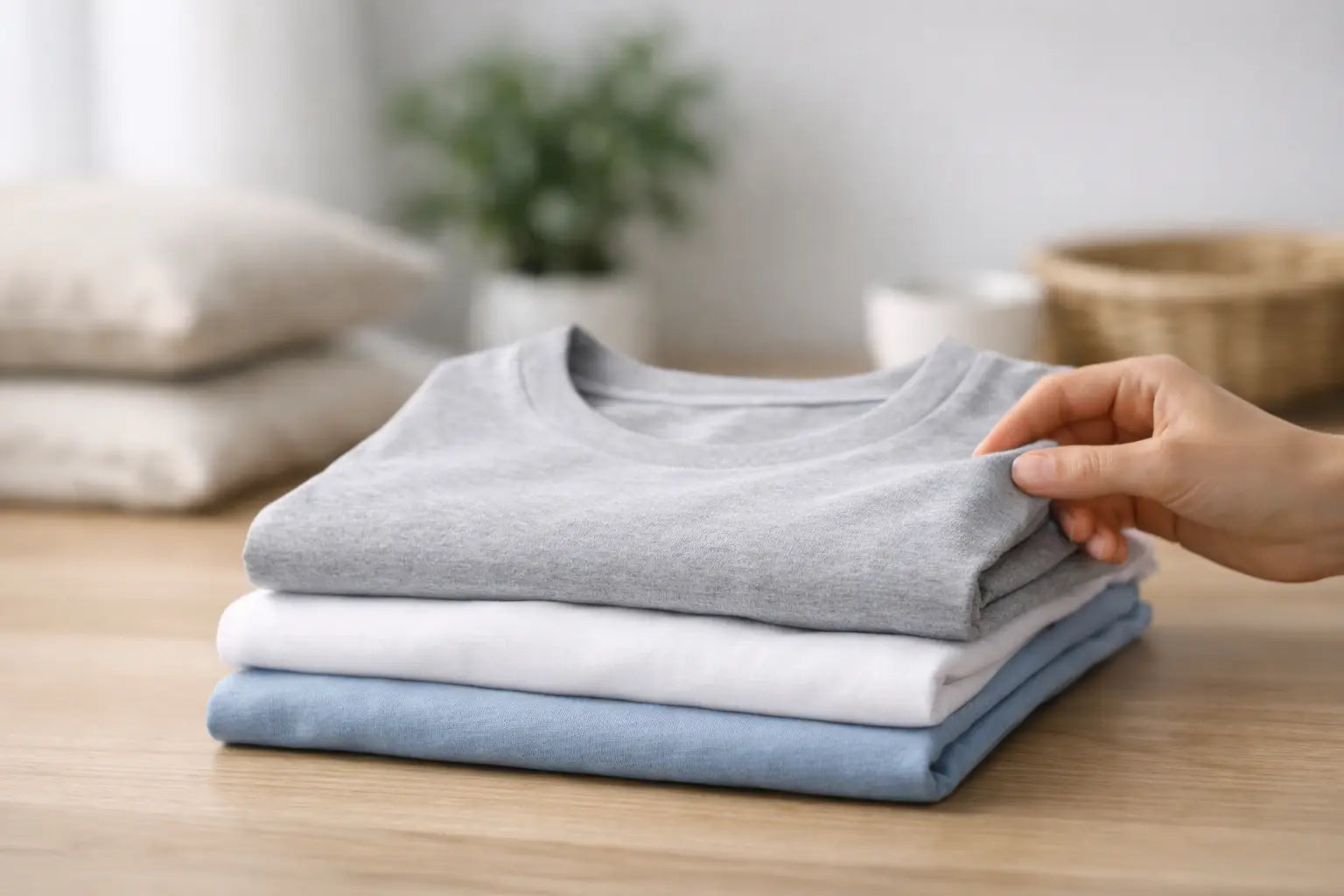
A three-pack can be especially practical when you have found a fit and fabric you trust. It reduces the gap between laundry days and gives your most-used staples a more even rotation. Buying multiples is not about excess. It is about avoiding the cycle of wearing one favorite shirt until it is worn out while the rest of the closet goes untouched.
LEBASQ approaches essentials with that logic: fewer distractions, more attention to fit, fabric, and everyday durability.
Care is part of the comfort equation
Even great basics need reasonable care. Heat, aggressive washing, and over-drying can shorten the life of almost any fabric. Read the care label, wash similar colors together, and avoid treating every load like workwear. These small habits help protect color, shape, and softness.
You do not need to turn laundry into a project. The point is simply to avoid wearing out good clothes faster than necessary. If a shirt is designed for repeated use, caring for it properly lets that design do its job.
It also helps to give garments a rest between wears when possible. Rotating your staples allows fabric to recover and reduces unnecessary strain on your single favorite tee or sweater. This is another reason a compact set of dependable basics makes more sense than a closet full of mediocre alternatives.
Choose clothes for your real routine
The strongest everyday wardrobe reflects your actual week. If you spend most days working from home, a soft, well-cut tee and a lightweight sweater may do more for you than a closet of formal shirts. If you move between meetings, travel, and casual plans, polos and structured T-shirts can offer the flexibility you need without feeling overdressed.
Trend pieces have their place, but they should not carry the weight of your wardrobe. Daily clothing should be easy to trust. It should feel right at 8 a.m., still look good at 6 p.m., and survive the wash without becoming a compromise.
Start with one better basic. Find the fit that works, choose fabric with enough substance, and wear it often. The right essentials do not ask for attention. They simply make every day easier.

Leave a comment
This site is protected by hCaptcha and the hCaptcha Privacy Policy and Terms of Service apply.