

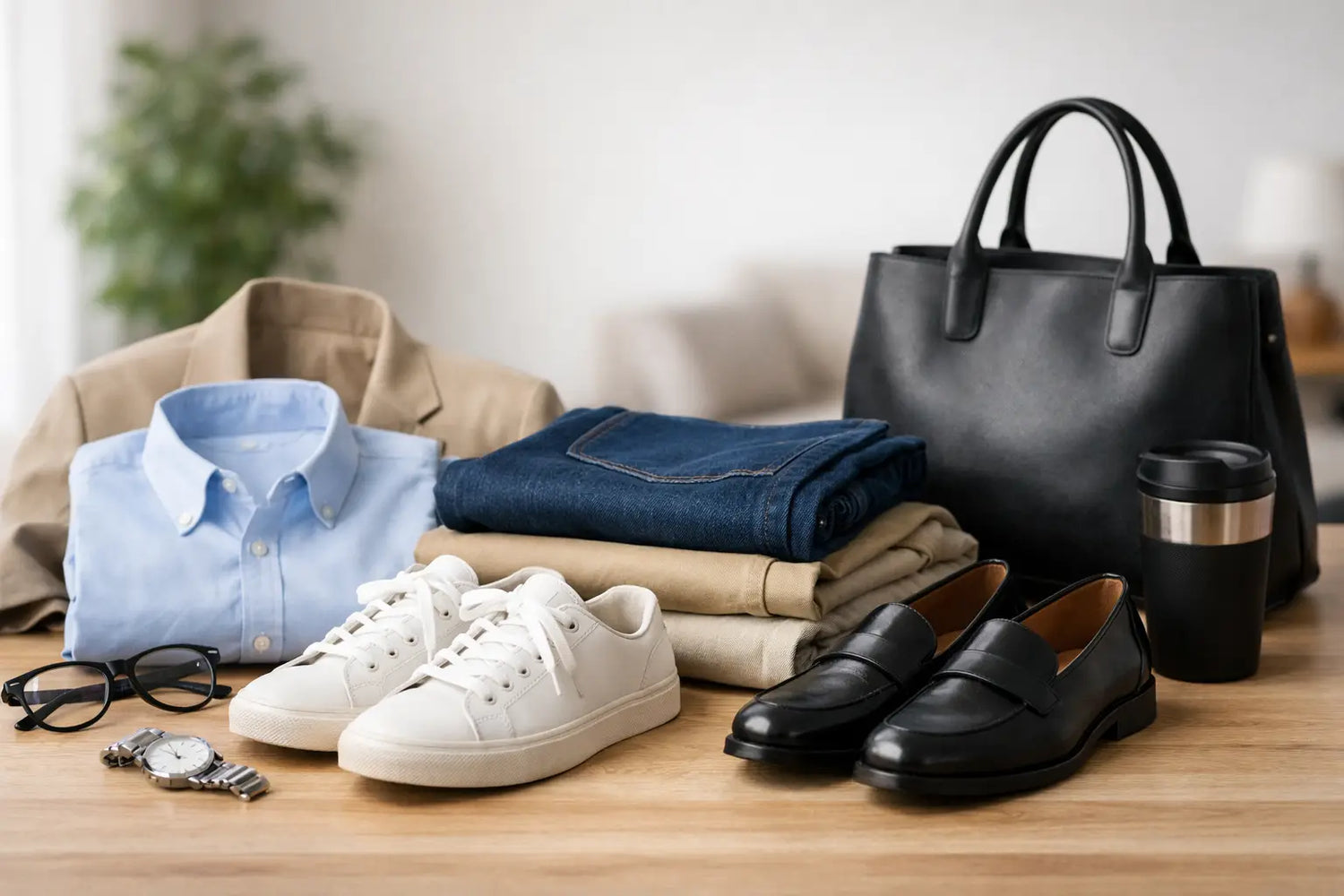
A closet full of clothes can still leave you with nothing reliable to wear at 8 a.m. The best basics for work and free time - or beste basics voor werk en vrije tijd - solve that problem. They are the pieces you can wear under a jacket, with jeans, on a video call, or on a Saturday morning without needing to rethink the outfit.
The goal is not to own more. It is to own better starting points: shirts that keep their shape, fabrics that feel good after a long day, and fits that work with your body instead of against it. A dependable wardrobe is built from repetition, not novelty.
What makes a basic worth wearing repeatedly?
A basic is not automatically good because it is plain. In fact, simple clothing leaves nowhere to hide. If the neckline stretches, the hem twists, or the fabric becomes thin after a few washes, you notice it immediately. The value of an everyday essential comes down to fabric, fit, construction, and how well it holds up over time.
Start with the fabric weight and hand feel. Lightweight shirts have a place, especially in warm weather or as an undershirt, but a tee meant to stand on its own should not feel disposable. A quality cotton fabric has enough substance to drape cleanly without feeling stiff. It should be comfortable against the skin, breathable, and capable of returning to shape after wear.
Construction matters just as much. Look at the collar, shoulder seams, sleeve openings, and hem. These areas take the most stress. A collar should sit flat rather than roll outward after a few washes. Shoulder seams should land close to your natural shoulder point. Clean stitching and stable finishing are not flashy details, but they are what make a shirt look considered months after you bought it.
Durability does not mean heavy or rigid. It means a garment is designed for real use: commuting, desk work, travel, errands, laundry, and doing it again next week.
Build your work-and-weekend foundation
The strongest wardrobes do not separate work clothes from casual clothes too strictly. Most people need pieces that move between both. A polished T-shirt under an overshirt can be appropriate for a relaxed office. The same shirt with denim works after hours. That flexibility is where basics earn their place.
Start with the right T-shirts
A crew neck T-shirt is the natural first purchase. It is clean, easy to layer, and works with almost everything. Choose neutral colors first: white, black, navy, charcoal, and a muted earth tone. These shades make getting dressed faster because they pair easily with the pants, jackets, and shoes you already own.
Fit is personal, but it should be intentional. A slim-fit tee gives a neater silhouette and works well under a sweater, overshirt, or blazer. It should follow the body without pulling across the chest or clinging around the stomach. A classic fit offers more room and is usually the safer choice if you prefer movement or a relaxed look.
Length is one of the most overlooked details. A standard tee that rides up every time you sit is frustrating, especially if you are tall or have a longer torso. Long-fit shirts provide extra coverage without forcing you to size up and compromise the shoulders or chest. The right length lets the shirt stay put while still looking balanced when worn untucked.
V-necks are useful when you want a more open neckline or need a shirt that stays hidden under a button-down. Keep the V shallow and structured. A deep V-neck tends to feel dated and limits where you can wear it.
Add polos for a sharper option
A polo sits between a T-shirt and a button-down. It is more polished than a tee but less formal and less restrictive than a woven shirt. That makes it a practical option for casual offices, client meetings, dinners, and travel days.
The best polos avoid unnecessary details. A stable collar, comfortable fabric, and a fit that does not balloon at the waist are enough. Wear one with chinos and clean sneakers for an easy work uniform, or with shorts when the weekend calls for something more refined than a graphic T-shirt.
A polo should not feel like a costume. If it is too tight, too shiny, or overloaded with branding, it loses the quiet versatility that makes it useful. Keep it simple and let the fit do the work.
Use sweaters as functional layers
A good sweater is not just for cold weather. It is the layer that makes a basic tee suitable for a cooler office, an evening out, or a flight. Choose a clean crew neck in a neutral color for the widest range of use.
Pay attention to bulk. A sweater should layer comfortably over a tee without restricting your shoulders, and it should fit under a jacket without bunching at the arms. Very thick knits offer warmth but are less flexible indoors. A medium-weight sweater is often the better everyday choice because it works across more seasons.
Fit comes before size on the label
Many people buy basics in the same size from every brand and wonder why half of them stay unworn. Size labels are only a reference point. The actual measurements and cut determine whether a garment works.
Check three areas before committing to a style: shoulders, chest, and length. The shoulder seam should not hang far down the arm unless you want an intentionally oversized look. Across the chest, the fabric should lie smooth when you move. At the hem, the shirt should provide coverage without extending so low that it shortens the look of your legs.
If you are between sizes, think about how you will wear the piece. Size up for a relaxed standalone layer. Stay closer to your body for shirts that will live under sweaters or jackets. There is no universal right answer. The useful answer is the one that matches your routine.
Buy fewer colors, then repeat what works
The smartest way to build a basics wardrobe is to reduce decision fatigue. Once you find a fabric and fit that work, buying a few of the same style is not boring. It is efficient. Multipacks make particular sense for T-shirts because they are worn, washed, and replaced more often than outer layers.
A practical starting rotation includes several neutral crew neck tees, one or two polos, and a couple of reliable sweaters. From there, add colors only when they genuinely fit with what you wear most. A dark green or muted burgundy can be useful. A color that only works with one pair of pants is usually not.
This approach also makes laundry easier. When your core pieces work together, you do not need every item clean at once to make an outfit feel complete.
Care is part of durability
Even well-made basics need sensible care. Wash tees and polos inside out to reduce surface friction. Use cold or warm water unless the care label says otherwise, and avoid excessive heat in the dryer. High heat can shrink fibers, weaken elastic recovery, and make collars lose their original shape sooner.
Do not over-wash clothes that are not actually dirty. Sweaters often need airing out rather than a full wash after every wear. When washing is needed, follow the label and dry them flat if the material calls for it. Small habits extend the useful life of clothes far more than most people expect.
It also helps to rotate your favorites. Wearing the same shirt hard several days in a row gives it less time to recover. A few dependable alternatives protect the pieces you like most.
Choose basics that fit your actual life
The right basics should make your mornings simpler, not create another category of clothing to manage. That is why LEBASQ focuses on elevated essentials with clear fit options, durable materials, and practical multipacks. No exaggerated promises. Just clothing designed to be worn often.
Start with the piece you reach for most and improve that first. Maybe it is the T-shirt that keeps shrinking, the polo that never sits right at the collar, or the sweater that looks tired after one season. Replace the weak link with something built for repeat wear. A better everyday uniform starts there.


Leave a comment
This site is protected by hCaptcha and the hCaptcha Privacy Policy and Terms of Service apply.