

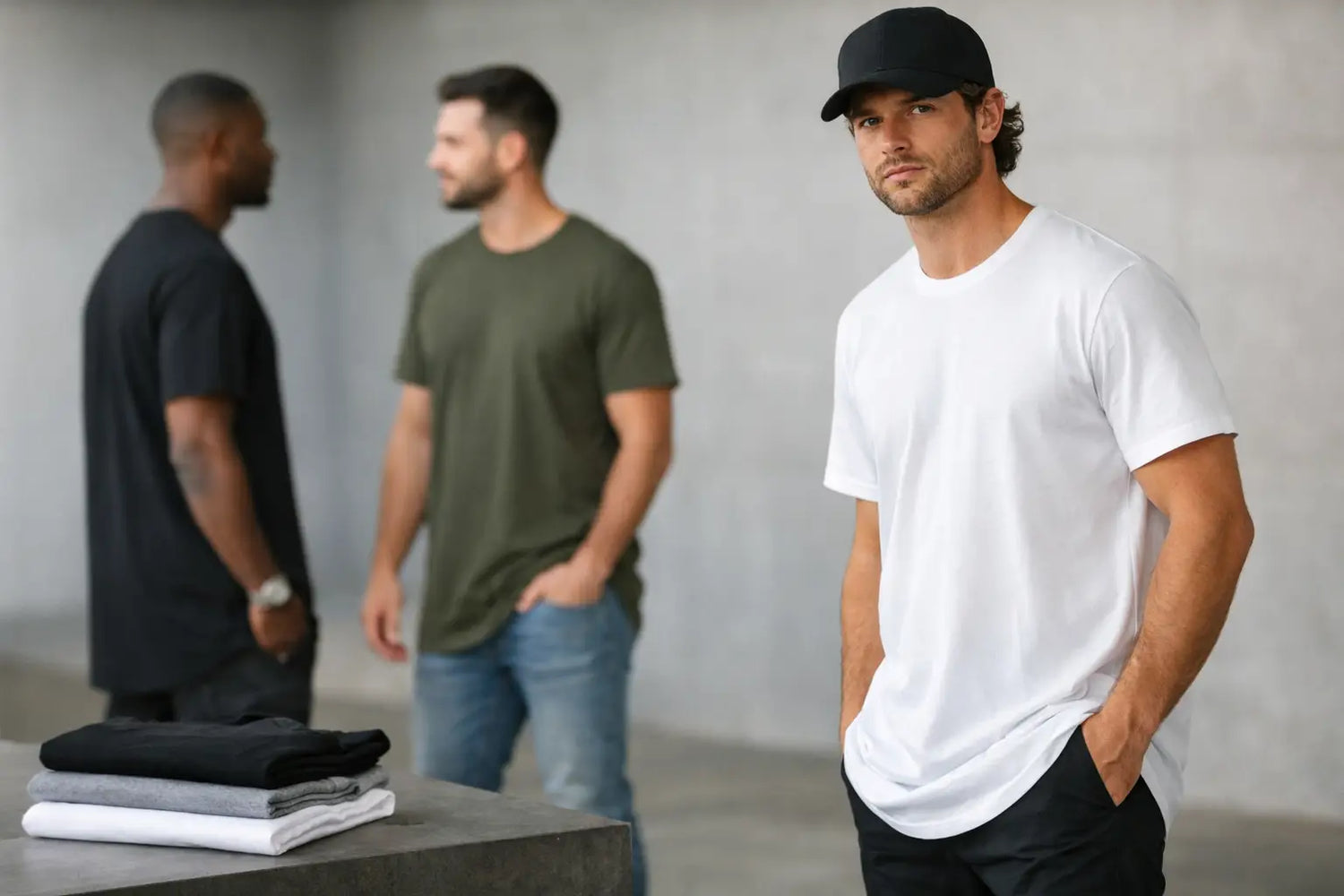
A standard T-shirt that creeps above the waistband every time you reach, sit, or bend is not a small annoyance. It changes how the whole outfit feels. The best long fit t shirts solve that problem with purposeful extra length, not with a baggy body or an oversized look.
A long-fit tee should stay put, sit cleanly through the chest, and keep its shape after regular washing. That sounds basic because it is. Getting all three right is where the difference lies.
What makes a long-fit T-shirt different?
A long-fit T-shirt is designed with more length through the torso than a standard tee. The extra coverage usually extends below the waistband and remains there when you move. It is especially useful for taller men, men with a longer torso, and anyone who prefers a little more coverage without sizing up.
The key distinction is proportion. A good long-fit shirt is not simply a regular shirt made larger. Going up a size can add length, but it also adds width at the chest, waist, shoulders, and sleeves. The result often looks loose where you want structure. A true long fit keeps the body close and clean while adding the length that standard sizing leaves out.
That balance makes it an everyday piece rather than a specialty item. It works under an overshirt, with jeans, beneath a sweater, or on its own with shorts. You should not need to think about it once it is on.
Best long fit T shirts start with the right length
Length is the reason to buy this fit, so it deserves more attention than most shoppers give it. A long-fit tee should cover the belt area and extend far enough below the waistband to stay in place during normal movement. For many men, that means a hem that lands around the mid-fly area, though height, torso length, and personal preference all matter.
Too little added length defeats the point. Too much can make a shirt look like it is meant for sleepwear or a fashion-forward oversized outfit. The right hem looks intentional. It gives coverage without pooling at the hips or creating excess fabric around the seat.
Check the product measurements when available, especially the back length. Compare them with a T-shirt you already own and wear often. Lay that shirt flat, measure from the highest point of the shoulder to the hem, and use it as your baseline. This is more dependable than relying on a label size alone.
Your torso matters more than your height
A taller person does not always need a long fit, and a person of average height may need one badly. Torso length is the real factor. If your regular shirts expose your waistband while your pants fit properly at the waist, extra length is likely the better fix.
Your posture and how you wear your pants also affect the choice. Low-rise jeans can call for more coverage than higher-rise chinos. If you regularly layer, a long-fit base tee can help keep the outfit looking neat. If you wear your T-shirts tucked in, however, a regular length may be easier to manage unless you need the added coverage throughout the day.
Get the shoulders and chest right first
Extra length cannot compensate for poor shoulder placement. The shoulder seam should sit near the edge of your natural shoulder. If it falls down the upper arm, the shirt will look too large even if the torso length is correct. If it pulls inward, you need more room through the upper body.
The chest should follow your shape without clinging. A slim long fit is a practical choice if you want a clean line under a jacket or overshirt. It should leave enough room to move your arms, sit comfortably, and wear through a full day. Restrictive fabric or tight armholes turn an otherwise good fit into a shirt you avoid reaching for.
Pay attention to the waist, too. A subtle taper can prevent the long body from looking boxy. But the taper should not be so aggressive that the hem catches at the hips and rides upward. The best fit is often straightforward: structured at the shoulders, easy through the chest, and slightly shaped through the body.
Fabric determines how the fit wears over time
A long T-shirt is only useful if it remains long after washing. Fabric quality and construction matter here. Lightweight cotton can feel cool and soft, but very thin fabric may twist, stretch, or lose its shape sooner. A heavier fabric usually offers more structure and durability, although it can feel warmer and less fluid in hot weather.
For a daily tee, look for cotton with a substantial but comfortable hand. It should feel smooth against the skin without being flimsy. Good recovery matters as much as initial softness. A shirt that feels perfect on day one but develops a stretched neckline or a wavy hem after a few washes is not a dependable basic.
The best choice depends on how you plan to wear it. A lighter tee works well as a base layer or warm-weather shirt. A medium-weight option often has the versatility most wardrobes need, with enough body to wear on its own and enough comfort for regular layering.
Neckline construction is another quiet quality marker. A crew neck should lie flat and return to shape after wear. A loose, rippled collar makes even a well-fitting shirt look worn out. Reinforced seams and clean finishing are not flashy details, but they are the details that keep a basic looking like a basic worth owning.
Choose the silhouette for how you actually dress
Long fit does not mean one silhouette works for everyone. A slim long-fit tee is ideal when you prefer a sharper outline and tend to wear fitted jeans, tapered pants, or layers. A more classic body gives more room through the midsection and may feel better if you want comfort without a close fit.
Avoid choosing based on the model photo alone. Models are styled, pinned, and photographed under controlled conditions. Your best reference is the fit you already know you like. If your current shirt fits your chest and shoulders but is too short, long fit is the logical adjustment. If it is both short and wide, look for a more tailored long fit rather than buying a bigger size.
Color also affects how a long tee reads. Black, navy, white, gray, and muted earth tones make the extended length feel clean and understated. They are easier to repeat, layer, and buy in multiples. A well-made essential does not need to announce itself.
Sizing without guesswork
Start with your usual size when the brand specifically offers a long fit. The pattern should already account for added body length. Size up only if you need more room in the chest or shoulders, not just because you want extra length.
Before removing tags or wearing the shirt outside, test it properly at home. Raise both arms, sit down, bend forward, and reach for something overhead. The hem should not jump above your waistband. Check the neckline in a mirror after a few minutes of movement. It should remain flat, and the shoulders should stay where they belong.
If the shirt feels good standing still but rides up when you sit, the issue may be length, taper, or fabric friction against your pants. A slightly longer fit can help, but a body that is too narrow at the hem can still climb. Fit is a system, not a single measurement.
Care is part of a long-lasting fit
Heat is hard on cotton. Repeated hot washes and high-heat drying can shrink the length you bought the shirt for, weaken fibers, and dull the color. Wash in cold water, turn darker shirts inside out, and dry on low heat or air dry when practical.
Do not overload the machine. Friction from crowded loads wears fabric and can distort collars over time. If you own several dependable tees, rotating them also helps. A three-pack of the same fit is practical because it gives each shirt time between wears while keeping your daily uniform simple.
LEBASQ builds its long-fit essentials around this straightforward idea: fit should work repeatedly, not just look good for the first wear. That is the standard worth using when you compare any premium basic.
Buy for repeat wear, not one outfit
The right long-fit T-shirt earns its place because it removes a recurring problem. It stays covered when you move, feels comfortable through the day, and still looks put together after many washes. That makes it more valuable than a cheaper tee that needs constant replacing.
Start with the color you wear most, choose the silhouette that fits your shoulders and chest, and verify the length against a shirt you trust. When a T-shirt does its job without demanding attention, you have found the one worth buying again.

Leave a comment
This site is protected by hCaptcha and the hCaptcha Privacy Policy and Terms of Service apply.