

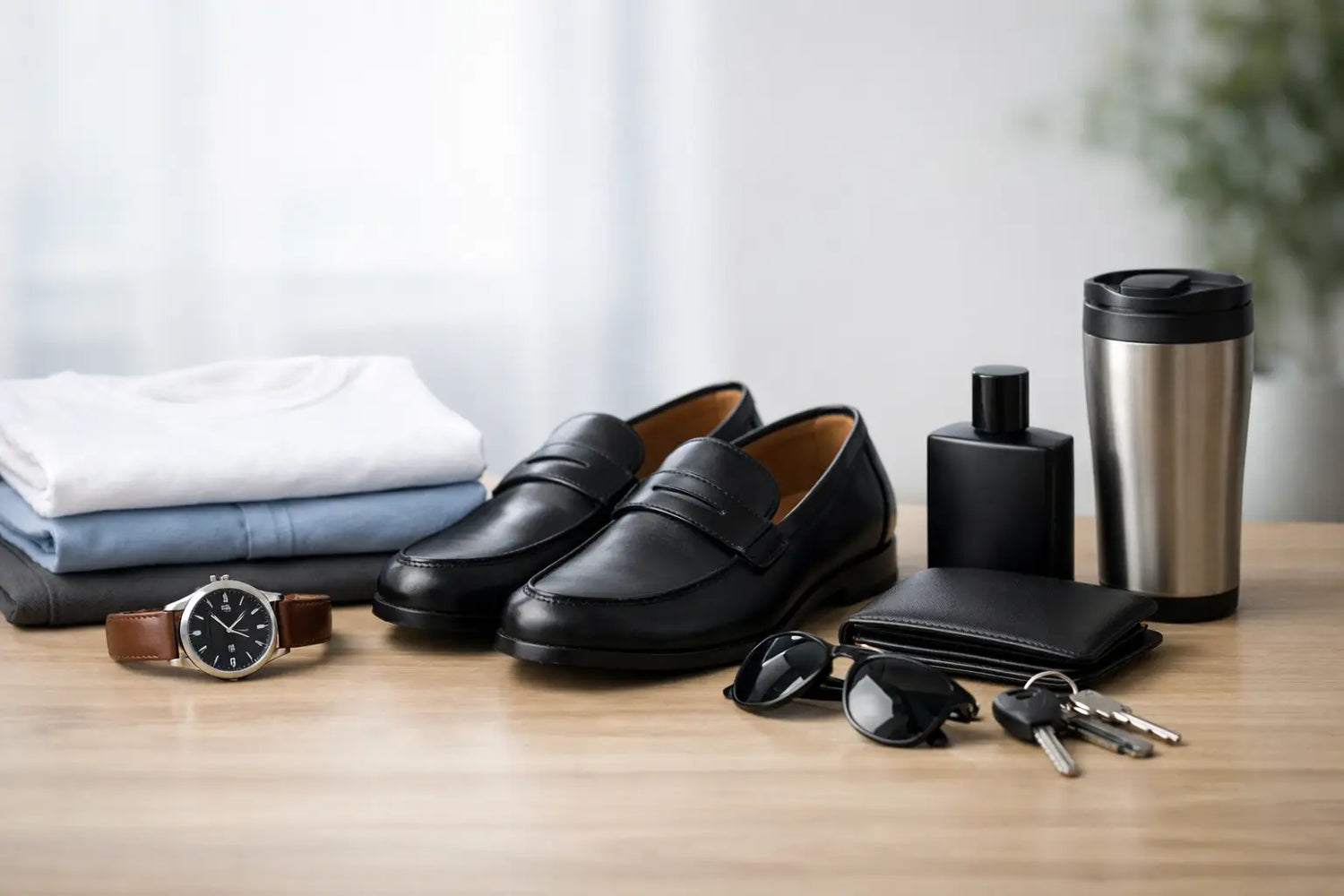
A closet can be full and still fail you at 7:30 a.m. The usual problem is not a lack of clothing. It is too many pieces that shrink, lose shape, fit awkwardly, or only work with one specific outfit. Daily wear essentials solve that problem when they are chosen with discipline.
The best basics do not need a big story. They need to feel right, wash well, and make getting dressed easier. A great T-shirt should work under a jacket, with jeans, on its own, and again tomorrow after a wash. That is the standard.
What Daily Wear Essentials Should Do
An essential earns its place through repeat use. It should work across ordinary situations: commuting, working from home, meeting friends, traveling, or taking a casual dinner reservation without changing your entire outfit. That does not mean every piece has to be plain. It means the foundation has to be dependable.
Start with items that solve more than one need. A well-cut crew neck provides a clean, familiar shape. A V-neck can add a little openness under an overshirt or sweater. A polo sits between a T-shirt and a button-down when the occasion calls for a more put-together look. Sweaters and caps round out the rotation when weather and routine demand them.
The trade-off is simple: more versatility usually means less novelty. A loud print may be fun once in a while, but it will not carry the same workload as a black, white, navy, gray, or muted earth-tone basic. Build the reliable core first. Add the statement pieces after.
Fit Comes Before Almost Everything
Fabric gets attention, but fit decides whether a garment gets worn. A premium T-shirt that pulls across the chest, ends too high at the waist, or collapses at the collar will stay in the drawer. The right fit makes a basic look intentional without making it feel restrictive.
Choose the Fit That Solves Your Problem
Classic fit is the safe starting point. It gives room through the body and suits people who prefer an easy, traditional silhouette. It also layers comfortably under overshirts and sweaters.
Slim fit works when you want cleaner lines with less extra fabric. It should follow the body, not cling to it. If the sleeves pinch or the torso strains when you move, the issue is not that you need to get used to it. The fit is too small.
Long fit is useful for a frustration many standard tees create: they are wide enough but too short. A little extra length helps the hem stay put when you reach, sit, or layer. For taller frames and longer torsos, it can be the difference between a T-shirt that looks considered and one that constantly needs adjusting.
Fit preference is personal, so avoid treating one cut as universally better. The practical move is to own the same dependable fabric in the silhouette that works for your body. Once you know it fits, replenishing becomes straightforward.
Check the Details That Change Wearability
Look at the collar first. It should sit flat against the neck and recover after washing. A stretched neckline makes even a new shirt look tired. Then check shoulder seams. They should land near the edge of your shoulder, not drift down your arm or pull inward toward your neck.
Length matters just as much. A T-shirt should cover the waistband comfortably without extending so far that it distorts your proportions. Sleeve length is a smaller detail with a big visual effect: a clean sleeve that ends around the mid-bicep tends to look balanced on most men.
Fabric Is Where Value Shows Up
Daily clothing gets tested in ordinary ways. It gets washed often, worn on warm days, pulled under jackets, packed into bags, and worn through long commutes. Fabric has to handle that routine without becoming thin, twisted, stiff, or shapeless.
A quality cotton fabric should feel comfortable from the first wear, but softness alone is not enough. Very light, overly soft fabric can feel good in the store and disappoint after a few laundry cycles. The better question is whether the material has enough substance to retain its shape while remaining breathable.
Pay attention to construction as well. Clean stitching, stable side seams, and a collar designed to hold its form are not glamorous details. They are the details that separate a shirt you wear for months from one you replace after a season.
There is no universal rule that heavier is always better. A heavier tee can provide structure and durability, but it may feel too warm in a humid climate or under multiple layers. A lighter weight can be ideal for hot weather, provided the fabric is not flimsy. Match the weight to where and how you actually live.
Build a Rotation, Not a Pile
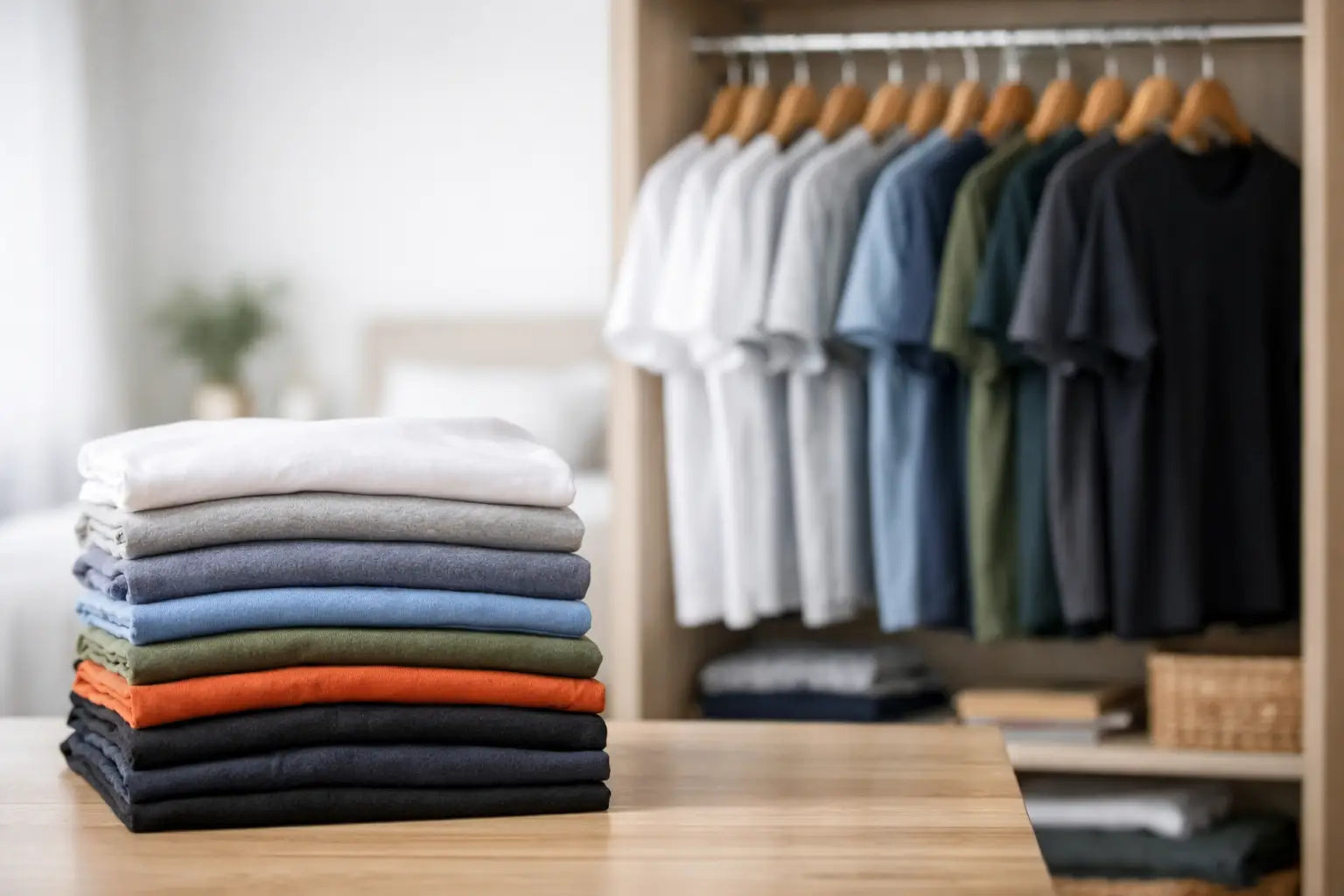
The goal is not to own more basics. It is to own enough of the right basics that laundry day does not dictate your week. For most wardrobes, a small rotation of consistent T-shirts, a few elevated alternatives, and one or two reliable layers does more than a closet of random purchases.
Start by identifying your real weekly uniform. If you reach for T-shirts five days a week, that category deserves most of your budget. If you regularly need something sharper than a tee but less formal than a shirt, add polos. If you use layers often, choose a sweater that fits comfortably over your preferred T-shirt rather than buying one in isolation.
Multipacks make sense here because consistency matters. Buying a three-pack of a fit you already trust reduces the risk of running out of clean essentials and gives each piece time to rest between wears. It is also more useful than buying three different shirts that all fit slightly differently.
Color should support the rotation. White, black, navy, charcoal, and heather gray are easy starting points because they pair with denim, chinos, shorts, and most outerwear. From there, bring in colors you will genuinely repeat. Deep green, brown, washed blue, and muted burgundy can add range without making coordination complicated.
Care Is Part of the Product
Even well-made essentials need sensible care. Wash cold when possible, turn darker garments inside out, and avoid overloading the machine. High heat is often the fastest way to shorten the life of cotton basics, especially at the collar, hem, and sleeves.
Drying method depends on your routine. Air drying is gentler and helps preserve shape, while low heat can be practical when time is limited. If you use a dryer, remove T-shirts before they are fully over-dried. That small habit reduces unnecessary shrinkage and keeps fabric feeling better longer.
Do not confuse wear with failure. A favorite shirt may soften slightly over time. That is normal. What you want to avoid is rapid loss of structure: a neck that waves, seams that twist, or a body that becomes noticeably shorter after a few washes. Those are signs the garment was not built for repeated use.
Buy Fewer Pieces With Higher Standards
Fast fashion trains people to accept short-term clothing. Low prices feel convenient until you replace the same category several times a year. Better daily wear essentials cost more upfront in many cases, but the value is in cost per wear, comfort, and reduced decision-making.
This does not mean every item in your closet must be premium. Save your standards for the pieces that carry the most hours: T-shirts, polos, sweaters, and the layers you reach for automatically. These are the categories where fit and fabric pay you back.
LEBASQ is built around that principle: straightforward essentials with specific fits, durable materials, and no unnecessary distraction. The point is not to chase a new look every week. It is to make the clothes you already need perform better.
A useful test is simple. Before buying, ask whether you can picture wearing the piece once a week for the next year. If the answer is yes, it belongs in the rotation. If it only works for one moment, leave room for the essentials that will do the real work.

Hinterlasse einen Kommentar
Diese Website ist durch hCaptcha geschützt und es gelten die allgemeinen Geschäftsbedingungen und Datenschutzbestimmungen von hCaptcha.